Heitor da Silva Costa and Carlos Oswald: The Visionaries Behind Christ the Redeemer
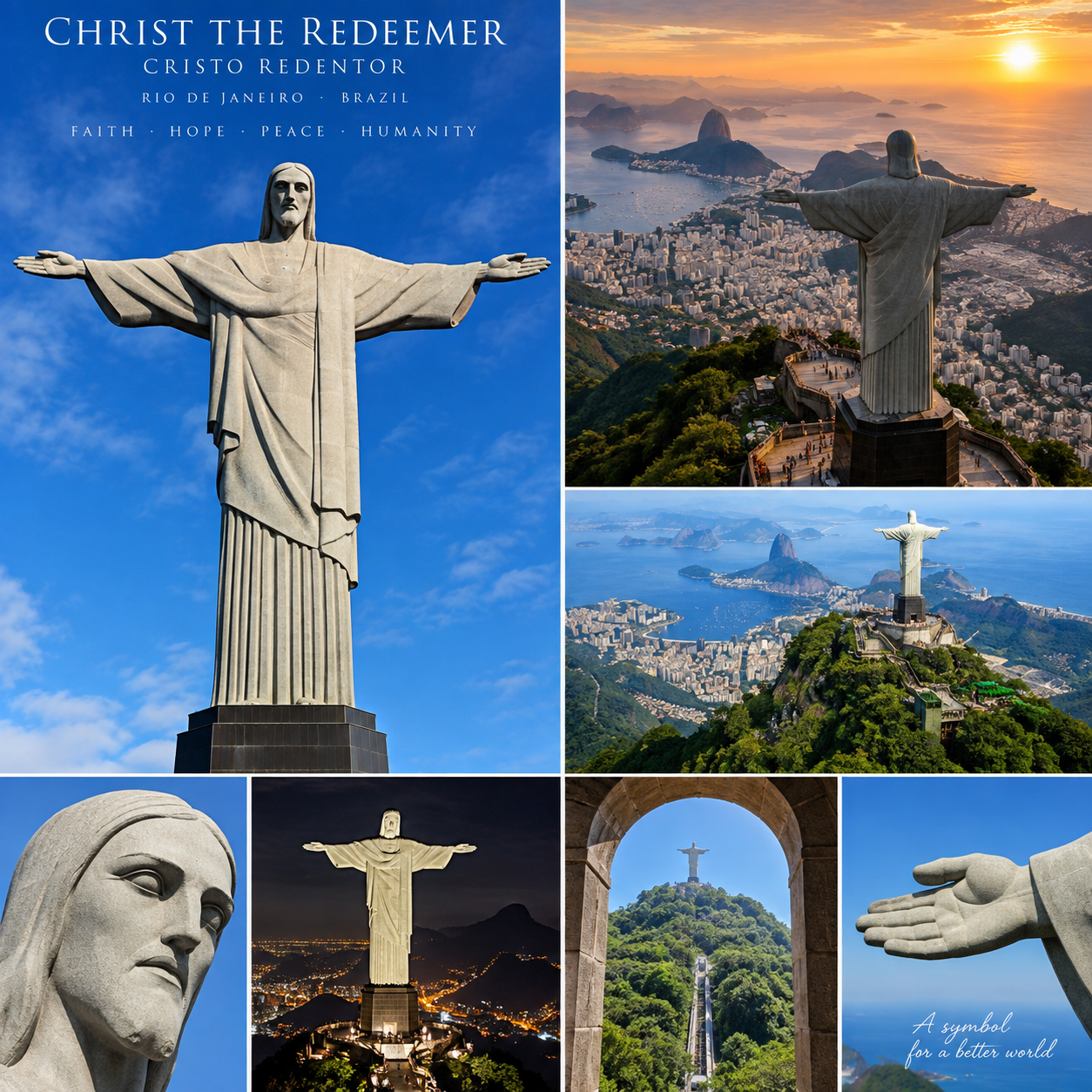
High above the city of Rio de Janeiro stands one of the world’s most recognizable monuments: Christ the Redeemer, or Cristo Redentor. With its enormous outstretched arms overlooking Rio, the monument has become a symbol of Brazil, Christianity, peace, welcome, and human creativity.
The famous statue, however, was not created by one person alone. Its story involved engineers, artists, architects, sculptors, politicians, religious leaders, workers, and supporters. Among the most important figures were Heitor da Silva Costa and Carlos Oswald.
Silva Costa was the Brazilian engineer who developed and coordinated the monument’s project, while Oswald played an important artistic role in developing the image of Christ with open arms. Their collaboration helped transform an ambitious idea into one of the most famous monuments on Earth.
The Dream of a Monument on Corcovado
The idea of placing a Christian monument on Corcovado Mountain in Rio de Janeiro developed during the early twentieth century.
Corcovado already had enormous visual importance. Rising above the city and surrounded by the dramatic landscape of Rio de Janeiro, the mountain offered a natural location for a monumental statue.
Supporters wanted a monument that would express Christian faith while also becoming a symbol visible across the city.
The project was ambitious. Building a huge statue on a steep mountain presented enormous engineering and logistical challenges.
The monument would have to withstand strong winds, heavy rain, and the difficult conditions of its elevated location.
It required not only an artistic vision but also sophisticated structural planning.
This was where Heitor da Silva Costa became particularly important.
Heitor da Silva Costa: The Engineer Behind the Project
Heitor da Silva Costa was born in Rio de Janeiro in 1873.
He trained as an engineer and became involved in the development of the monument that would eventually become Christ the Redeemer.
His contribution went far beyond simply designing a statue.
He helped transform the concept into a practical construction project.
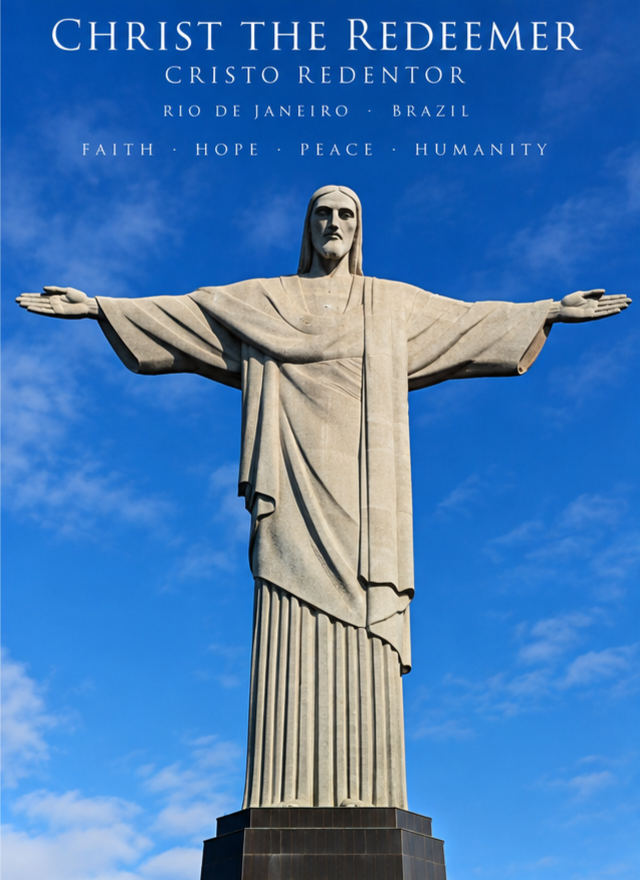
Silva Costa understood that the monument needed to combine artistic beauty with structural strength. The statue would stand approximately 30 meters tall, with an additional pedestal beneath it, making the complete monument an imposing structure on the summit of Corcovado.
The location itself created difficulties.
Materials and workers had to reach the mountaintop. Construction had to be carefully organized. The structure needed to be strong enough to withstand environmental forces while still producing the elegant appearance envisioned by its creators.
Silva Costa’s engineering background was therefore essential.
Carlos Oswald and the Artistic Vision
While Silva Costa focused heavily on the project’s engineering and organization, Carlos Oswald contributed significantly to its artistic conception.
Oswald was born in Florence, Italy, in 1882, and later became an important artist in Brazil.
He was known particularly for painting and engraving.
His collaboration with Silva Costa helped develop the visual identity of Christ the Redeemer.
One of the most recognizable features of the monument is Christ’s enormous outstretched arms.
The gesture has several meanings.
It can be interpreted as an embrace of humanity, a gesture of blessing, a symbol of peace, and a representation of Christian faith.
From certain perspectives, the figure’s body and arms also create the unmistakable shape of a cross.
Oswald’s artistic contribution was important in developing this concept.
A Monument That Could Be Seen From Across Rio
The location of Christ the Redeemer was not chosen randomly.
Corcovado Mountain provided an extraordinary natural platform.
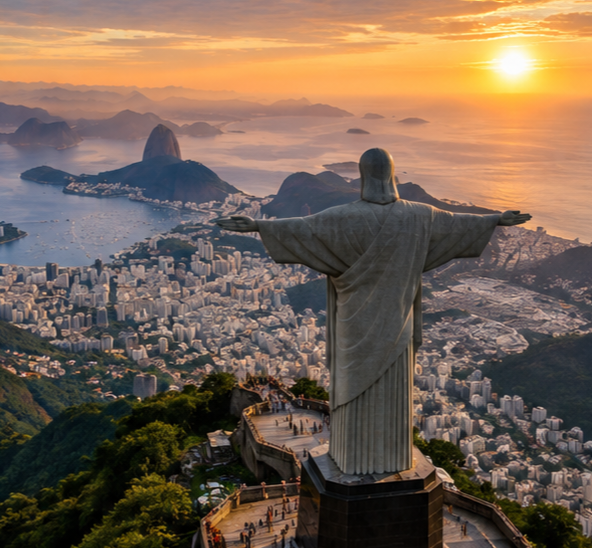
From the summit, the statue could overlook much of Rio de Janeiro.
The monument was intended to be visually powerful from a distance.
Silva Costa and Oswald had to consider how the figure would appear when viewed from different parts of the city.
A monument of this scale could not simply be designed like a small sculpture.
Its proportions had to work from far away.
The arms needed to be wide enough to create a dramatic silhouette.
The head and body needed to remain recognizable from distant viewpoints.
The monument also had to fit naturally into the mountainous landscape.
From Concept to Reality
Creating Christ the Redeemer required years of planning.
Silva Costa traveled to Europe to develop the project and seek technical and artistic assistance.
The project evolved during this process.
Different ideas were considered for the monument’s appearance.
Early concepts were different from the final statue.
One proposed concept envisioned Christ holding a globe and a cross. The design eventually developed into the open-armed figure that the world knows today.
This transformation demonstrates that major works of art often evolve through collaboration.
The final Christ the Redeemer was not simply the result of a single drawing.
It was the product of engineering, sculpture, artistic design, architecture, and construction.
Paul Landowski’s Role
Another important figure in the story was Paul Landowski, a French-Polish sculptor.
Landowski became responsible for the sculptural execution of the figure.
The collaboration between the Brazilian project team and Landowski was crucial.
Silva Costa had developed and coordinated the project, while Oswald contributed to the artistic concept. Landowski translated the design into a monumental sculptural form.
The process was technically complicated.
Because the statue was enormous, it could not simply be carved from a single block of stone.
Instead, the figure was constructed using a reinforced concrete structure and covered with a mosaic of soapstone.
The soapstone pieces created the characteristic surface of the monument.
Albert Caquot and Structural Engineering
The engineering challenges required additional expertise.
French engineer Albert Caquot contributed to the structural engineering of the monument.
The statue had to withstand powerful winds and the weight of its own enormous structure.
Its position at the summit of Corcovado made structural stability especially important.
The internal reinforced-concrete structure provided strength, while the external stone surface created the desired appearance.
The successful combination of these technologies allowed the monumental figure to rise above Rio.
Why Soapstone Was Used
One of the distinctive features of Christ the Redeemer is its surface.
The monument is covered with small triangular pieces of soapstone.
Soapstone was selected partly because it could be cut into small pieces and applied to the curved surfaces of the statue.
The material also contributed to the monument’s distinctive appearance.
Workers carefully placed the pieces over the structure.
The process required considerable patience.
The thousands of individual pieces created a mosaic-like surface.
This means that Christ the Redeemer is not only a giant statue but also an enormous piece of architectural and artistic craftsmanship.
Construction on Corcovado Mountain
Construction began in the 1920s and continued for several years.
Building on Corcovado was extremely challenging.
The mountain’s steep terrain made transporting materials difficult.
Workers had to operate at significant elevation, and the project required careful coordination.
The famous Corcovado Railway played an important role in transporting people and construction materials up the mountain.
The project demonstrated what could be achieved through cooperation between engineers, artists, workers, and organizations.
Every component had to work together.
A mistake in engineering could threaten the stability of the structure.
A mistake in sculpture could affect its appearance.
A mistake in transportation could delay construction.
The monument therefore represented a remarkable combination of different skills.
A Monument of Faith and Welcome
Christ the Redeemer was conceived as a Christian monument, but its symbolism eventually became much broader.
The open arms of Christ created an image of welcome.
From Rio de Janeiro, the statue appears to embrace the city.
For many visitors, the monument represents faith and spirituality.
For others, it represents peace, hope, Brazilian identity, or the beauty of Rio.
The symbolism of open arms is one of the reasons the monument became so universally recognizable.
The design does not present Christ as distant or threatening.
Instead, the figure appears to welcome those below.
The Inauguration in 1931
After years of planning and construction, Christ the Redeemer was officially inaugurated on October 12, 1931.
The completion of the monument was a major event in Brazil.
The statue immediately became an important landmark in Rio de Janeiro.
It was also an extraordinary demonstration of engineering and construction technology for its era.
Standing on Corcovado, the figure became part of the city’s skyline.
Over time, photographs of the monument spread around the world.
Christ the Redeemer gradually became one of the defining images of Brazil.
The Relationship Between Engineering and Art
The story of Silva Costa and Oswald demonstrates how engineering and art can work together.
Silva Costa’s engineering perspective helped make the monument physically possible.
Oswald’s artistic contribution helped shape its visual identity.
Neither aspect could have been ignored.
A beautiful design would not be enough if the structure could not stand safely.
Likewise, a technically strong structure would not have become one of the world’s most famous monuments without a powerful artistic concept.
Christ the Redeemer succeeded because different disciplines came together.
The Importance of Collaboration
One of the greatest lessons from the monument’s history is the importance of collaboration.
It is common for famous monuments to become associated with one name.
However, major projects are rarely the work of a single individual.
Christ the Redeemer involved numerous people.
Silva Costa coordinated the Brazilian project.
Oswald helped develop the artistic concept.
Landowski carried out the sculptural work.
Caquot contributed engineering expertise.
Thousands of workers helped construct and finish the monument.
The final result belongs to a team.
Carlos Oswald’s Artistic Legacy
Carlos Oswald’s contribution to Brazilian art extends beyond Christ the Redeemer.
He became known for his work as a painter and engraver.
His artistic career helped establish him as an important figure in Brazil’s cultural history.
His involvement with Christ the Redeemer, however, remains one of his most internationally recognized contributions.
The image of Christ with arms stretched outward became inseparable from Rio de Janeiro.
Whenever photographs of the city are shown, the monument often appears above the skyline.
The artistic concept developed during the project’s planning became an enduring symbol.
Heitor da Silva Costa’s Legacy
Heitor da Silva Costa’s name is permanently connected with one of Brazil’s greatest landmarks.
His achievement was not simply designing a monument.
He helped coordinate a project involving architecture, engineering, sculpture, transportation, materials, finance, and construction.
The success of Christ the Redeemer demonstrated the possibilities of large-scale engineering in Brazil during the early twentieth century.
His work remains an important part of Brazil’s architectural and engineering history.
Christ the Redeemer Becomes a Global Icon
As decades passed, Christ the Redeemer became much more than a religious monument.
It became a global symbol of Rio de Janeiro.
Millions of people have visited the site.
Millions more have seen photographs and videos of the statue.
The monument has appeared in books, documentaries, films, advertisements, travel guides, and countless photographs.
Its silhouette is instantly recognizable.
For many people around the world, seeing the statue immediately brings Rio de Janeiro to mind.
One of the New Seven Wonders
In 2007, Christ the Redeemer was selected as one of the New Seven Wonders of the World through a global public voting campaign.
The recognition further increased the monument’s international fame.
Although the statue was already an important Brazilian landmark, its inclusion among the New Seven Wonders reinforced its status as a global cultural icon.
The achievement also highlighted the extraordinary vision of the people who created it nearly a century earlier.
A Symbol of Rio de Janeiro
Today, Christ the Redeemer is closely associated with Rio’s natural and cultural landscape.
The monument stands above forests, mountains, beaches, and urban neighborhoods.
From the summit of Corcovado, visitors can see the dramatic geography of Rio de Janeiro.
This relationship between the statue and its environment is one of the monument’s greatest strengths.
It does not stand isolated on an empty plain.
Instead, it rises above one of the world’s most spectacular cities.
The natural landscape becomes part of the monument’s visual experience.
The Enduring Message of Open Arms
Perhaps the most powerful aspect of Christ the Redeemer is its gesture.
The arms are extended outward.
That simple pose has remained meaningful for generations.
It can symbolize welcome.
It can symbolize protection.
It can symbolize peace.
It can symbolize faith.
And it can symbolize humanity’s desire to create something greater than itself.
The idea developed through the work of Silva Costa, Oswald, and their collaborators continues to communicate without requiring words.
Conclusion
The story of Heitor da Silva Costa and Carlos Oswald is an important chapter in the history of Christ the Redeemer.
Silva Costa brought engineering knowledge, organization, and determination to the project.
Carlos Oswald contributed an artistic vision that helped shape the monument’s unforgettable image.
Their work was joined by the talents of Paul Landowski, Albert Caquot, and thousands of workers who transformed drawings and ideas into a monumental reality.
Christ the Redeemer was inaugurated in 1931, but its influence has lasted for generations.
Today, it stands as one of the most recognizable monuments in the world and one of Brazil’s most powerful symbols.
When visitors look toward the summit of Corcovado and see the enormous figure with its arms extended over Rio, they are seeing more than a statue.
They are seeing the result of imagination, engineering, artistic collaboration, craftsmanship, faith, and perseverance.
The monument’s enduring message is perhaps best expressed through its open arms: a symbol of welcome, hope, and humanity overlooking the extraordinary city of Rio de Janeiro.


Post Comment