Anton Flettner and the Making of the Synchropter: The Story of an Innovative Helicopter
When people think about the early history of helicopters, names such as Igor Sikorsky often come to mind. However, the development of the helicopter was the result of work by many inventors and engineers. Among them was Anton Flettner, a German engineer and inventor who developed one of the most unusual and influential rotor systems in helicopter history: the synchropter.
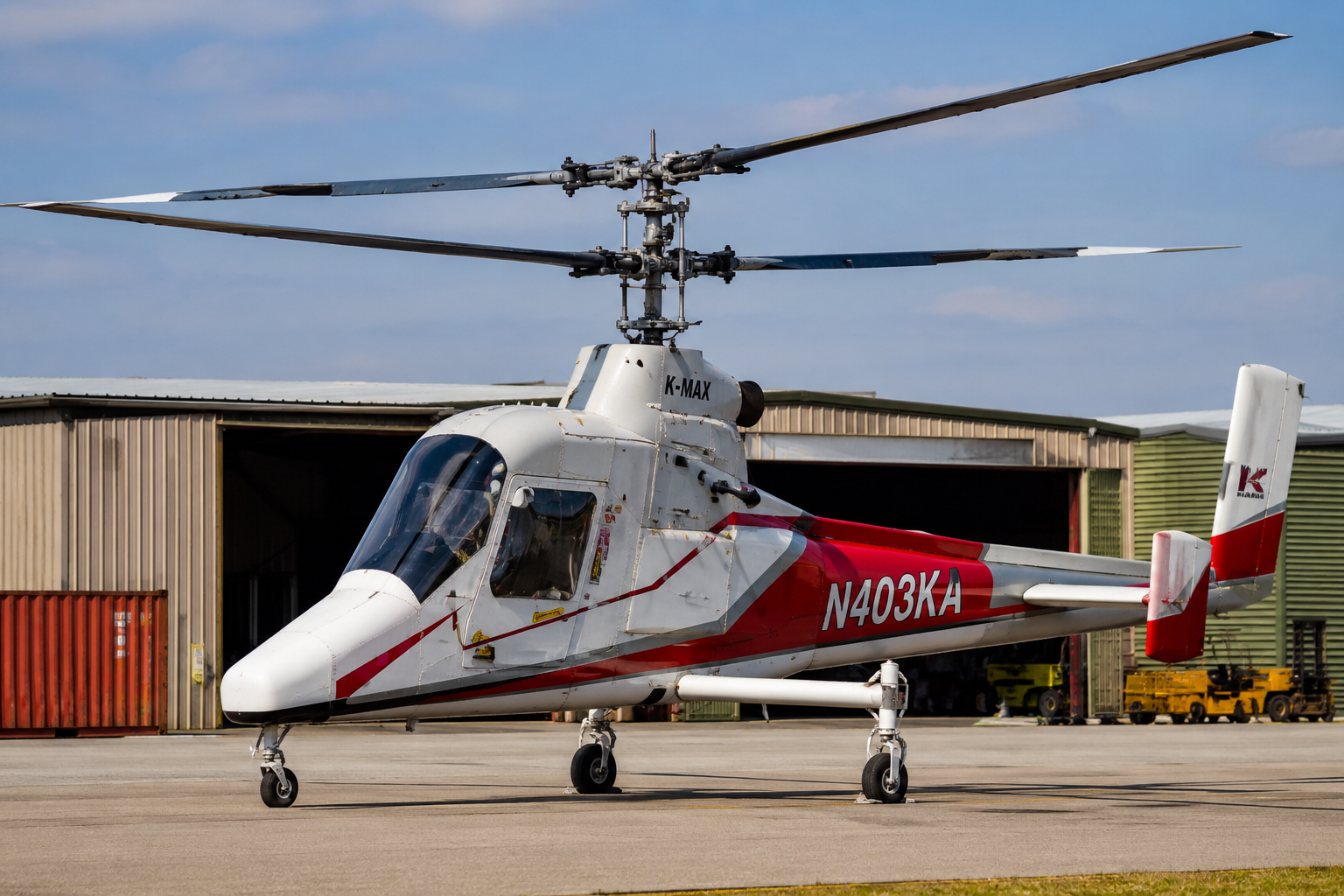
The synchropter uses two counter-rotating main rotors whose blades intermesh. Instead of using one large main rotor and a tail rotor, Flettner’s design placed two rotors close together and tilted their shafts outward slightly. The rotors turned in opposite directions, cancelling much of the torque produced by one another. This eliminated the need for a conventional tail rotor.
Flettner’s work eventually produced the Flettner Fl 265 and the better-known Flettner Fl 282 Kolibri, aircraft that became important milestones in the development of rotary-wing aviation.
—
Who Was Anton Flettner?
Anton Flettner (1885–1961) was an engineer and inventor from Germany who worked on many different technologies before becoming famous for his rotorcraft.
His interests were not limited to helicopters. He also worked on mechanical inventions and maritime technology. One of his best-known early ideas was the Flettner rotor, a rotating cylinder that could use the Magnus effect to generate aerodynamic force. His work on rotor technology eventually influenced his interest in aircraft capable of vertical flight.
During the 1920s, Flettner increasingly focused on aviation. He established an aircraft company in Berlin and began experimenting with unconventional rotorcraft.
At the time, aviation was dominated by fixed-wing airplanes. Helicopters were still experimental machines, and engineers had not yet agreed on the best way to produce lift, control torque, and achieve stable vertical flight.
Flettner believed that unconventional rotor arrangements could solve some of these problems.
—
The Problem With a Conventional Helicopter
To understand Flettner’s idea, it is important to understand one major problem with a single-rotor helicopter.
When the main rotor spins, it produces torque on the helicopter’s fuselage in the opposite direction. If nothing counteracts this torque, the fuselage would rotate.
Modern conventional helicopters solve this problem with a tail rotor. The tail rotor produces sideways thrust that counters the torque of the main rotor.
But a tail rotor has disadvantages. It requires additional mechanical components and consumes engine power. It also extends the helicopter’s overall length and can be vulnerable to damage.
Flettner approached the problem differently.
Instead of using one rotor and a tail rotor, he proposed using two main rotors rotating in opposite directions.
If the two rotors could be synchronized correctly, the torque produced by one rotor could be balanced by the torque produced by the other.
This was the basic principle behind the synchropter.
—
What Is a Synchropter?
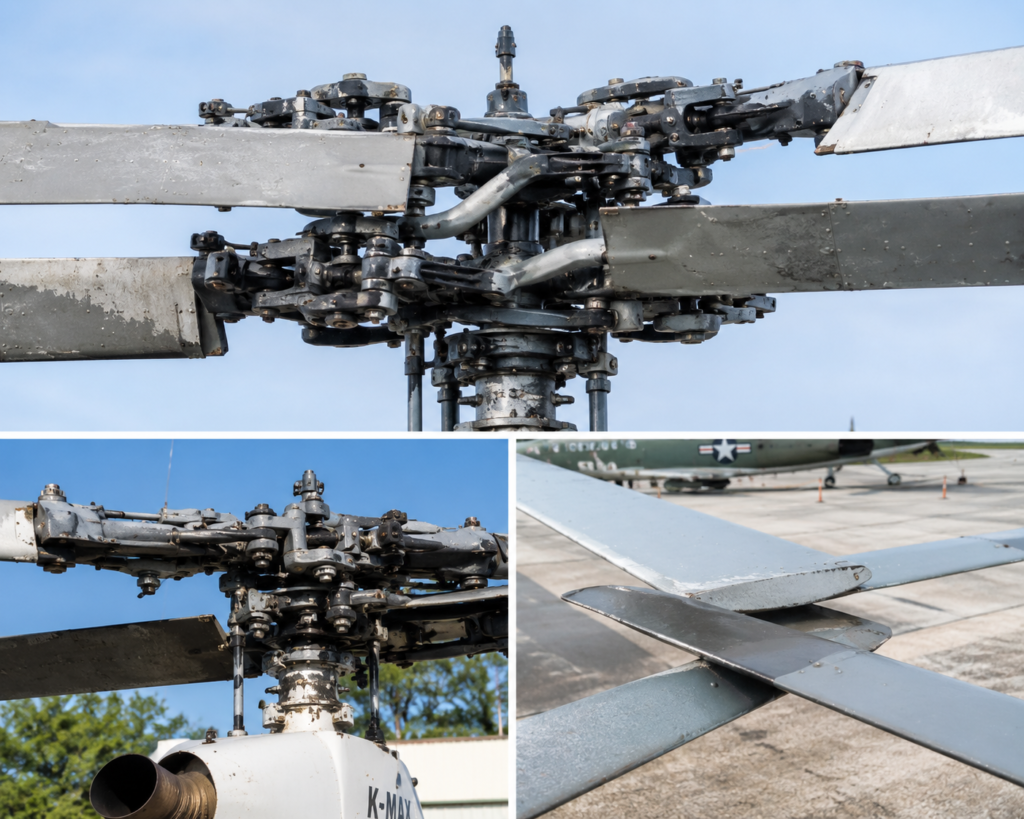
A synchropter, also called an intermeshing-rotor helicopter, has two main rotors mounted close together.
The rotor shafts are positioned at an angle, allowing the blades to pass through the same general area without colliding. The two rotors rotate in opposite directions and are mechanically synchronized.
The word “intermeshing” describes the way the rotor blades appear to fit together as they rotate.
From above, the system can look almost like two spinning gears.
The rotors are carefully synchronized through the transmission so that the blades arrive at their closest points at precisely the correct times. This is extremely important because the rotor blades operate very close to each other.
The arrangement provides several advantages:
No conventional tail rotor is required.
Rotor torque can be balanced.
The helicopter can be relatively compact.
The two rotors can provide substantial lifting capability.
The design can provide good maneuverability.
However, it also creates engineering challenges. The transmission and synchronization system must be extremely precise, and the rotor blades must maintain safe clearance from one another.
—
Flettner’s Early Helicopter Experiments
Flettner did not immediately create the successful synchropter.
During the 1930s, he experimented with several different rotorcraft concepts. His Fl 184 was an autogyro design intended for reconnaissance-related work, while the Fl 185 explored a combination of helicopter and gyroplane concepts.
These experiments helped Flettner understand the challenges associated with vertical flight.
He was searching for a practical way to create a rotorcraft that could hover, move forward, and operate without the complications of a conventional tail rotor.
His work eventually led to the breakthrough idea of two intermeshing counter-rotating rotors.
—
The Flettner Fl 265
The first major aircraft associated with Flettner’s synchropter system was the Flettner Fl 265.
Flettner began developing the Fl 265 in the late 1930s. The German Navy ordered six aircraft for evaluation, with interest in their possible use for naval reconnaissance and anti-submarine duties.
The Fl 265 used two two-bladed rotors. Their shafts were positioned close together and angled outward. The rotors rotated in opposite directions and were synchronized.
The prototype first flew in May 1939.
The aircraft represented an important step because Flettner demonstrated that the intermeshing rotor concept could actually be used in a practical helicopter.
The design also demonstrated an important capability involving the transition between powered helicopter flight and autorotation. NASA’s historical material identifies the Fl 265 as a pioneering example in this area.
—
The Challenges of the Fl 265
The Fl 265 was innovative, but it was not perfect.
The biggest danger was obvious: two sets of rotor blades were operating extremely close to one another.
If synchronization failed or the aircraft experienced an unexpected movement, the blades could collide.
One early Fl 265 was destroyed after its rotor blades struck one another. Other prototypes were subsequently used for testing and evaluation.
Despite these difficulties, testing showed that the basic concept had significant potential.
The aircraft was also tested for naval operations, including operations from ships. Such experiments were important because helicopters could potentially perform reconnaissance without requiring a conventional aircraft carrier runway or catapult system.
The lessons learned from the Fl 265 directly influenced Flettner’s next helicopter.
—
From Fl 265 to Fl 282 Kolibri
Flettner’s next major design was the Fl 282 Kolibri, meaning “Hummingbird.”
The Fl 282 was an improved version of the Fl 265 and retained the intermeshing rotor principle.
The aircraft was designed to be more practical and versatile. Its development attracted considerable interest from German military authorities, particularly the German Navy.
The Fl 282 could be used for observation, reconnaissance and other duties where a small helicopter could provide advantages over fixed-wing aircraft.
Its compact design made it particularly interesting for shipboard operations.
The first prototypes were tested during 1941, including takeoffs and landings from a platform mounted on the German cruiser Köln.
This demonstrated one of the important advantages of helicopters: they could operate from relatively small spaces.
—
How the Fl 282 Synchropter Worked
The Fl 282’s rotor system was its most important feature.
A single engine provided power to the transmission. The transmission divided the power between the two rotor shafts, which rotated in opposite directions.
The two rotors were carefully synchronized.
As one rotor blade moved through a particular position, the other rotor was positioned so that the blades did not collide.
This required a sophisticated mechanical transmission.
The two rotors also helped cancel the torque effects that would normally require a tail rotor.
In other words, Flettner solved the torque problem by using two main rotors instead of one main rotor plus a tail rotor.
This is what makes the synchropter so distinctive.
—
Why Was the Synchropter Important?
Flettner’s design was important because it showed that there was more than one way to build a helicopter.
The conventional helicopter configuration eventually became dominant: one main rotor combined with a tail rotor.
But the synchropter offered another solution.
Its intermeshing rotors provided several benefits.
1. No Tail Rotor
The most obvious advantage was the elimination of the tail rotor.
Because the two main rotors rotated in opposite directions, their torque effects could largely cancel each other.
2. Compact Design
The two rotors could be positioned close together. This made the aircraft relatively compact compared with some other twin-rotor arrangements.
3. Good Lifting Capability
The two rotors together could provide significant lift while maintaining a compact footprint.
4. Maneuverability
The configuration can provide good control characteristics and maneuverability, making the concept attractive for certain helicopter applications.
5. Efficient Use of the Airframe
Without a long tail rotor system, the aircraft could devote more of its design to the central fuselage and lifting system.
—
The Limitations
The synchropter was not a perfect solution.
The biggest challenge was the complex transmission.
The two rotors have to remain synchronized. A mechanical failure could have serious consequences because the blades operate in overlapping paths.
The rotor system also creates complicated aerodynamic interactions. The two rotors influence each other’s airflow.
Therefore, designing the blades, gearbox and synchronization system requires considerable engineering knowledge.
This explains why the synchropter never became as common as the conventional single-main-rotor helicopter.
—
World War II and the Flettner Helicopters
Flettner’s helicopters were developed during the period leading into and during World War II.
Military authorities were interested in helicopters because they could perform tasks that conventional airplanes could not perform easily.
A helicopter could hover, land in a small area, take off vertically and observe an area from a relatively low speed.
For naval forces, a small helicopter could potentially operate from a ship and search for submarines or observe the surrounding sea.
The Fl 265 and Fl 282 therefore attracted military interest.
However, the war also created enormous manufacturing and logistical difficulties.
Although production plans for the Fl 282 were ambitious, only a limited number were actually constructed. The Smithsonian National Air and Space Museum records that 23 Fl 282s were constructed by Flettner’s small design firm between 1941 and 1944.
Thus, the Fl 282 remained an important experimental and limited-production aircraft rather than becoming a mass-produced helicopter.
—
Anton Flettner’s Legacy
Although Flettner’s helicopters did not become the dominant helicopter design, his ideas did not disappear.
The intermeshing rotor concept was later developed further by other engineers and companies.
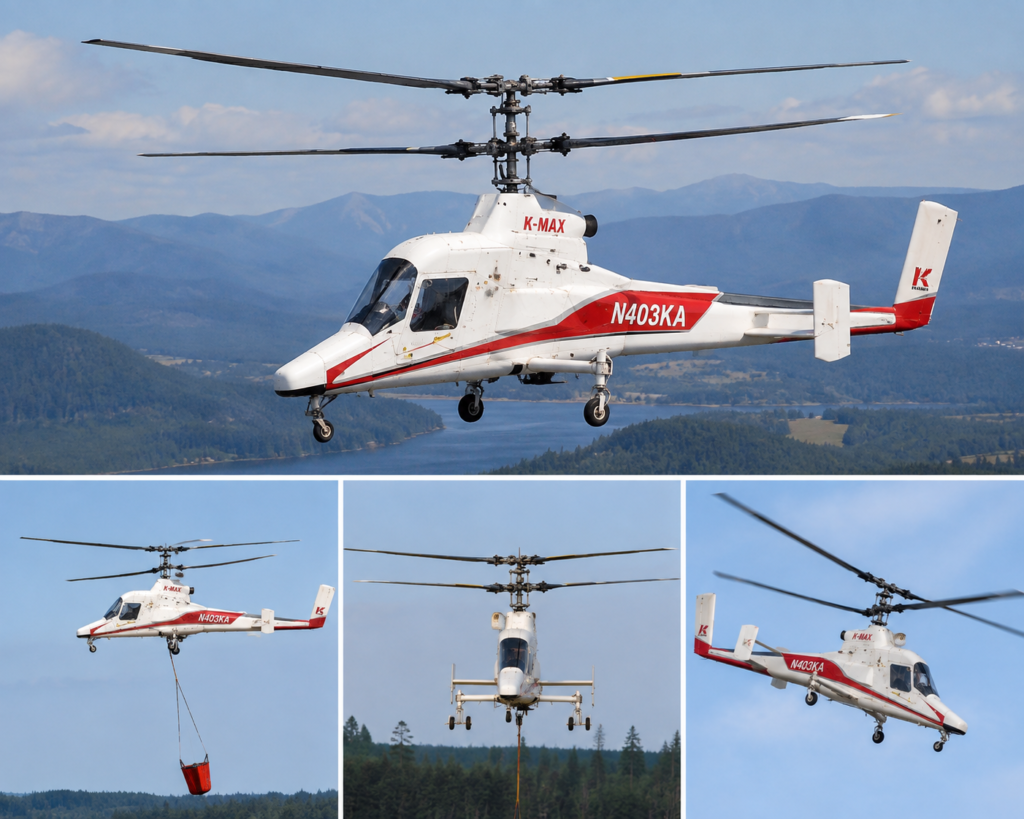
One of the most famous modern examples is the Kaman K-MAX, which uses an intermeshing rotor arrangement.
The principle remains recognizable: two rotors rotate in opposite directions, their blades intermesh, and a tail rotor is unnecessary.
This demonstrates that Flettner’s idea was not simply a World War II experiment. It became a rotorcraft configuration with continuing practical value.
Research into synchropter and intermeshing-rotor aircraft has also continued in modern aviation, including unmanned aircraft.
—
Why Anton Flettner Matters in Helicopter History
Anton Flettner’s greatest contribution was not simply building one successful helicopter.
His importance lies in thinking differently about the helicopter rotor.
At a time when engineers were still trying to understand how practical helicopters should be designed, Flettner rejected the idea that a helicopter needed to follow a single standard configuration.
He asked a different question:
What if two rotors could work together instead of using one rotor and a tail rotor?
The answer was the synchropter.
His Fl 265 proved that the concept could fly. His Fl 282 developed the concept further and demonstrated its usefulness in military and naval applications.
The design had serious technical challenges, but it also showed remarkable engineering creativity.
—
Conclusion
Anton Flettner and the making of the synchropter represent an important chapter in the history of helicopter development.
Flettner’s experiments during the 1930s eventually led to the Fl 265, one of the pioneering helicopters to use synchronized intermeshing rotors. Its successor, the Fl 282 Kolibri, became an even more advanced example of the concept.
The synchropter’s basic idea is simple to describe but difficult to engineer: two rotors, rotating in opposite directions, positioned close together so their blades intermesh without touching.
This arrangement eliminates the need for a conventional tail rotor and provides a distinctive alternative to the traditional helicopter configuration.
Although Flettner’s helicopters were developed during a difficult period of aviation history and were produced only in limited numbers, their influence continued long after the war.
Today, intermeshing-rotor helicopters such as the K-MAX demonstrate that Flettner’s unusual idea still has practical applications.
Anton Flettner’s story is therefore more than the story of one helicopter. It is the story of an inventor who looked at one of aviation’s biggest problems—how to control the torque of a helicopter rotor—and solved it with an entirely different approach.
His synchropter became one of the most distinctive rotorcraft designs in aviation history, and the basic principle remains a fascinating example of how innovative engineering can create an alternative path to the future of flight.



Post Comment