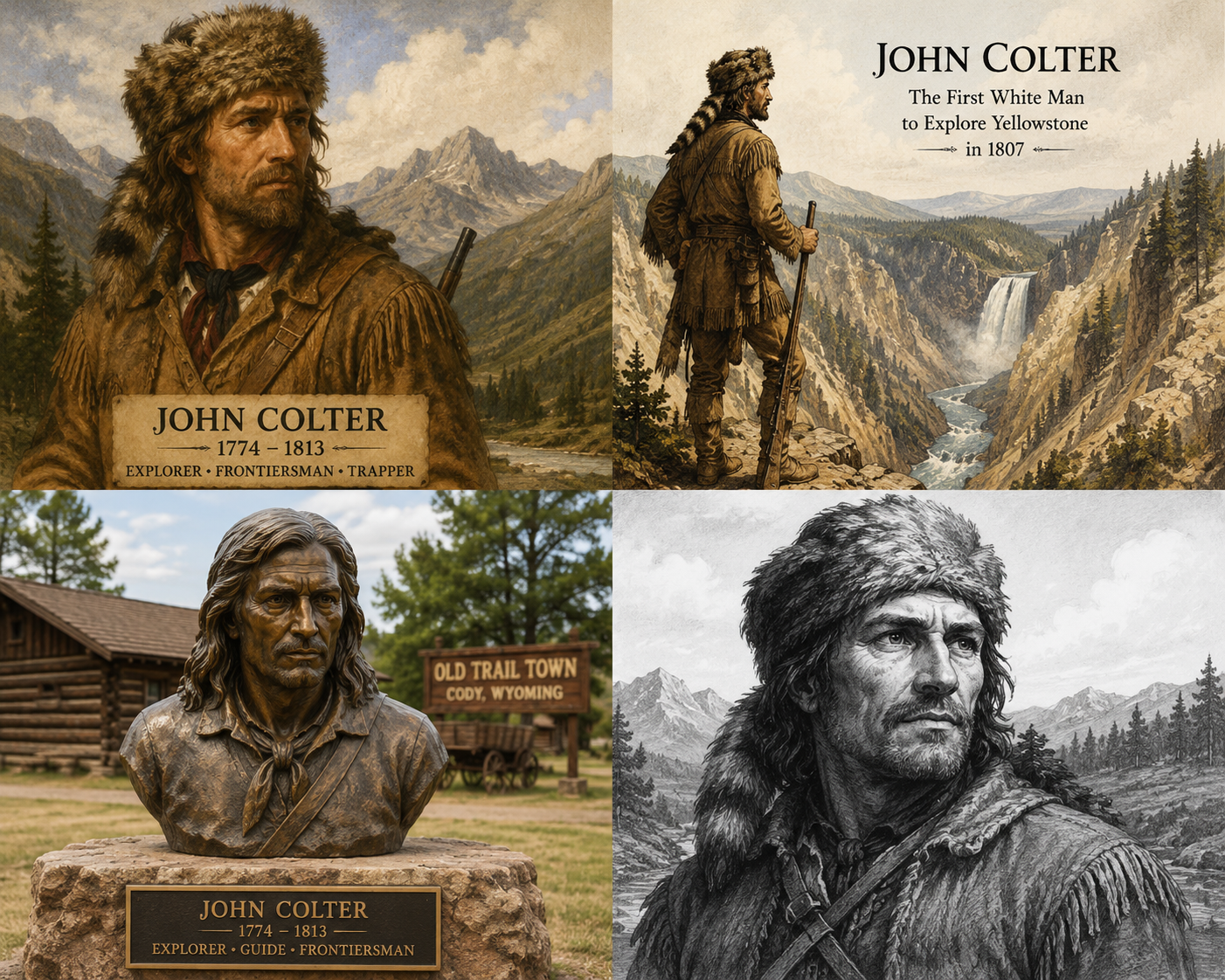
John Colter: The Fearless Explorer Who Discovered the Wild Heart of the American West
John Colter was one of the most remarkable frontiersmen in early American history. A member of the famous Lewis and Clark Expedition, Colter later traveled deep into the Rocky Mountains, explored regions that would eventually become Yellowstone National Park, and survived experiences that sound almost unbelievable.
Born around 1774 in Virginia, Colter grew up during a period when the American frontier was expanding rapidly. Much of the land west of the Mississippi River was unfamiliar to European Americans. Mountains, forests, rivers, wildlife, and Native American nations dominated the landscape. For adventurous men like Colter, the West represented both opportunity and danger.
Colter became famous not because he held a powerful political position or commanded an army, but because of his courage, endurance, wilderness skills, and willingness to travel into places few Americans had seen.
Early Life of John Colter
John Colter was probably born around 1774 in the Colony of Virginia. Details about his early childhood are limited, and historians do not know everything about his family or education.
Like many frontiersmen of his generation, Colter developed skills that were extremely valuable in the wilderness. Hunting, tracking, navigating difficult terrain, handling firearms, and surviving with limited supplies were essential abilities on the American frontier.
By the beginning of the nineteenth century, the United States was looking westward. President Thomas Jefferson wanted Americans to learn more about the enormous territory acquired through the Louisiana Purchase.
This ambition led to one of the most famous expeditions in American history.
Joining the Lewis and Clark Expedition
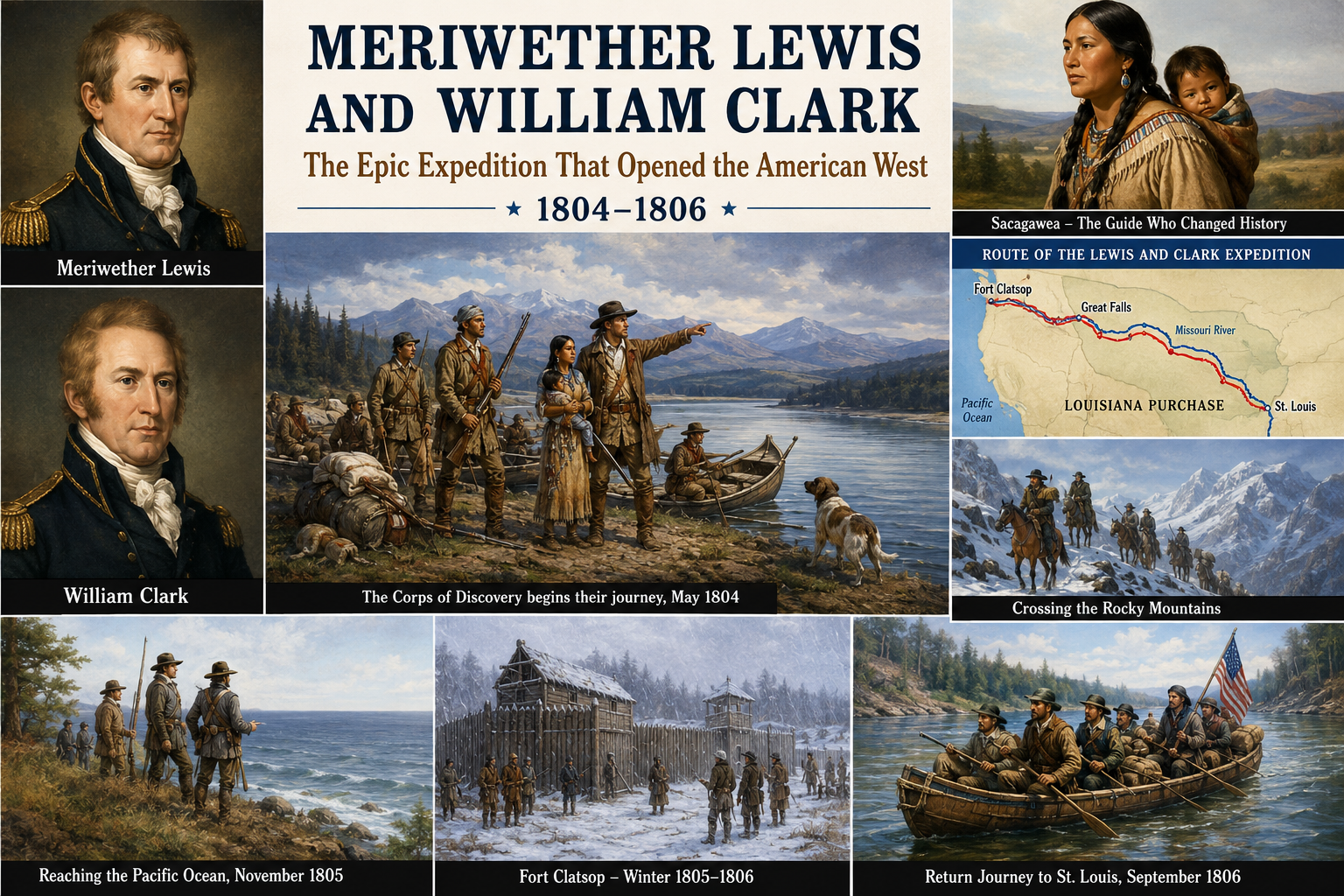
In 1804, Meriwether Lewis and William Clark began their historic expedition across the newly acquired western territory.
The expedition was officially known as the Corps of Discovery. Its mission included exploring the geography of the region, establishing relationships with Native American nations, studying plants and animals, and searching for a practical route to the Pacific Ocean.
John Colter joined the expedition as a private soldier.
Colter proved to be a valuable member of the group. He was familiar with frontier life and possessed the physical toughness required for a journey lasting thousands of miles.
The expedition traveled up the Missouri River, crossed the Rocky Mountains, and eventually reached the Pacific Ocean before beginning its return journey.
For Colter, however, the expedition was only the beginning.
Leaving the Expedition
When the Lewis and Clark Expedition returned in 1806, Colter had already developed a strong attraction to the western wilderness.
During the return journey, he encountered a group of fur trappers. Colter received permission to leave the expedition and join them.
This decision changed his life.
Instead of returning east with Lewis and Clark, Colter remained in the wilderness and began exploring the Rocky Mountain region.
At a time when maps of the American West were incomplete, Colter traveled through enormous areas of rugged terrain.
He became one of the earliest Americans known to explore portions of what is now Wyoming, Montana, and surrounding regions.
Exploring the Yellowstone Region
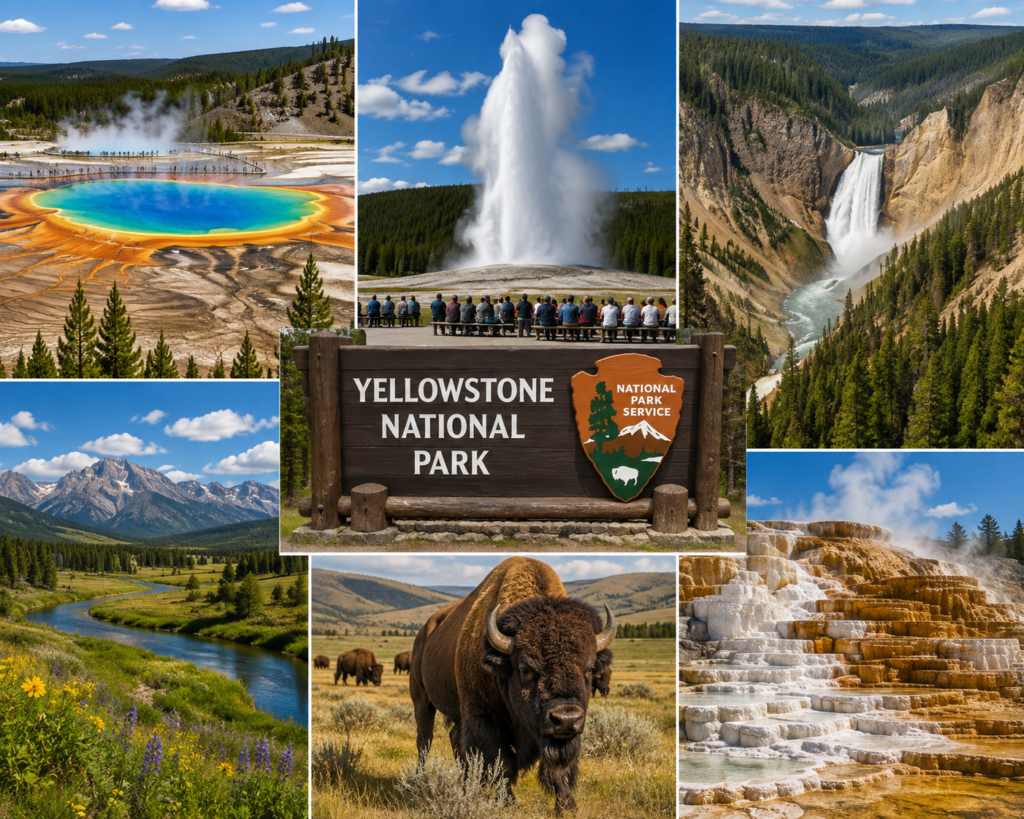
One of the most important parts of Colter’s story concerns the Yellowstone region.
Today, Yellowstone National Park is famous around the world for its geysers, hot springs, waterfalls, mountains, forests, and wildlife.
But in the early nineteenth century, few Americans knew what existed in that remote region.
Colter reportedly traveled through areas associated with the present-day Yellowstone region.
When he returned and described what he had seen, his stories were difficult for some people to believe.
He reportedly described strange landscapes containing hot springs, steaming ground, and other unusual geological features.
Because these descriptions sounded almost fantastic, some people mocked the reports.
The term “Colter’s Hell” was later associated with the region because of the stories about hot springs and volcanic-looking landscapes.
Modern knowledge of Yellowstone’s geology makes Colter’s reports much easier to understand. Yellowstone sits over a massive volcanic system, producing the geothermal features that make the park unique.
Although historians continue to examine exactly where Colter traveled and which features he personally witnessed, his name remains strongly connected with the early exploration of the Yellowstone region.
Life as a Mountain Man
Colter’s life was not simply about discovering beautiful landscapes.
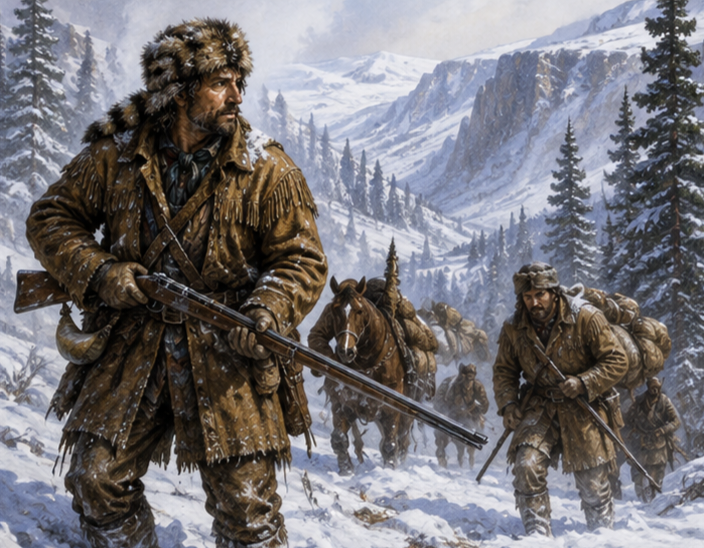
The Rocky Mountains were dangerous.
Travelers faced freezing temperatures, hunger, difficult rivers, steep mountains, wild animals, illness, and conflicts with different groups.
Colter worked as a hunter and trapper and spent long periods away from established settlements.
Mountain men had to become highly independent. They often traveled with very little equipment and depended on their ability to find food and water.
A mistake could become fatal.
Colter’s reputation grew because he repeatedly survived situations that would have defeated less experienced travelers.
The Famous Colter’s Run
Perhaps the most famous story associated with John Colter is known as Colter’s Run.
According to the traditional account, Colter encountered a group of Blackfeet warriors while traveling through the northern Rocky Mountain region.
He was captured and stripped of most of his clothing.
The story says that the warriors allowed Colter to run while they chased him.
What followed became one of the most famous survival stories in American frontier history.
Colter reportedly ran for miles across rough terrain while being pursued. He eventually reached the Madison River.
According to the traditional version of the story, he hid beneath floating logs or brush in the river and managed to escape.
He then continued traveling until he reached safety.
The story is extraordinary, but historians have pointed out that some details may have been exaggerated over time.
Frontier stories were often retold many times, and details could change with each telling.
Nevertheless, the story demonstrates how Colter became a symbol of endurance and survival.
A Life of Danger
Colter’s experiences were not isolated incidents.
The Rocky Mountain frontier was a place where survival depended on constant awareness.
Native American nations had their own territories, cultures, political interests, and relationships with traders and explorers. Competition over hunting grounds and resources could create conflict.
At the same time, many Native American communities traded with, guided, or interacted peacefully with European-American travelers.
It is therefore important to understand Colter’s story within the larger history of interactions between Indigenous peoples, explorers, traders, and settlers.
The American West was not an empty wilderness waiting to be discovered. It was home to numerous Native American nations with long histories in the region.
Colter and the Fur Trade
The fur trade played a major role in bringing American and European travelers into the Rocky Mountains.
Beaver fur was especially valuable because it was used to make fashionable felt hats.
Trappers traveled deep into the wilderness looking for beaver and other valuable animals.
John Colter participated in this world.
The work was physically demanding. Trappers could spend months or years away from settlements.
They had to understand animal behavior, geography, weather, and the habits of different Indigenous communities.
Colter’s wilderness knowledge made him particularly valuable in this environment.
Why Colter’s Yellowstone Story Matters
The significance of John Colter’s exploration is not simply that he may have visited places that later became Yellowstone National Park.
His story represents an important moment in the history of American exploration.
At the beginning of the nineteenth century, the geography of the American West was still poorly understood by the United States government and many Americans living east of the Mississippi.
Travelers like Colter provided information about mountains, rivers, wildlife, and geothermal areas.
His descriptions helped create curiosity about the Rocky Mountain wilderness.
More than half a century later, formal expeditions would travel through the Yellowstone region and produce detailed reports and maps.
In 1872, Yellowstone became the world’s first national park.
Although Colter did not live to see that transformation, his early travels became part of the area’s exploration history.
The Legacy of John Colter
John Colter died around 1812 or 1813, although historical records about his final years are limited.
His life was relatively short, but his reputation became enormous.
Over time, books, newspapers, historians, and storytellers transformed Colter into one of the legendary figures of the American frontier.
His story has been remembered for several reasons.
First, he was an important participant in the Lewis and Clark Expedition.
Second, he continued exploring after the expedition ended.
Third, his travels connected him with some of the earliest accounts of the Yellowstone region.
Finally, stories such as Colter’s Run turned him into a symbol of courage and survival.
John Colter’s Place in American History
John Colter’s life represents the adventurous and often dangerous world of the early nineteenth-century American frontier.
He lived at a time when maps were incomplete, transportation was difficult, and vast areas of the West remained unfamiliar to American settlers.
His decision to remain in the wilderness after the Lewis and Clark Expedition demonstrates the adventurous spirit that drove many mountain men.
But his story should also be viewed critically.
Some accounts of Colter’s adventures were recorded years after the events and may contain exaggerations.
Historians therefore distinguish between documented facts and traditional frontier legends.
Even with those uncertainties, Colter’s importance remains.
He was a real explorer who traveled through some of the most difficult landscapes in North America and contributed to the growing knowledge of the Rocky Mountain West.
Conclusion
John Colter was more than a legendary mountain man.
He was a soldier, explorer, hunter, trapper, and survivor whose life became intertwined with one of the most important chapters in American exploration.
His journey with Lewis and Clark introduced him to the enormous western wilderness. Rather than returning to ordinary life afterward, he chose to remain in the mountains and explore farther.
His reported travels through the Yellowstone region, his experiences in the fur trade, and the legendary story of Colter’s Run made him one of the most memorable figures of the American frontier.
Today, Yellowstone is visited by millions of people who come to see its geysers, hot springs, wildlife, and dramatic landscapes. More than two centuries ago, travelers like John Colter entered that remote world with little knowledge of what awaited them.
His story reminds us of a time when exploration meant stepping into the unknown with limited maps, limited supplies, and enormous personal risk.
John Colter’s life ended long before the modern era of national parks and tourism, but his name remains connected to the history of the American West.
He represents a generation of explorers who pushed into unfamiliar territory and helped reveal the extraordinary landscapes of North America to a wider world.
Post Comment