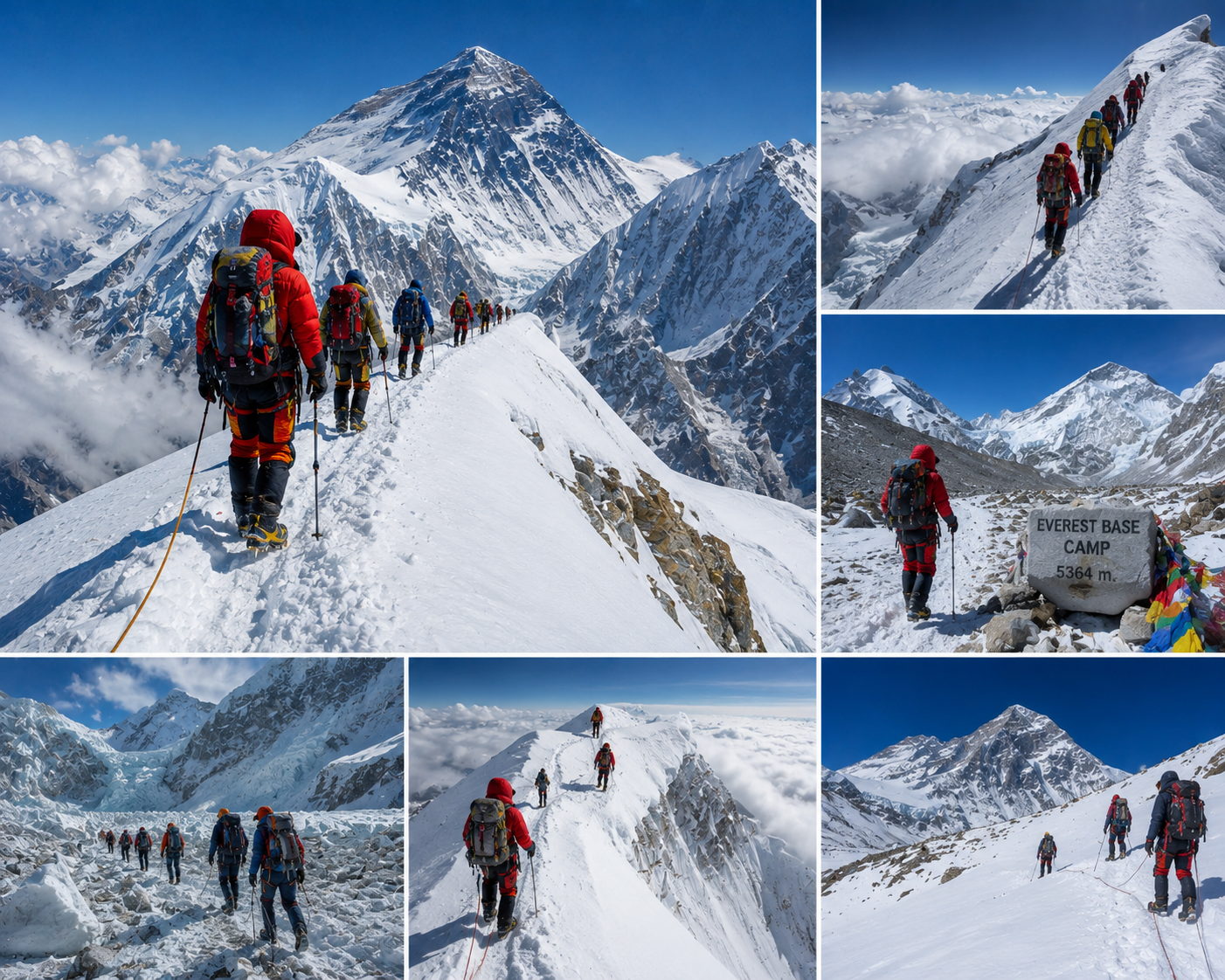
Jim Whittaker: The First American to Conquer Mount Everest
Introduction
On May 1, 1963, American mountaineer Jim Whittaker stepped onto the summit of Mount Everest and became the first American to reach the highest point on Earth. It was a historic achievement that transformed him from a determined climber into one of the most celebrated mountaineers in American history.
Whittaker’s achievement was not simply a story about reaching a mountain summit. It was a story about preparation, teamwork, courage, risk, leadership, and perseverance. The climb took place during an era when Himalayan mountaineering was still extremely dangerous, and Everest remained one of the greatest challenges in the world.
Whittaker climbed Everest as part of the 1963 American Mount Everest Expedition. His success helped establish a new chapter in American mountaineering and inspired generations of climbers to pursue difficult goals.
Early Life of Jim Whittaker
Jim Whittaker was born on February 10, 1929, in Seattle, Washington. Growing up in the Pacific Northwest gave him an early connection with mountains and the outdoors.
The region surrounding Seattle is famous for its dramatic landscapes, forests, and mountains. For Whittaker, the outdoors became more than a place for recreation. It became a place where he developed the physical strength, confidence, and determination that would eventually define his career.
As a young man, Whittaker developed a passion for climbing. He learned that mountaineering required much more than physical strength. Climbers had to understand weather, terrain, equipment, teamwork, and their own limitations.
These lessons became extremely important later when he faced the dangers of the Himalayas.
From Climbing to Leadership
Whittaker’s climbing career developed during a period when organized mountaineering was becoming increasingly important in the United States.
He became associated with the National Outdoor Leadership School and the Recreational Equipment, Inc. (REI) outdoor community. Whittaker was especially important in the development of REI. He became its first full-time employee and eventually served as its president.
His experience in the mountains helped shape his approach to leadership. He believed that outdoor adventure could teach people valuable lessons about responsibility, cooperation, and perseverance.
But the greatest challenge of his early climbing career was still ahead.
The 1963 American Mount Everest Expedition
By the early 1960s, Everest had already become one of the world’s most famous mountains.
Mount Everest rises approximately 8,849 meters (29,032 feet) above sea level. At such extreme altitude, the human body struggles to receive enough oxygen. Temperatures can become dangerously low, winds can be violent, and avalanches and falling ice create constant risks.
The first confirmed ascent of Everest had been made in 1953 by New Zealand climber Edmund Hillary and Sherpa Tenzing Norgay.
Ten years later, American climbers wanted to achieve their own historic ascent.
The 1963 American Mount Everest Expedition was led by Norman Dyhrenfurth. The expedition included experienced American climbers as well as Sherpa climbers who possessed invaluable knowledge of Himalayan terrain.
Jim Whittaker was selected as one of the expedition’s strongest climbers.
The Journey Toward Everest
An Everest expedition was not simply a matter of flying to Nepal and climbing directly to the summit.
The expedition required enormous amounts of equipment, food, oxygen, climbing gear, tents, ropes, and other supplies. Teams had to establish camps at different elevations so that climbers could gradually adapt to the thin air.
Acclimatization was essential.
At lower elevations, climbers could carry heavy loads and move relatively normally. As they climbed higher, every movement became harder. Breathing became difficult, and even simple physical tasks required enormous effort.
The team gradually moved upward, establishing camps and preparing the route.
For Whittaker, the summit was always the ultimate goal, but reaching it required patience.
The Final Push
In the spring of 1963, the American expedition prepared for its summit attempts.
Whittaker was chosen for one of the summit teams. His climbing partner was Nawang Gombu, an experienced Sherpa mountaineer.
The relationship between Western climbers and Sherpa climbers was crucial to the expedition. Sherpas had extraordinary experience working in the Himalayas and played an essential role in carrying supplies, establishing camps, fixing routes, and supporting summit attempts.
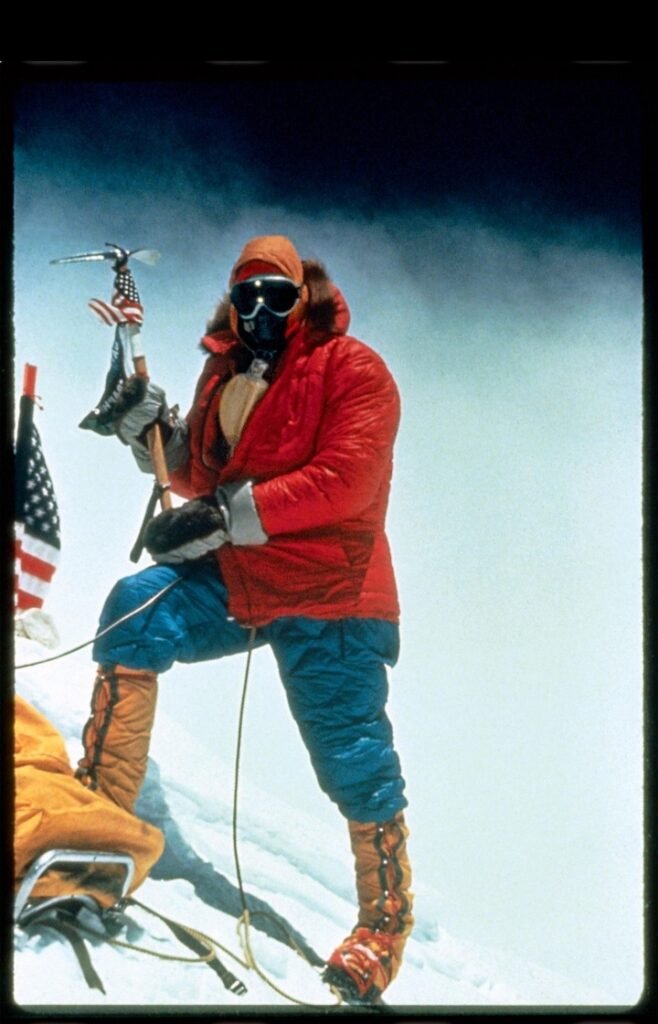
Whittaker and Gombu climbed together toward the summit.
The higher they climbed, the more severe the environment became.
At extreme altitude, climbers face a condition commonly known as the “death zone.” Above approximately 8,000 meters, the amount of oxygen available to the body is extremely low. The body begins to deteriorate, and remaining at such altitude for long periods can be fatal.
Every step toward the summit therefore carried enormous risk.
May 1, 1963: A Historic Summit
On May 1, 1963, Jim Whittaker and Nawang Gombu reached the summit of Mount Everest.
With that step, Whittaker became the first American to stand on the summit of Everest.
The achievement was celebrated across the United States.
For Whittaker, however, the summit was not the end of the adventure. The descent was still extremely dangerous.
A successful summit does not guarantee survival. Climbers can become exhausted, suffer frostbite, lose their route, or encounter worsening weather while descending.
Whittaker and Gombu eventually made their way safely back down.
The expedition had achieved one of the most important milestones in American mountaineering.
The Meaning of the Everest Achievement
Whittaker’s achievement represented much more than a national record.
Everest had become a symbol of human ambition. People around the world watched climbers attempt to overcome an environment that seemed almost impossible for human beings to survive in.
Whittaker’s success demonstrated the importance of preparation and teamwork.
It also showed that major achievements are rarely accomplished by one person alone.
Although Whittaker became the public face of the expedition, the success depended on an entire network of climbers, Sherpas, expedition leaders, doctors, logistics teams, and supporters.
A New Chapter in American Mountaineering
After Everest, Whittaker became a prominent figure in American outdoor culture.
He used his experience to encourage people to explore nature and challenge themselves.
His philosophy was not simply about climbing the highest mountains. It was about discovering what people could accomplish when they combined preparation with determination.
Whittaker became an influential speaker and outdoor leader. His Everest story allowed him to connect with audiences far beyond the climbing community.
For many people, he became a symbol of adventure.
Jim Whittaker and REI
Whittaker also played an important role in the development of REI, a company that became one of America’s best-known outdoor retailers.
His connection with REI began early in the company’s history. He became its first full-time employee and later served as president and CEO.
This was an important part of his legacy because it connected his personal passion for mountaineering with a broader movement encouraging ordinary people to participate in outdoor recreation.
Climbing equipment, camping gear, hiking equipment, and outdoor education became increasingly accessible to Americans.
Whittaker helped promote the idea that outdoor adventures were not reserved only for professional mountaineers.
K2 and Another Historic Expedition
Everest was not the end of Whittaker’s mountaineering career.
He continued to participate in major expeditions and remained involved in climbing and outdoor leadership.
In 1978, Whittaker helped lead an American expedition to K2, the second-highest mountain in the world.
K2 has a reputation for being one of the most difficult mountains to climb. Its steep terrain, unpredictable weather, and technical challenges have made it a legendary objective among mountaineers.
The successful American ascent demonstrated that Whittaker’s Everest achievement had not been a single isolated event. He remained deeply involved in some of the most important adventures in American mountaineering.
The International Peace Climb
Whittaker also believed that mountains could bring people together.
In 1990, he organized the International Peace Climb, an expedition that brought climbers from different countries together on Everest.
The idea reflected a broader philosophy that adventure could help overcome political and cultural divisions.
At a time when international relationships were changing dramatically, the expedition represented the possibility of cooperation across national boundaries.
For Whittaker, mountains were not merely obstacles to conquer. They were places where people could learn about one another and discover shared goals.
Environmental Leadership
Whittaker’s interests eventually expanded beyond climbing.
He became an advocate for environmental conservation and responsible outdoor recreation.
Spending decades in some of the world’s most spectacular natural environments gave him a strong appreciation for protecting wilderness.
His life demonstrated an important evolution in outdoor culture. The goal was not simply to climb mountains but also to preserve the landscapes that make adventure possible.
This message became increasingly important as concerns about pollution, climate change, overcrowding, and environmental damage grew.
Lessons From Jim Whittaker’s Life
Jim Whittaker’s story offers several lessons that extend far beyond mountaineering.
1. Preparation Matters
Everest cannot be climbed through enthusiasm alone.
Successful mountaineering requires training, planning, equipment, knowledge, and careful decision-making.
The same principle applies to almost any major goal in life.
2. Teamwork Is Essential
Whittaker may have stood on the summit, but he did not reach it alone.
The expedition depended on many people working together.
Great achievements often involve individuals receiving the recognition while an entire team contributes to the result.

3. Courage Does Not Mean Ignoring Risk
Mountaineering requires courage, but experienced climbers understand that courage does not mean being reckless.
The mountain must always be respected.
Knowing when to continue and when to turn around can be just as important as reaching the summit.
4. Failure Is Part of Adventure
Mountaineering is filled with setbacks.
Weather can destroy plans. Equipment can fail. Physical exhaustion can force climbers to retreat.
Whittaker’s career demonstrated that persistence is not simply about never failing. It is about continuing to learn and move forward.
5. The Summit Is Only One Part of the Journey
Reaching Everest’s summit was one of the defining moments of Whittaker’s life, but his legacy continued for decades.
He became a leader, businessman, environmental advocate, author, and inspiration to future generations.
The real achievement was therefore much larger than a single moment on top of a mountain.
Jim Whittaker’s Legacy
Jim Whittaker became one of the most influential figures in American mountaineering.
His Everest ascent gave him a place in history, but his broader contribution was perhaps even more important.
He helped popularize outdoor adventure in America, encouraged people to explore nature, promoted teamwork, supported environmental causes, and inspired countless individuals to challenge themselves.
His story reminds us that extraordinary accomplishments often begin with an ordinary decision: deciding to try.
The mountain may be enormous, the goal may seem impossible, and the journey may be difficult. But with preparation, courage, teamwork, and perseverance, people can accomplish things that once seemed beyond reach.
Conclusion
Jim Whittaker’s ascent of Mount Everest on May 1, 1963, was a landmark moment in American history.
Standing on the summit, he became the first American to reach the top of the world’s highest mountain. But his greatest legacy was not simply the height he climbed.
It was the inspiration he created.
Whittaker showed generations of people that adventure is about more than reaching a destination. It is about preparation, courage, friendship, responsibility, and discovering one’s own potential.
From the mountains of the Pacific Northwest to the summit of Everest and beyond, his life became a remarkable story of exploration and leadership.
Mount Everest remains one of Earth’s greatest natural challenges. Jim Whittaker’s name remains permanently connected with the moment an American climber first reached its summit—and with the larger idea that the greatest mountains in life can be overcome one determined step at a time.



Post Comment