How Josiah Flagg Changed American Dentistry
Introduction
Imagine visiting a dentist more than 230 years ago. There would be no modern dental clinic, no electric drilling machines, no digital X-rays, and certainly no comfortable adjustable dental chair. Dental treatment was a difficult experience for both patients and practitioners. Dentists often worked with basic instruments and ordinary wooden chairs.
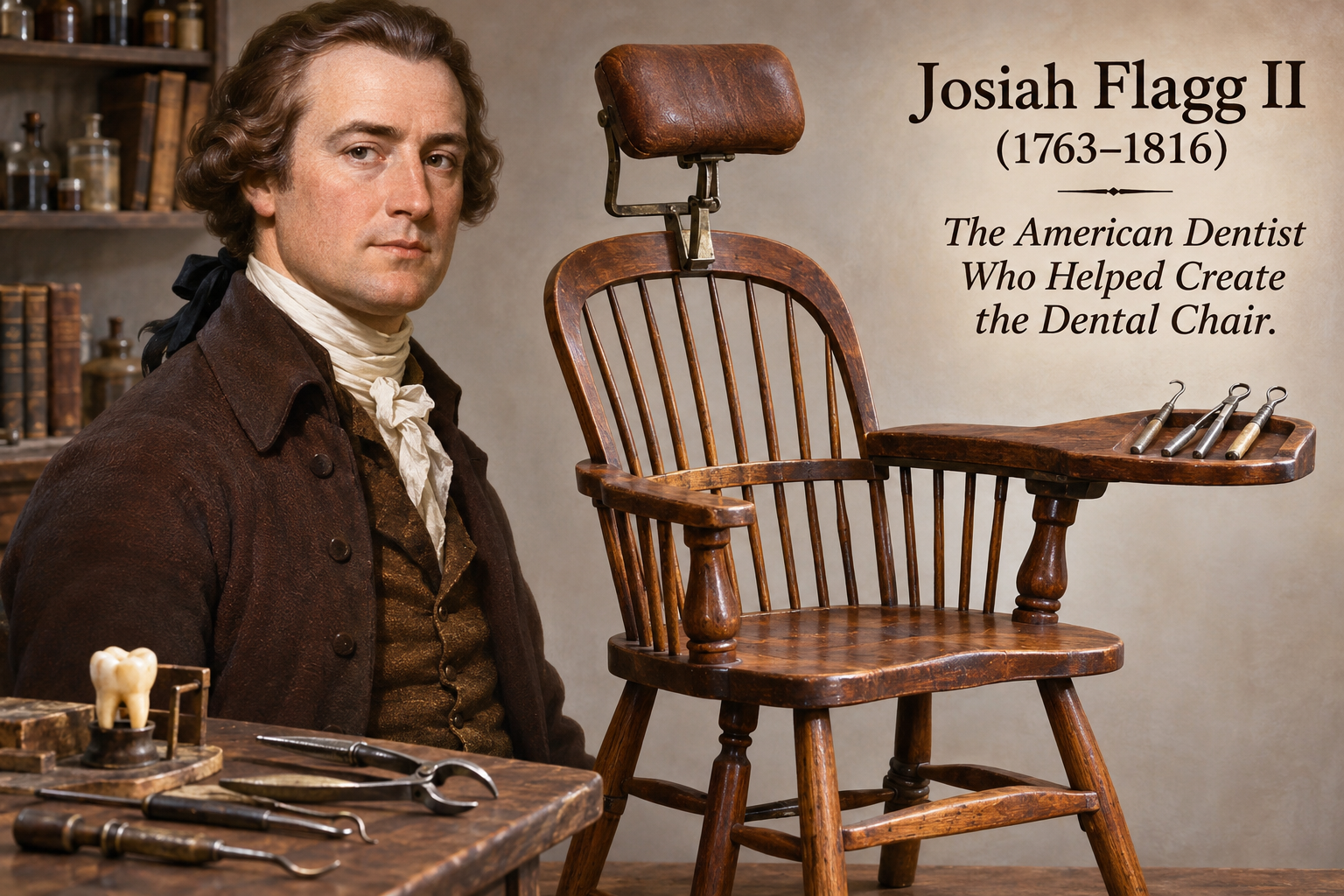
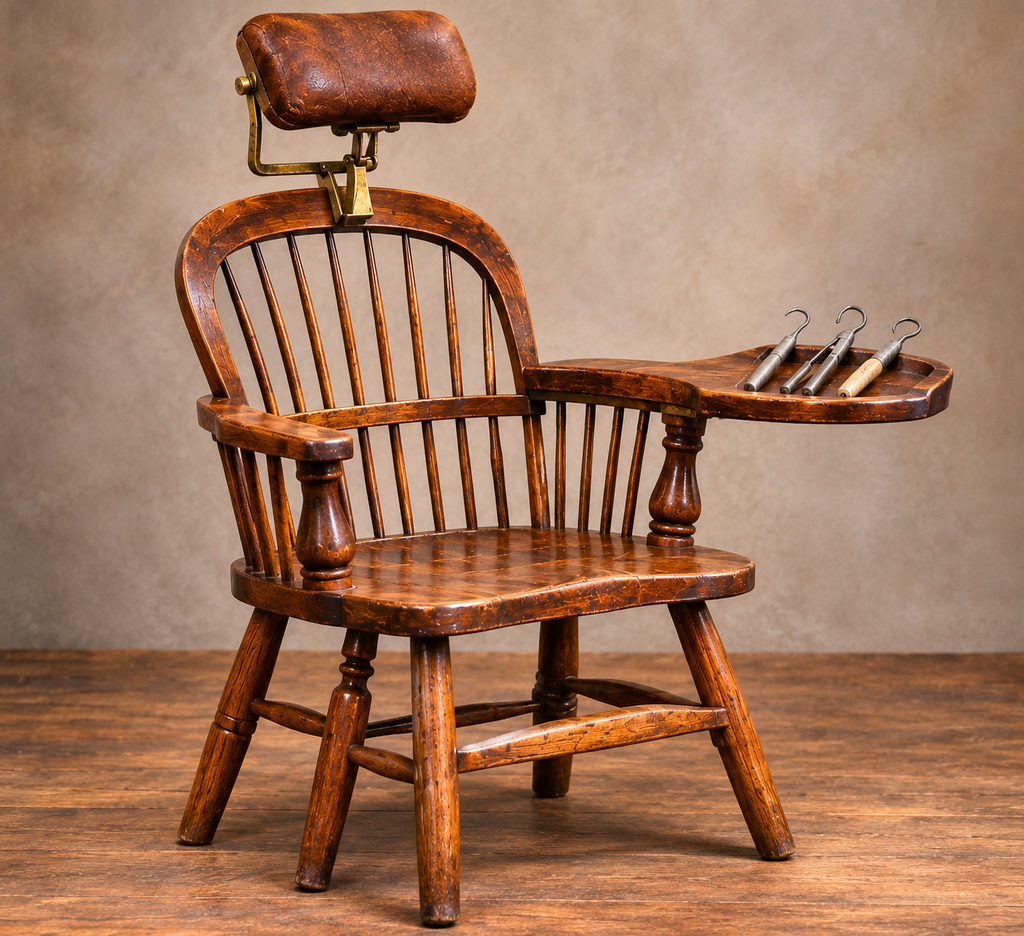
During this period, an American dentist named Josiah Flagg II (1763–1816) introduced an important improvement that helped shape the future of dental treatment. Around 1790, he modified a traditional Windsor writing chair to create one of the first specially designed dental chairs made in America.
His design included a movable headrest and an extended armrest that provided space for dental instruments. Although simple compared with modern equipment, it represented a significant step toward making dental treatment more organized and practical.
Flagg’s story is an example of how a small improvement can influence an entire profession. His contribution became part of the long journey that transformed dentistry from a basic treatment practice into the advanced medical profession we know today.
Who Was Josiah Flagg?
Josiah Flagg II was one of the early American-born dentists who helped develop professional dentistry in the United States.
He lived during a period when America was experiencing significant changes in science, medicine, technology, and professional education. Dentistry was still developing, and practitioners had limited equipment and fewer established treatment methods.
Flagg established himself as a dental practitioner and became associated with Boston, Massachusetts. His work involved treating dental problems and providing services that were considered advanced for the period.
Unlike modern dentists, early practitioners had to depend heavily on their practical experience, manual skills, and individually designed instruments.
Flagg recognized the importance of improving the equipment used during dental procedures. His work on the dental chair demonstrated that better furniture could make dental treatment more efficient and manageable.
Today, he is remembered particularly for his contribution to the development of the American dental chair.
What Was Dentistry Like in the 1700s?
To understand Flagg’s contribution, it is important to understand the condition of dentistry during his lifetime.
In the eighteenth century, dental care was very different from modern treatment. Dentistry was not yet fully established as a separate medical profession.
People suffering from toothaches, damaged teeth, or infections had limited treatment options. Dental procedures were often performed by independent practitioners, surgeons, and other individuals with practical experience.
Common dental problems included:
– Tooth decay and cavities.
– Severe toothaches.
– Broken or damaged teeth.
– Gum infections.
– Missing teeth.
– Difficult tooth extractions.
Many dental procedures were painful because modern anesthetics were not available.
Dental practitioners also faced difficulties positioning patients during treatment. Ordinary chairs did not provide the necessary head support or convenient places for instruments.
This created a need for specialized dental furniture.
How Josiah Flagg Developed the Dental Chair
One of Flagg’s most important contributions came around 1790.
He modified a traditional Windsor writing chair to make it more suitable for dental treatment. The original chair was an ordinary wooden piece of furniture, but Flagg adapted its design to meet the practical requirements of a dental practitioner.
His modifications included two important features.
Movable headrest: The additional head support helped patients maintain a more suitable position during dental procedures.
Extended armrest: The widened armrest provided a convenient area for placing dental instruments, helping the dentist work more efficiently.
These changes addressed two practical problems: supporting the patient and organizing the dentist’s working equipment.
The chair was not a modern reclining dental unit. It was a relatively simple wooden design, but it represented an important development in specialized dental furniture.
Historical dental collections and the University of the Pacific’s Virtual Dental Museum identify Flagg’s 1790 chair as the first American-made dental chair.
Why Was His Invention Important?
At first glance, modifying an ordinary chair might not appear to be a major invention. However, the improvement addressed an important need in early dentistry.
A dentist must be able to examine the patient’s mouth and perform delicate procedures while maintaining a suitable working position.
The patient also needs proper support to remain positioned during treatment.
Flagg’s design helped introduce several useful ideas:
Better patient support: The movable headrest provided additional support for the patient’s head.
Improved organization: The extended armrest offered a convenient place for dental instruments.
Practical working conditions: A chair designed specifically for dental treatment could make procedures more manageable.
Specialized medical furniture: His design demonstrated the value of creating equipment for the specific needs of a profession.
These principles continue to influence dental equipment design.
Josiah Flagg’s Dental Practice in Boston
Flagg was not simply an inventor interested in furniture. He was also an active dental practitioner.
Boston was an important center of commercial and professional activity in early America. Dentists operating there had opportunities to serve customers who needed treatment for various dental conditions.
A historical advertising broadside from 1796 provides evidence of Flagg’s professional activities.
The advertisement described several services, including tooth transplantation, treatment of damaged teeth, artificial teeth, and other dental procedures.
It also demonstrates that early dentists promoted their services through printed advertisements, much like businesses do today.
This document provides an interesting picture of the dental profession during the eighteenth century.
It shows that Flagg’s work extended beyond the development of a dental chair. He was part of an early generation of practitioners trying to improve dental services and establish public confidence in dentistry.
The Challenges Faced by Early American Dentists
Dental practice during Flagg’s lifetime involved considerable difficulties.
Modern dentists have access to advanced instruments, anesthesia, sterilization equipment, and diagnostic technology. Early practitioners had none of these modern advantages.
Some major challenges included:
Painful treatment: Patients often experienced significant discomfort during dental procedures.
Limited equipment: Dental practitioners depended on relatively simple instruments.
Lack of modern technology: There were no electric drills, digital imaging systems, or modern dental units.
Difficult working positions: Ordinary furniture did not always provide suitable support for patients or convenient working arrangements.
Limited professional education: Organized dental education and specialist institutions were still developing.
These conditions required practical thinking and experimentation.
Flagg’s dental chair was one example of how an individual practitioner could identify a problem and develop a useful improvement.
How the Dental Chair Continued to Evolve
Flagg’s contribution was an early step in a much longer history of dental equipment development.
During the nineteenth century, other dentists introduced improvements that made dental chairs more adjustable and comfortable.
In 1832, English dentist James Snell developed a mechanical dental chair with an adjustable seat and back. This was an important development because it allowed patients to be positioned more conveniently.
Later improvements included:
– Better reclining mechanisms.
– Adjustable seats and backrests.
– Improved head and foot supports.
– Mechanical height adjustments.
– Hydraulic lifting systems.
– More convenient instrument arrangements.
By the twentieth century, dental chairs had become increasingly sophisticated.
Electric motors and hydraulic systems made it easier to adjust patient positions. Integrated lighting and instrument delivery systems further improved dental treatment.
The modern dental chair is the result of generations of improvements by dentists, engineers, and manufacturers.
Flagg’s early design represents an important part of this evolution.
The Growth of Professional Dentistry in America
During the nineteenth century, dentistry gradually became more organized and scientifically developed.
One important milestone occurred in 1840, when the Baltimore College of Dental Surgery was established. It is widely recognized as the first dental college in the world.
The establishment of professional dental education helped create more systematic training for future practitioners.
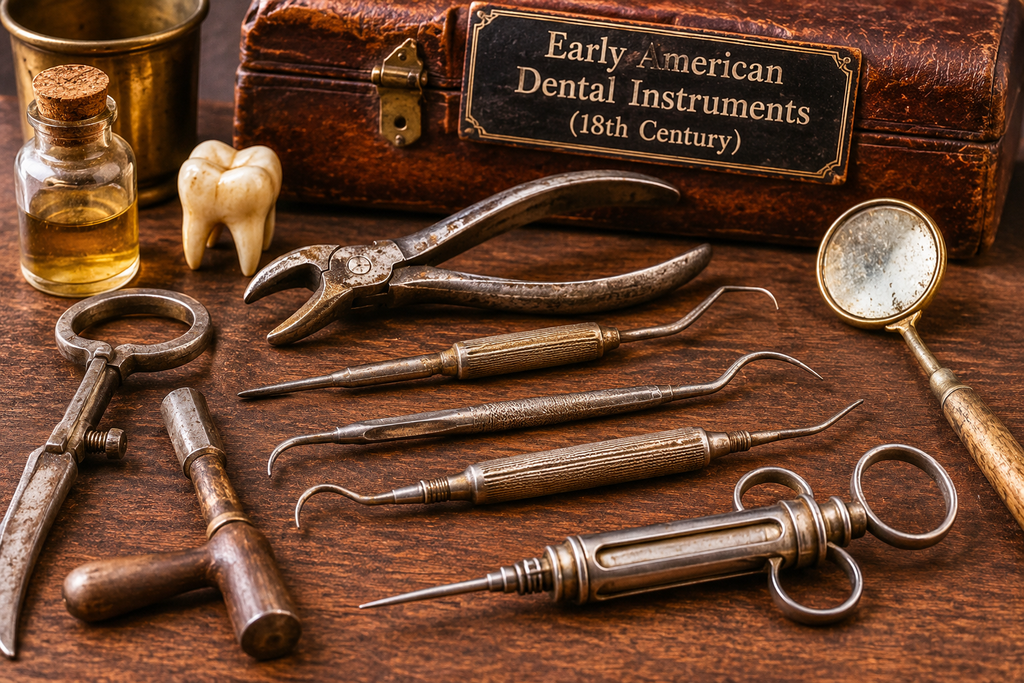
Scientific research, improved instruments, professional organizations, and new treatment methods gradually changed the profession.
The American Dental Association was established in 1859, providing another important milestone in the organization of American dentistry.
These developments happened decades after Flagg’s early dental chair, but they reflect the same broader movement toward improving dental care.
From a Wooden Chair to Modern Dental Clinics
Today, a dental chair is one of the most important pieces of equipment in a dental clinic.
Modern chairs are designed to provide support, improve patient positioning, and help dentists perform procedures accurately.
They commonly include:
– Electrically adjustable seating.
– Movable headrests.
– Adjustable backrests.
– Integrated dental lighting.
– Instrument holders.
– Water and suction systems.
– Foot-operated controls.
Some advanced dental units also include digital technology and specialized equipment for complex procedures.
The difference between these modern systems and Flagg’s wooden chair is enormous.
However, the basic purpose remains similar: creating a suitable working environment for dentists while providing better support for patients.
This is why the history of the dental chair is an interesting example of continuous technological improvement.
The Legacy of Josiah Flagg
Josiah Flagg’s contribution occupies a meaningful place in the history of American dentistry.
His modified Windsor chair demonstrated that practical design improvements could make professional work easier.
The movable headrest and extended armrest were relatively simple features, but they addressed real problems experienced by early dental practitioners.
His professional activities in Boston also provide valuable historical evidence about the development of dental services in America.
Today, his name is associated with one of the earliest specially designed dental chairs made in the United States.
Although he did not create modern dentistry on his own, his contribution represents an important early chapter in the development of dental equipment.
His story reminds us that innovation often begins with observing everyday difficulties and finding practical ways to solve them.



Post Comment