
How Frank E. Kirby Developed Icebreaking Ships
Introduction
Frank E. Kirby was an American naval architect and marine engineer who played an important role in the development of shipbuilding in the United States. He became particularly known for designing innovative vessels that operated on the Great Lakes, where freezing winter conditions created serious transportation challenges.
During the late 19th century, ships were essential for transporting passengers, industrial materials, and agricultural products. However, thick ice often stopped ordinary vessels from travelling during winter. This created a major problem for businesses, railway companies, and communities around the Great Lakes.
Kirby used his engineering knowledge to develop specialized ships capable of travelling through icy waterways. His work helped improve winter transportation and influenced the development of icebreaking technology.
His contribution to American maritime engineering remains an interesting example of how innovation can solve real-world problems.
Early Life of Frank E. Kirby
Frank Eugene Kirby was born on July 1, 1849, in Cleveland, Ohio. He grew up in a family connected to the shipbuilding industry. His father, Stephen Russell Kirby, was a shipbuilder who introduced him to ships, engines, and marine engineering.
From an early age, Kirby developed an interest in mechanical design and engineering. He later studied marine engineering at Cooper Union in New York City.
After completing his education, he gained practical experience in engineering and shipbuilding. This combination of technical knowledge and practical experience helped him develop the skills needed for a successful career.
Kirby eventually moved to Detroit, Michigan, where he became involved in the growing Great Lakes shipbuilding industry.
The Winter Transportation Problem
The Great Lakes played an important role in American economic development during the 19th century. Ships transported iron ore, coal, lumber, agricultural products, and passengers between different cities and industrial ports.
However, winter created serious difficulties for shipping companies. Extremely cold temperatures caused large areas of water to freeze, making navigation difficult and sometimes impossible.
The Straits of Mackinac, which connect Lake Michigan and Lake Huron, were particularly important for transportation. Railway companies needed reliable ferries to carry railway cars between Michigan’s Upper and Lower Peninsulas.
Ordinary ferries struggled to operate when thick ice covered the waterways. Engineers needed a better solution to maintain transportation during winter.
This challenge encouraged the development of specialized icebreaking vessels.
How Frank E. Kirby Designed the St. Ignace
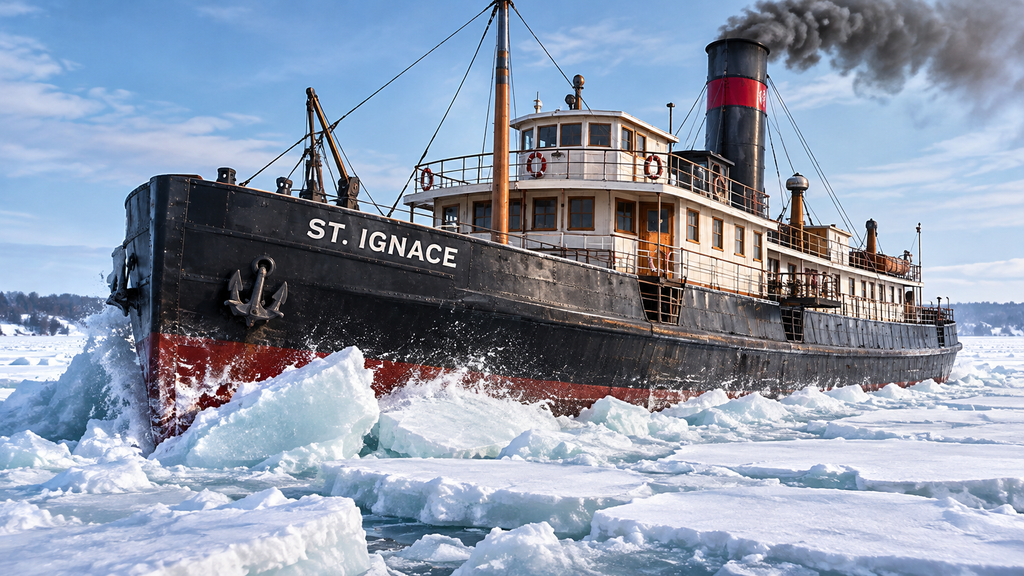
One of Kirby’s important engineering achievements was the design of the St. Ignace, a railroad car ferry introduced in 1888.
The vessel was specially designed to operate in the difficult winter conditions of the Great Lakes.
Unlike ordinary ferries, St. Ignace featured a specially shaped bow that could climb onto frozen ice. When the ship moved forward, its weight helped crack and break the ice underneath it.
Another important feature was its bow propeller. The vessel had propellers at both the front and rear. The forward propeller helped move water and broken ice away from the bow, reducing resistance and making movement through icy conditions easier.
The hull was also protected with metal sheathing to withstand contact with ice.
These engineering features made St. Ignace an important development in the history of icebreaking transportation.
How Icebreaking Technology Worked
Icebreaking technology uses specially designed ships to travel through frozen waterways.
Kirby’s approach combined several important engineering principles.
First, the specially shaped bow allowed the ship to climb onto the ice instead of simply pushing against it.
Second, the weight of the vessel helped break the frozen surface.
Third, the front propeller helped move broken ice away from the bow, while the rear propeller provided forward movement.
Together, these features allowed the vessel to move through icy water more effectively than an ordinary ferry.
This design demonstrated how changes in hull shape and propeller placement could improve a ship’s performance in extreme winter conditions.
The Success of the Ste. Marie
Following the development of St. Ignace, another important vessel, the Ste. Marie, entered service in 1893.
It was a larger and more powerful railroad ferry that continued the development of icebreaking transportation on the Great Lakes.
The vessel helped railway companies maintain connections across the Straits of Mackinac during difficult winter conditions.
These specialized ferries became valuable for transporting railway cars, passengers, and commercial goods.
Their success demonstrated that icebreaking technology could support regular commercial transportation and not just military or emergency operations.
How Kirby’s Ideas Influenced European Icebreakers
Kirby’s engineering ideas attracted attention beyond the United States.
European countries also experienced serious winter transportation problems. In northern Europe, frozen harbours and coastal waters often interrupted shipping activities.
Finnish engineers became interested in American icebreaking ferry designs. Engineer Alex Bonsdorff studied developments in the Great Lakes and helped bring attention to the advantages of bow-propeller technology.
Later icebreaker designs, including Finland’s Sampo, incorporated related engineering ideas.
The Russian icebreaker Yermak also represented an important development in the history of specialized icebreaking ships.
Kirby’s work was part of a broader international exchange of maritime engineering knowledge that helped improve winter navigation.
Why Icebreaking Ships Were Important
Icebreaking ships made a significant difference to transportation and industrial development.
They helped keep important shipping routes accessible during winter, supported railway connections, and allowed businesses to move goods more reliably.
For communities around the Great Lakes, winter transportation was especially important. Without specialized vessels, frozen waterways could interrupt travel and commercial activities.
Icebreaking technology also encouraged engineers to experiment with stronger hulls, improved propellers, and more powerful marine engines.
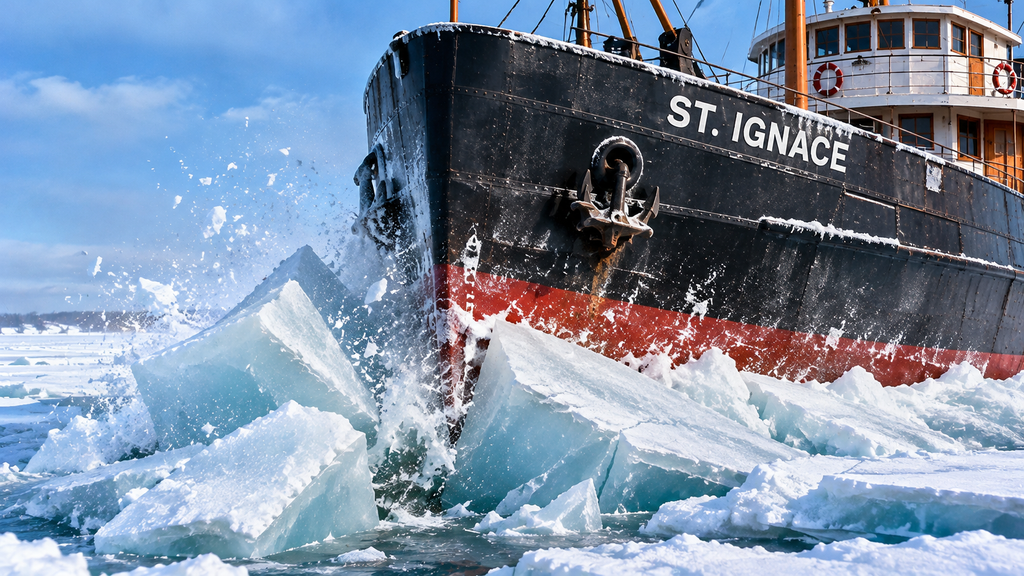
These developments contributed to the evolution of modern icebreakers.
Other Achievements of Frank E. Kirby
Frank E. Kirby’s achievements extended beyond icebreaking vessels.
He designed several famous passenger steamships that operated on the Great Lakes. Among his best-known designs were Tashmoo, Columbia, and Ste. Claire.
These ships became important parts of American passenger transportation history.
Kirby also contributed to maritime safety improvements. Following the General Slocum disaster in 1904, he was appointed to help revise American steamboat construction and inspection standards.
His engineering expertise was also used by the United States government during wartime.
His career demonstrated that a talented engineer could make important contributions to transportation, public safety, and national development.
The Legacy of Frank E. Kirby
Frank E. Kirby died on August 25, 1929, in New York. He left behind a remarkable contribution to American naval architecture.
His work on specialized Great Lakes vessels demonstrated how engineering innovation could overcome difficult environmental conditions.
The St. Ignace and other vessels helped improve winter transportation and influenced the development of icebreaking technology.
Modern icebreakers are much more advanced, using powerful engines, reinforced steel hulls, sophisticated navigation systems, and specialized propellers. However, the engineering principles developed during the early history of icebreaking remain important.
Kirby’s contribution deserves recognition as part of America’s maritime and industrial history.


Post Comment