
How Gail Borden Revolutionized the American Milk Industry
Milk is one of the most widely consumed food products in the world. It is used in tea, coffee, desserts, baking, cooking, and many other products. Today, people can easily purchase milk and milk-based products from supermarkets and grocery stores. However, during the nineteenth century, preserving fresh milk was a major challenge. Without modern refrigeration, milk spoiled quickly, especially during hot weather and long-distance transportation.
One American inventor helped change this situation. His name was Gail Borden Jr., an entrepreneur, businessman, and innovator who developed a commercially successful method of concentrating and preserving milk.
Born in 1801, Borden lived during a period when America was experiencing major changes in transportation, manufacturing, and technology. He believed that practical inventions could solve everyday problems and improve people’s lives.
His work eventually helped transform the American dairy industry. His condensed milk process made milk easier to transport, store, and distribute. His story is an important example of how determination and innovation can turn an ordinary product into a successful business.
Early Life of Gail Borden
Gail Borden Jr. was born on November 9, 1801, in Norwich, New York, United States. He was the son of Gail Borden Sr. and Philadelphia Borden.
During his childhood, his family moved westward, eventually settling in Kentucky and Indiana. Growing up in different environments gave him opportunities to experience frontier life and develop practical knowledge.
Unlike many inventors who received formal scientific education, Borden developed his abilities through observation, experience, and experimentation. He was curious about business, technology, agriculture, and practical solutions to everyday challenges.
As a young man, he worked as a surveyor and schoolteacher. These experiences helped him understand different aspects of American society.
His early career was not limited to one profession. He explored several opportunities and gradually developed the entrepreneurial skills that would later help him establish a successful food business.
His Career as a Surveyor and Publisher
Before becoming famous for condensed milk, Borden worked as a surveyor.
During the 1820s, he became involved in surveying and land-related activities in Texas. Surveying was an important profession because the growing American population required accurate land measurements and maps.
Borden also became interested in communication and publishing.
In 1835, he and his associates established the Telegraph and Texas Register, an important early newspaper in Texas.
Through this work, he gained experience in business management, publishing, and public communication.
However, his greatest contribution would eventually come from an entirely different industry: food preservation.
The Problem That Inspired His Invention
During the nineteenth century, fresh milk was difficult to preserve.
Milk was an essential food, particularly for children, but it could quickly become unsafe when exposed to warm temperatures and contamination.
Long-distance travel made the problem even more serious. People travelling by ships and trains could not always obtain fresh and safe milk.
One experience reportedly had a particularly strong influence on Borden. During a steamship journey, he witnessed the suffering of children who lacked access to safe milk.
This experience encouraged him to think about how milk could be preserved for longer periods.
He began exploring different food-preservation methods. His goal was to develop a product that could be transported over long distances without spoiling as quickly as ordinary fresh milk.
He understood that solving this problem could benefit families, travellers, businesses, and the wider food industry.
How Gail Borden Developed Condensed Milk
Borden experimented with different methods of removing water from milk.
Ordinary milk contains a high percentage of water. By removing much of this water, it becomes concentrated and takes up less storage space.
However, simply boiling milk at high temperatures could damage its taste and quality.
Borden worked on a method that used a vacuum pan to evaporate water under reduced pressure.
The basic process involved collecting fresh milk, placing it in a specially designed container, and reducing the pressure inside the vessel. This allowed water to evaporate at a lower temperature than ordinary boiling.
The resulting concentrated milk was easier to store and transport.
This development was important because it offered a practical way to produce condensed milk commercially.
Borden’s achievement was not simply the idea of removing water from milk. His contribution was developing a commercially successful process that helped make large-scale milk preservation possible.
The Historic Patent of 1856
One of the most important moments in Borden’s career came in 1856.
On August 19, 1856, he received United States Patent No. 15,553 for his milk-concentration process.
The patent covered his method of concentrating milk using a vacuum system.
This achievement gave him an important foundation for developing a commercial business.
Receiving the patent was a major milestone, but turning an invention into a successful product required more work. He needed suitable manufacturing facilities, financial investment, reliable milk supplies, and customers willing to purchase his product.
Borden continued working toward these goals.
Establishing the Condensed Milk Business
Developing a new product was only the first step. Borden also needed to establish a business that could manufacture and sell condensed milk.
In 1857, he partnered with businessman Jeremiah Milbank to establish the New York Condensed Milk Company.
The company focused on producing and distributing condensed milk.
Its manufacturing operations developed in Wassaic, New York, where milk could be processed on a commercial scale.
The business worked to improve production methods and establish consumer confidence in the new product.
Condensed milk gradually became an important packaged food product in the American market.
The Borden business helped demonstrate that food preservation could become a successful commercial industry.
How the American Civil War Increased Demand
The American Civil War, which lasted from 1861 to 1865, played an important role in the growth of condensed milk.
During the conflict, supplying food to soldiers was a major challenge. Military personnel often travelled long distances and stayed in locations where fresh food was difficult to obtain.
Ordinary milk was not suitable for long-distance transportation without proper refrigeration.
Condensed milk offered a convenient alternative because it was concentrated and could be stored for longer periods in suitable sealed packaging.
The Union Army became an important customer of Borden’s company.
As demand increased, the company expanded production to supply the growing market.
The Civil War helped introduce condensed milk to a much larger population. After the conflict, many American consumers were already familiar with the product.
This helped create new opportunities for the company in the civilian market.
Other Inventions and Business Ideas
Gail Borden was interested in more than milk preservation.
He also experimented with other ways of making food easier to store and transport.
One of his earlier inventions was a dehydrated meat product known as the meat biscuit.
The idea was to create a compact food product using concentrated meat and flour. It was designed to provide nourishment in a form that could be transported conveniently.
Borden also explored methods of concentrating other food products, including fruit juices and beverages.
Although not all his experiments became successful commercial products, they demonstrated his interest in solving practical problems.
His work showed that innovation often involves trying different ideas, learning from failures, and improving existing methods.

The Impact on the American Dairy Industry
Borden’s condensed milk process helped change the way milk could be manufactured and distributed.
Before the development of commercially successful condensed milk, dairy businesses depended heavily on local markets because fresh milk spoiled quickly.
The ability to concentrate milk created new opportunities for transportation and storage.
His contribution helped make milk easier to transport over long distances, increase the availability of preserved milk, support food supplies for military personnel, encourage commercial dairy manufacturing, and expand the packaged-food industry.
His work also demonstrated the commercial potential of using technology to improve traditional agricultural products.
The Growth of the Borden Name
The Borden name became closely associated with condensed milk and the American dairy industry.
The business that developed from his invention continued to grow beyond his lifetime.
Over the years, the Borden name became familiar to American consumers through dairy products and food advertisements.
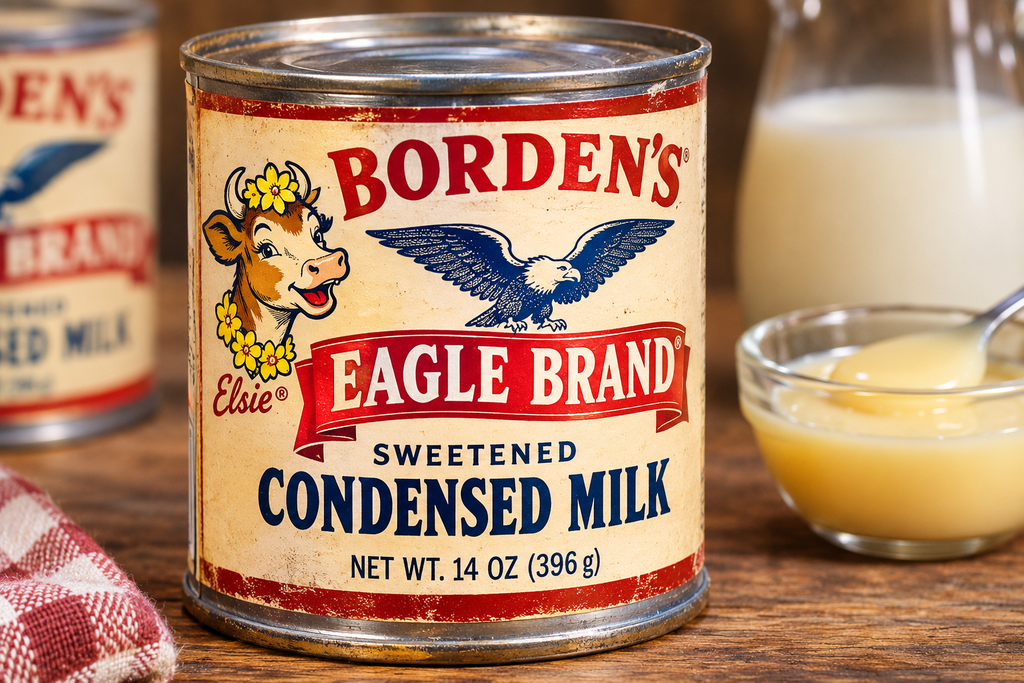
The famous Eagle Brand condensed milk also became associated with the history of condensed milk production in the United States.
His business legacy demonstrated how a practical invention could develop into a recognizable commercial name.
Personal Life and Final Years
Gail Borden spent much of his life exploring business opportunities and developing practical inventions.
He was an entrepreneur who moved between different professions, including surveying, publishing, and manufacturing.
His career demonstrated his willingness to explore new ideas rather than remain limited to one field.
Borden died on January 11, 1874, in Borden, Texas, at the age of 72.
Although he did not live to witness the full development of the modern dairy industry, his contribution continued to influence food manufacturing and preservation.
The Legacy of Gail Borden
Gail Borden’s contribution remains an important part of American innovation history.
His condensed milk process helped solve a practical problem that had affected families, travellers, and food businesses for generations.
Today, condensed milk is widely used in desserts, cakes, sweets, beverages, and many other recipes around the world.
His work also illustrates an important lesson about entrepreneurship: identifying a problem is only the beginning. Developing a practical solution, improving it, and building a business around it require patience and determination.
Borden was inducted into the National Inventors Hall of Fame in 2006 in recognition of his contribution to condensed milk production.
His story continues to represent the connection between American invention, business development, and everyday life.



Post Comment