How Garrett Morgan Invented a Safer Traffic Signal
Introduction
Imagine driving through a busy American intersection in the early 1900s. Cars, horse-drawn carriages, bicycles, and pedestrians all compete for space. Traffic rules are still developing, and drivers do not always have enough time to react when a signal changes.
One inventor recognized that a simple improvement could make these streets safer. His name was Garrett Morgan, an African American inventor and entrepreneur whose work helped advance traffic control and public safety.
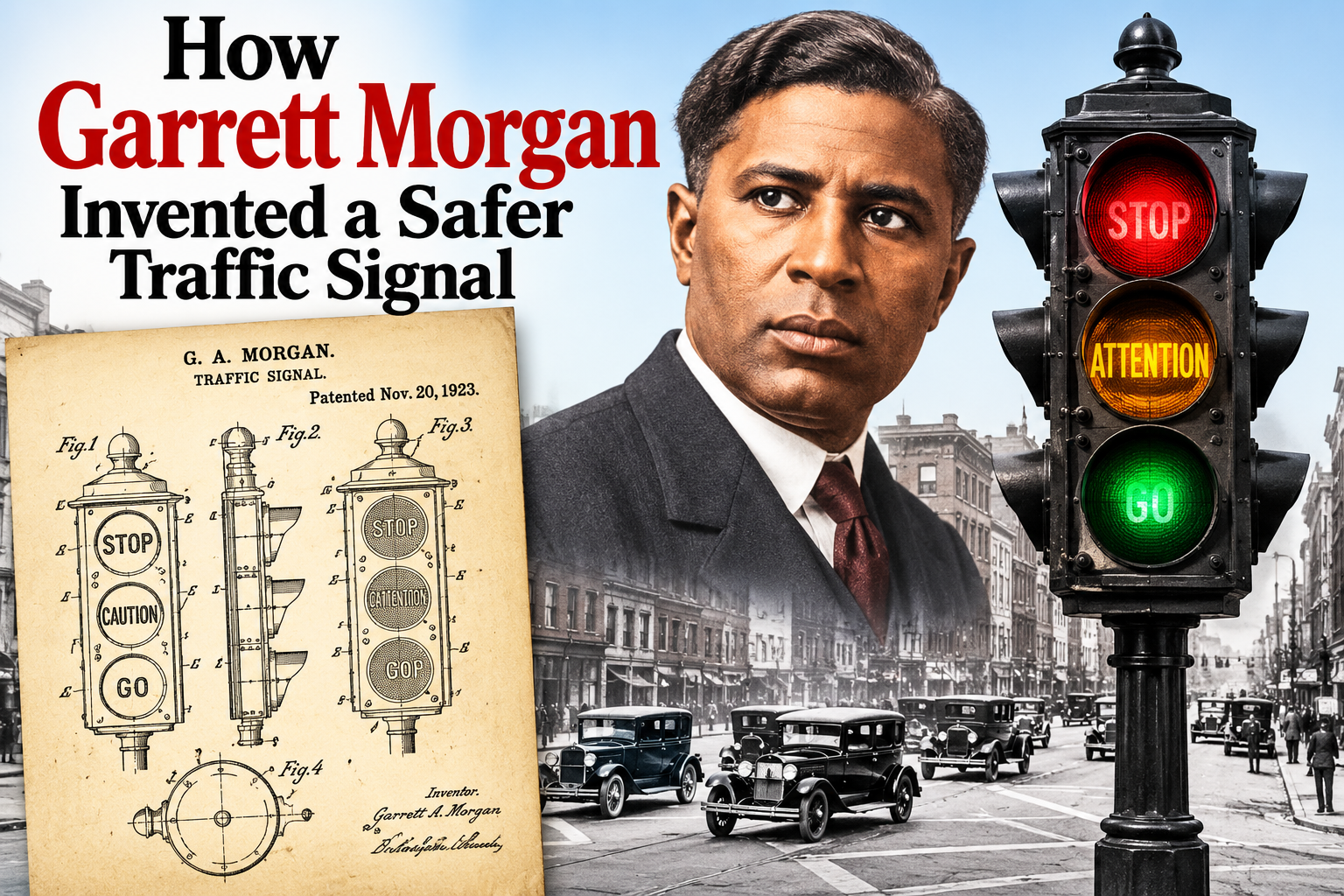
In 1923, Morgan received a patent for an improved three-position traffic signal. Unlike basic signals that switched between stop and go, his design included a position that stopped traffic in all directions. This pause gave vehicles time to clear an intersection before traffic from another direction moved forward.
Morgan’s achievement was part of a larger story of American innovation. His work demonstrated how careful observation, mechanical skill, and determination could help solve everyday problems.
Who Was Garrett Morgan?
Garrett Augustus Morgan was born on March 4, 1877, in Paris, Kentucky. He grew up in a large family during a period when African Americans faced significant racial discrimination and limited educational and professional opportunities.
Morgan received some formal schooling but left school at a young age to begin working. As a teenager, he moved to Cincinnati, Ohio, to find employment. He later settled in Cleveland, where he developed his mechanical skills.
Morgan worked repairing sewing machines and learned how different parts of machinery operated together. His practical experience encouraged him to experiment with mechanical improvements and develop his own inventions.
He eventually became a successful entrepreneur. His interests extended beyond traffic safety to protective equipment, manufacturing, and publishing.
Morgan’s life shows that innovation can come from practical experience as well as formal education. His ability to identify problems and design useful solutions became a defining feature of his career.
Why Did Garrett Morgan Want to Improve Traffic Safety?
During the early twentieth century, American cities were changing rapidly. Automobiles were becoming increasingly common, but road systems and traffic-control methods had not fully adapted to the growing number of vehicles.
At busy intersections, cars might approach from several directions while pedestrians and horse-drawn vehicles crossed the same streets. Drivers needed clear instructions about when to stop and when to proceed.
Some early traffic signals offered only two basic instructions: stop and go. When the signal changed, drivers could have little time to react. Vehicles already in the intersection might still be moving when traffic from another direction began to advance.
These conditions created a need for better traffic coordination.
Historical accounts associate Morgan’s interest in traffic safety with witnessing a collision involving an automobile and a horse-drawn carriage. The experience encouraged him to consider how a signal could give drivers more time to respond.
Morgan recognized an important principle: traffic safety depends not only on knowing when to move but also on having enough time to stop safely and clear an intersection.
How Did Garrett Morgan Invent His Traffic Signal?
Morgan developed a mechanical traffic-control device designed to manage the movement of vehicles more safely.
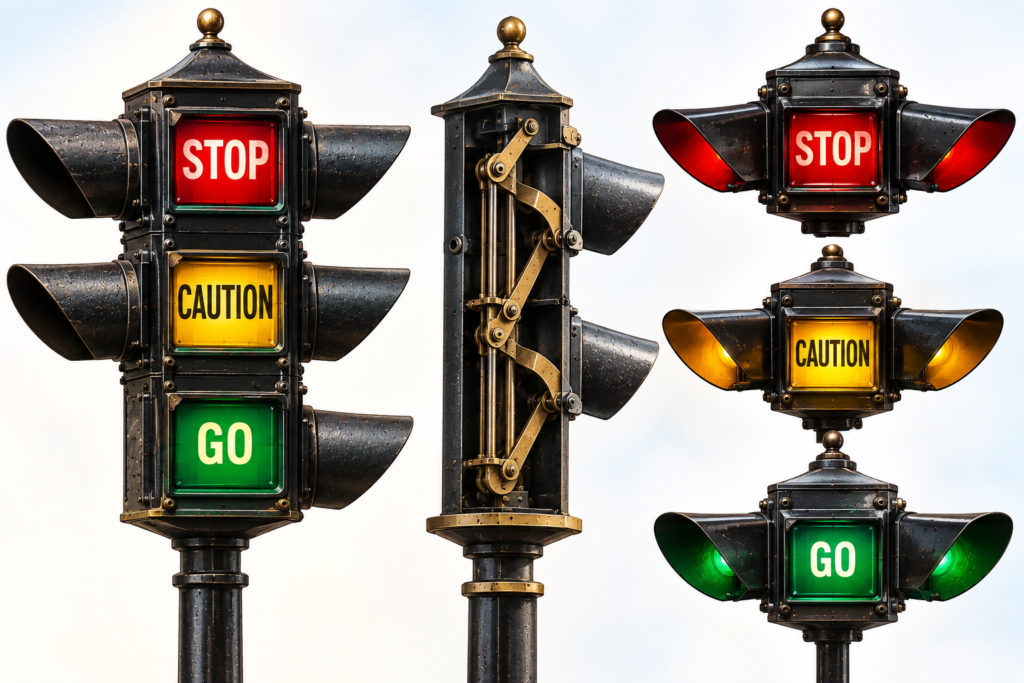
His patented design used a T-shaped structure with movable arms. These arms could indicate different instructions to traffic, including stopping and proceeding.
The most significant feature was the third position. Rather than changing directly from stop to go, the signal could temporarily stop traffic in all directions.
This pause created a transition period between movements. Vehicles that had entered the intersection could finish crossing before other vehicles were allowed to proceed.
The design was manually operated, unlike modern traffic lights that commonly use electrical controls and automated timing systems. However, Morgan’s approach addressed a practical problem that remains important in traffic engineering today: conflicting traffic movements need to be separated safely.
His invention was not the first traffic signal ever developed. Its importance lay in the particular improvement he patented and the safety principle incorporated into its design.
When Did Garrett Morgan Patent His Invention?
A major milestone came on November 20, 1923, when Morgan received U.S. Patent No. 1,475,024 for his traffic signal.
The patent documented his three-position design and its method of controlling traffic movement. The additional position allowed the signal to provide an all-direction stop before permitting another movement.
This feature helped distinguish Morgan’s design from simpler stop-and-go signals.
Patents are important in the history of invention because they document a specific design and give inventors legal rights over their patented inventions for a limited period. Morgan’s patent established a historical record of his contribution to traffic-control technology.
His achievement also reflected a broader period of experimentation in American transportation, when inventors were developing ways to manage the increasing demands of automobile traffic.
How Did Garrett Morgan Bring His Invention to the Public?
Developing an invention was only one part of Morgan’s challenge. He also needed to demonstrate its practical value and attract interest from people who could help bring it into wider use.
Morgan arranged a public demonstration of his traffic signal in Willoughby, Ohio. The demonstration helped show how the device could control traffic movements and provide a pause between directions.
His invention attracted interest from the General Electric Company, which became involved in acquiring the patent rights.
Historical accounts report that Morgan sold the rights to his traffic-signal patent to General Electric for $40,000. The company later developed an electric version of the three-position signal.
This development illustrates the relationship between inventors and manufacturers. An inventor may create a useful design, while an established company can help adapt, manufacture, and distribute technology on a wider scale.
Morgan’s work helped bring attention to the value of an additional transition phase in traffic control.
Garrett Morgan Invented More Than a Traffic Signal
Traffic safety was not Morgan’s only contribution to public safety. He also developed an early breathing device known as a safety hood, designed to help protect people from smoke and hazardous fumes.
Morgan received a patent for this device in 1914. It became especially well known after a disaster in Cleveland in July 1916.
An explosion in a waterworks tunnel beneath Lake Erie trapped workers underground. The air was dangerous, and rescuers faced serious risks while attempting to reach people inside.
Morgan and his brother Frank, along with other helpers, used breathing devices to enter the hazardous environment. Their efforts helped rescue survivors and recover victims.
The incident demonstrated the practical value of Morgan’s safety equipment. It also showed his willingness to put his invention to work in a dangerous situation.
His breathing device and traffic signal addressed different problems, but both reflected his interest in developing practical solutions that could protect human life.
The Challenges Garrett Morgan Faced
Morgan built his career during a period when racial discrimination limited opportunities for many African Americans.
Inventors needed access to customers, manufacturers, investors, and public recognition. For a Black entrepreneur in the early twentieth century, gaining attention and commercial support could be particularly difficult.
Despite these barriers, Morgan established businesses and continued developing products.
He also entered the publishing industry. In 1920, he founded the Cleveland Call, a newspaper that served the African American community. His activities extended into civic life and efforts to improve opportunities for Black Americans.
Morgan’s career demonstrated persistence and business ability. He did not limit himself to one field but explored several areas in which he believed practical improvements could make a difference.
His experience is an important part of American innovation history because it shows how inventors can achieve meaningful results despite social and economic obstacles.
How Did Garrett Morgan Influence Modern Traffic Safety?
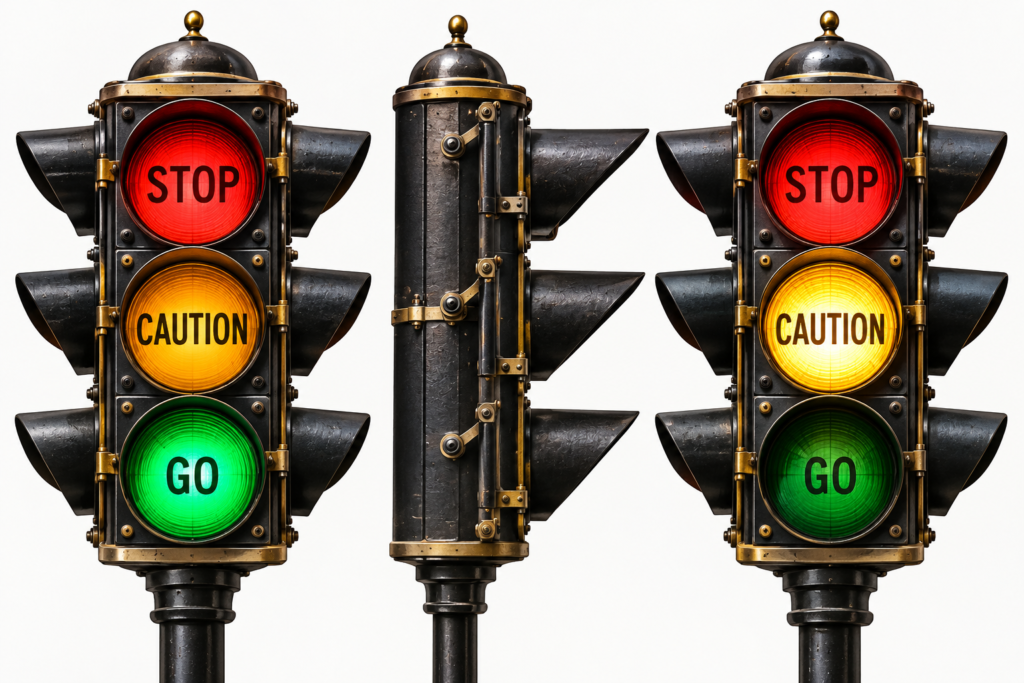
Modern traffic signals are much more advanced than Morgan’s mechanical device. Most use colored lights, electrical controls, sensors, and carefully programmed timing systems.
Red tells drivers to stop, green permits movement when the intersection is clear, and yellow warns that the signal is changing. Some intersections also use dedicated turning signals and pedestrian phases.
Modern systems developed through the contributions of many inventors, engineers, transportation agencies, and safety researchers. Morgan should not be credited as the sole inventor of the modern traffic light.
His three-position signal nevertheless represents an important step in the development of traffic control. It addressed the need to separate conflicting movements and allow time for an intersection to clear.
That underlying safety principle remains relevant in modern transportation planning.
The history of traffic lights demonstrates that technological progress often happens through a series of improvements rather than a single invention. Morgan’s work formed part of that larger process.
Garrett Morgan’s Legacy
Garrett Morgan died on July 27, 1963, in Cleveland, Ohio. His career left a lasting mark on the history of American invention and public safety.
He is remembered for his three-position traffic signal and his early protective breathing device. His achievements received formal recognition when the National Inventors Hall of Fame inducted him in 2005.
Morgan’s legacy is about more than machinery. His life illustrates the value of noticing everyday problems, questioning existing methods, and developing practical alternatives.
He also demonstrated that invention requires more than an original idea. A successful inventor must often test a design, explain its benefits, build relationships, and find ways to bring the invention to the public.
Today, traffic signals help coordinate movement at intersections around the world. Although modern systems differ greatly from Morgan’s original design, his contribution remains a meaningful part of the story of how traffic safety evolved.
Why Garrett Morgan’s Story Still Matters
Garrett Morgan’s story continues to matter because the problems he addressed are still familiar. People depend on transportation systems every day, and even small improvements can help reduce confusion and risk.
His work reminds us that useful innovation often begins with a simple question: How can this be made safer?
Morgan observed a problem, developed a mechanical solution, patented his design, and worked to demonstrate its value. His career shows how practical experience and determination can lead to inventions that benefit society.
For aspiring inventors and entrepreneurs, his example offers an enduring lesson: meaningful innovation starts by understanding a problem and finding a better way to solve it.


Post Comment