All About the Ancient Maya Men: History, Culture, Daily Life, Traditions, and Legacy
Introduction
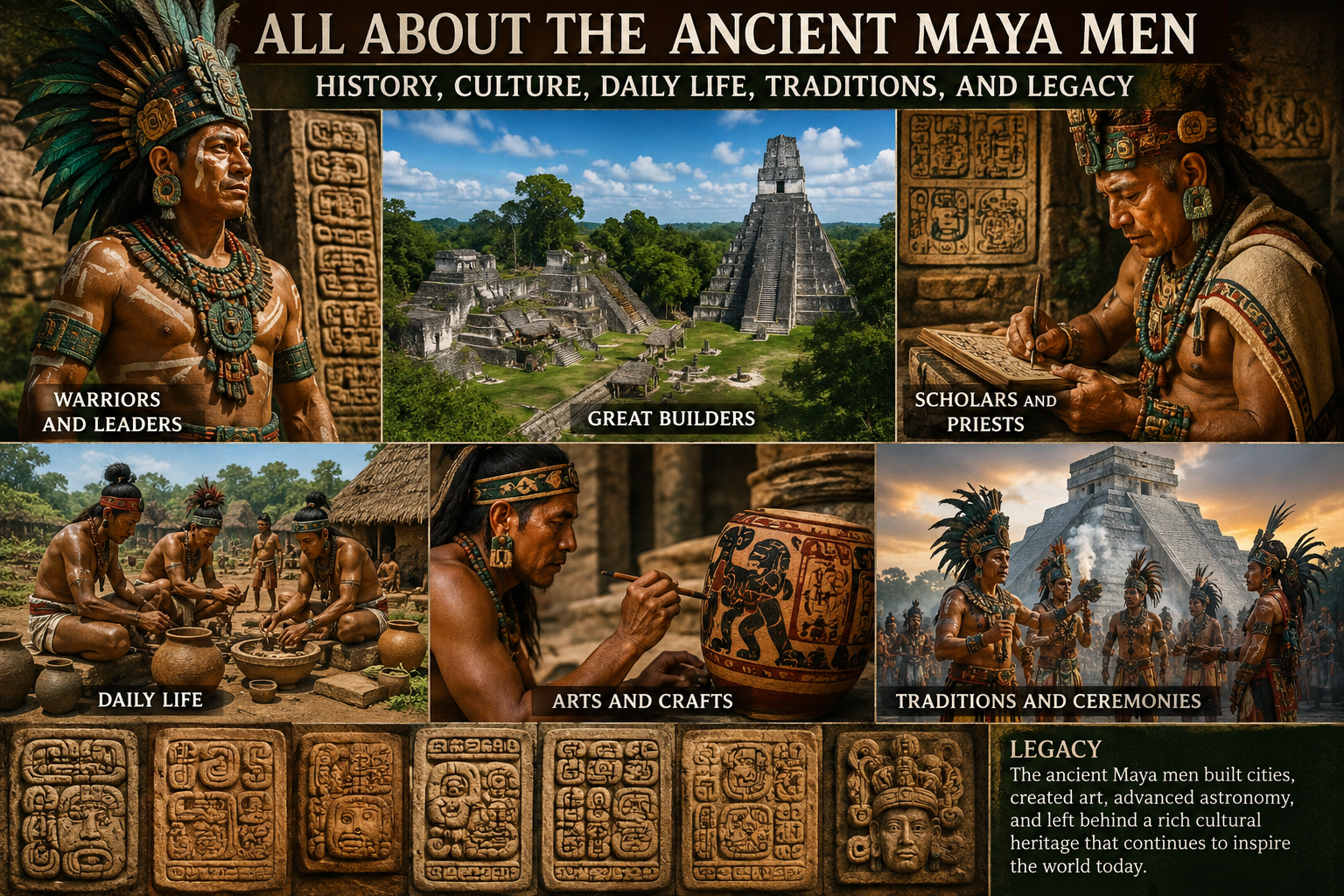
The Ancient Maya civilization was one of the most advanced cultures in the Americas, flourishing for thousands of years across present-day Mexico, Guatemala, Belize, Honduras, and El Salvador. Maya men played vital roles as farmers, warriors, craftsmen, priests, merchants, and rulers. Their lives were shaped by religion, family, agriculture, and community responsibilities.
This article explores who the Maya men were, how they lived, what they wore, their traditions, occupations, beliefs, and the lasting legacy they left behind.
—
Who Were the Maya Men?
Maya men belonged to one of the greatest civilizations in history. The Maya built impressive cities, developed a sophisticated writing system, advanced mathematics, and made remarkable achievements in astronomy.Every man had responsibilities
within his family and community. While noblemen often became rulers or priests, most men worked as farmers or craftsmen.
—
The Roles of Maya Men
1. Farmers Most Maya men were farmers. They grew crops such as:
Maize (corn)
Beans
Squash
Chili peppers
Cacao
Agriculture was the foundation of Maya society.
2. Warriors
Some men became skilled warriors who protected their cities and fought rival kingdoms. Courage in battle earned respect and honor.
3. Craftsmen
Many Maya men specialized in making:
Pottery
Stone carvings
Jewelry
Wooden sculptures
Tools
Weapons
Their artistic skills are still admired today.
4. Merchants
Merchants traveled long distances trading goodsincluding:
Jade
Salt
Cacao
Obsidian
Feathers
CottonTrade connected different Maya cities.
5. Priests
Priests held one of the highest positions in society. They performed ceremonies, studied astronomy, interpreted calendars, and communicated with the gods.
6. Kings
Powerful rulers governed Maya city-states. Kings were believed to have a sacred connection with the gods.
—
Clothing of Maya Men
Clothing varied according to wealth.
Common men usually wore:
Cotton loincloths
Simple sandals
Nobles wore:
Decorative cloaks
Jaguar skins
Feathered headdresses
Jade jewelry
Colorful textiles
Clothing represented social status.
—
Hairstyles and Appearance
Maya men took pride in their appearance.
Many:
Grew long hair
Tied their hair with decorative bands
Wore elaborate feather headdresses during ceremonies
Appearance often reflected social rank.
—
Body Paint and Tattoos
Body decoration was an important part of Maya culture.
Men sometimes decorated themselves with:
Blue body paint for sacred ceremonies
Red, black, or yellow paint for festivals
Tattoos representing courage or religious beliefs
Blue paint was especially associated with religious rituals.
—
Religion
Religion guided every part of Maya life.
Men participated in:
Temple ceremonies
Festivals
Offerings to the gods
Ritual dances
Priests led ceremonies asking for rain, successful harvests, and protection.
—
Family Life
Maya men were responsible for:
Supporting their families
Teaching sons practical skills
Building homes
Farming fields
Protecting relatives
Family was central to Maya society.
—
Education
Education depended on social status.
Noble boys learned:
Reading and writing
Astronomy
Mathematics
Leadership
Religion
Common boys learned:
Farming
Hunting
Fishing
Craftsmanship
—
Weapons
Warriors commonly used:
Spears
Bows and arrows
Stone blades
Wooden clubs
Obsidian knives
These weapons were effective despite the absence of metal swords.
—
Sports
Maya men enjoyed the famous Mesoamerican ballgame.
The game had:
Religious significance
Political importance
Athletic competition
Some ceremonial matches were connected with religious rituals.
—
Food
The Maya diet included:
Corn tortillas
Beans
Squash
Chili peppers
Tomatoes
Cacao drinks
Turkey
Deer
Fish
Fruits
Corn was considered sacred.
—
Architecture
Maya men helped build:
Massive pyramids
Palaces
Temples
Roads
Ball courts
Observatories
Many of these structures still stand today.
—
Marriage
Most Maya men married within their communities.
Marriage was considered important for:
Family life
Community stability
Continuing traditions
—
Festivals
Men participated in festivals featuring:
Music
Dancing
Costumes
Religious ceremonies
Community celebrations
Festivals strengthened social bonds.
—Science and Knowledge
The Maya made remarkable achievements in:
Astronomy
Mathematics
Calendar systems
Writing
Architecture
Many educated men became scholars or priests.
—
Legacy
The Maya civilization continues to inspire the world. Descendants of the Maya still live in Central America, preserving many traditions, languages, and cultural practices.Ancient Maya men contributed to one of history’s greatest civilizations through farming, craftsmanship, leadership, science, religion, and architecture.

Post Comment