Hiram Bingham III and Machu Picchu: The Explorer Who Introduced the Lost Inca City to the World
Introduction
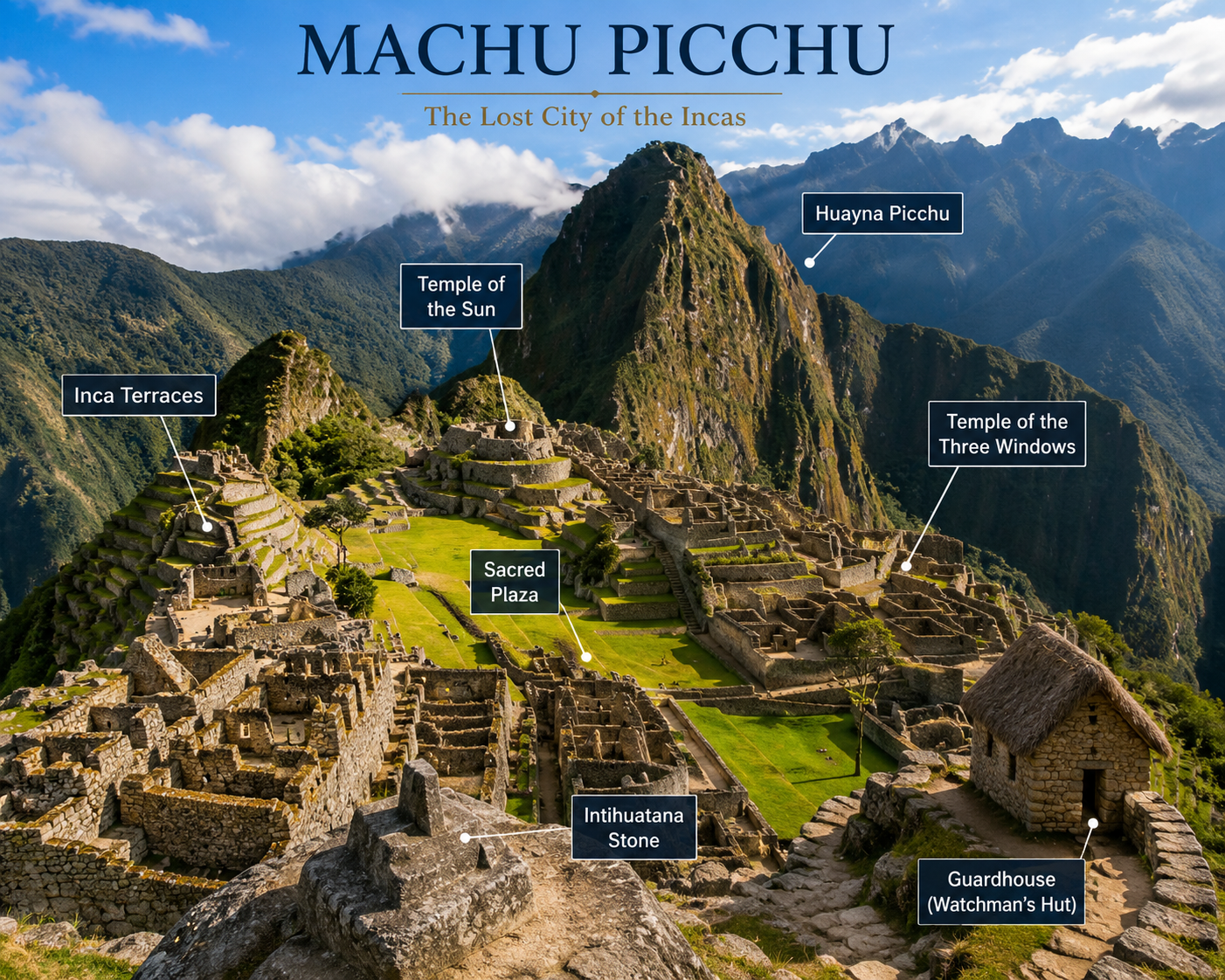
High in the mist-covered Andes Mountains of Peru lies one of the world’s greatest archaeological wonders—Machu Picchu. Today, millions of travelers dream of visiting its breathtaking stone terraces, ancient temples, and dramatic mountain scenery. Yet, for much of the modern world, this extraordinary Inca city remained virtually unknown until the early twentieth century.
The man most closely associated with bringing Machu Picchu to international attention was Hiram Bingham III, an American explorer, historian, and professor. Although local Indigenous communities had long known about the site, Bingham’s 1911 expedition transformed Machu Picchu from a little-known mountain ruin into one of the world’s most celebrated archaeological landmarks.
His story is one of adventure, determination, controversy, and discovery. It combines scientific curiosity with the thrill of exploration and raises important questions about archaeology, cultural heritage, and historical recognition.
—
Who Was Hiram Bingham III?
Hiram Bingham III was born on November 19, 1875, in Honolulu, Hawaii. He came from a family of missionaries and grew up with a strong emphasis on education and service.
Bingham studied at several prestigious institutions, including:
– Yale University
– University of California, Berkeley
– Harvard University
Although trained as a historian rather than an archaeologist, he became fascinated with the history of South America, particularly the rise and fall of the Inca Empire.
As a professor at Yale University, Bingham believed that many important Inca sites remained hidden within Peru’s rugged mountains.
—
The Search for the Lost Inca Capital
By the early 1900s, historians were searching for Vilcabamba, the last refuge of the Inca rulers after the Spanish conquest.
Following the arrival of Spanish conquistadors led by Francisco Pizarro in the sixteenth century, the Inca Empire collapsed. However, several Inca rulers escaped into remote mountain regions and continued resisting Spanish rule for decades.
Bingham hoped to locate this legendary stronghold.
In 1911, with financial support from Yale University and the National Geographic Society, he organized an expedition into Peru.
—
The Journey Through the Andes
Traveling through the Peruvian Andes in 1911 was far from easy.
There were:
– Dense forests
– Steep cliffs
– Narrow mountain paths
– Deep river valleys
– Frequent rainstorms
Bingham’s team traveled mainly by horseback and on foot.
Without modern roads, GPS, or satellite maps, every stage of the expedition depended on local guides, muleteers, and villagers.
—
Meeting Local Farmers
One of the most important moments in the expedition came when Bingham met local farmers living near the Urubamba River.
These residents already knew about the ancient ruins hidden on a nearby mountain.
A local farmer, Melchor Arteaga, guided Bingham toward the mountain.
Without local knowledge, it is unlikely that Bingham would have reached the site.
This fact has become increasingly recognized by historians, who emphasize that Machu Picchu was never truly “lost” to the people living nearby.
—
July 24, 1911: A Historic Discovery
On July 24, 1911, Bingham climbed the steep mountain trail through thick vegetation.
Near the summit he encountered a young local boy who led him further toward the ruins.
As the forest opened, magnificent stone walls, staircases, terraces, temples, and plazas emerged from the mist.
Many structures remained remarkably well preserved despite centuries of abandonment.
Bingham immediately realized he had found an exceptionally important archaeological site.
Although he initially believed it might be the legendary Vilcabamba, later research showed that the ruins were actually Machu Picchu.
—
Why Machu Picchu Is Extraordinary
Machu Picchu is believed to have been built during the reign of the Inca emperor Pachacuti in the fifteenth century.
The city demonstrates astonishing engineering.
Its features include:
– Agricultural terraces
– Sophisticated drainage systems
– Granite temples
– Residential buildings
– Ceremonial plazas
– Astronomical observation points
The Incas shaped enormous stones so precisely that many fit together without mortar.
This engineering has allowed many structures to survive earthquakes for centuries.
—
Bingham’s Excavations
Following his initial visit, Bingham organized additional expeditions in 1912 and 1915.
His teams cleared dense vegetation that covered much of the city.
They documented:
– Buildings
– Staircases
– Water channels
– Artifacts
– Burial sites
– Ceremonial structures
Thousands of photographs and detailed maps were produced.
These records introduced Machu Picchu to scholars worldwide.
—
National Geographic Brings Machu Picchu to the World
The National Geographic Society strongly supported Bingham’s research.
Its publications featured stunning photographs and detailed reports describing the mysterious Inca city.
Readers around the world became fascinated.
For many people, this was their first glimpse of Machu Picchu.
Interest in Inca civilization increased dramatically.
—
Did Bingham Really Discover Machu Picchu?
Today, historians answer this question carefully.
Bingham did not discover Machu Picchu in the sense of being the first human to find it.
Local Indigenous families had always known about the ruins.
Some farmers even cultivated land near the site.
Earlier explorers may also have visited parts of the ruins before 1911.
However, Bingham deserves credit for introducing Machu Picchu to international scholarship through scientific documentation, photography, mapping, and publication.
This distinction is important in modern historical discussions.
—
The Artifact Controversy
During his expeditions, Bingham removed thousands of artifacts from Peru.
These included:
– Pottery
– Bones
– Metal objects
– Ceramics
– Stone tools
The collection was taken to Yale University for study.
Over time, Peru requested the return of these artifacts.
After years of negotiations, Yale eventually returned the collection to Peru during the twenty-first century.
The issue became one of the most significant debates regarding archaeological ethics and cultural heritage.
—
Later Career
Following his explorations, Bingham entered public service.
He served as:
– Governor of Connecticut
– United States Senator
Although his political career was notable, he remained best known for his connection with Machu Picchu.
—
Machu Picchu Today
Today Machu Picchu is recognized as:
– A UNESCO World Heritage Site
– One of the New Seven Wonders of the World
– Peru’s most famous tourist attraction
Hundreds of thousands of visitors arrive each year.
To protect the fragile ruins, authorities carefully regulate visitor numbers and conservation efforts.
—
Lasting Legacy
Hiram Bingham III left a complex legacy.
His expeditions expanded global knowledge of Inca civilization and inspired generations of archaeologists and historians.
At the same time, modern scholarship emphasizes the essential role played by local Peruvian communities whose knowledge guided his expedition and highlights the importance of respecting cultural heritage.
The story of Machu Picchu is therefore not only about one explorer but also about Indigenous history, scientific research, and international cooperation.
—
Interesting Facts
– Hiram Bingham was a historian, not a trained archaeologist.
– He first visited Machu Picchu on July 24, 1911.
– Local farmer Melchor Arteaga guided him toward the ruins.
– National Geographic made Machu Picchu famous worldwide.
– Machu Picchu sits about 2,430 meters (7,970 feet) above sea level.
– The Inca builders used precisely cut stones without mortar.
– Yale University eventually returned thousands of artifacts to Peru.
– Machu Picchu is now one of the world’s most visited archaeological sites.
—
Conclusion
The story of Hiram Bingham III and Machu Picchu is one of exploration, scholarship, and historical reassessment. Bingham’s expeditions brought the magnificent Inca citadel to the attention of the international community through careful documentation and publication, helping to inspire worldwide appreciation of Inca engineering and culture. At the same time, modern historians recognize that Machu Picchu was never truly “lost” to the local people who lived in the region and whose guidance made Bingham’s visit possible.
More than a century after the 1911 expedition, Machu Picchu remains a symbol of human ingenuity, resilience, and cultural achievement. Its stone temples and terraces continue to captivate visitors from around the globe, reminding us that preserving the past requires both scientific curiosity and respect for the communities whose heritage these remarkable places represent.
Post Comment