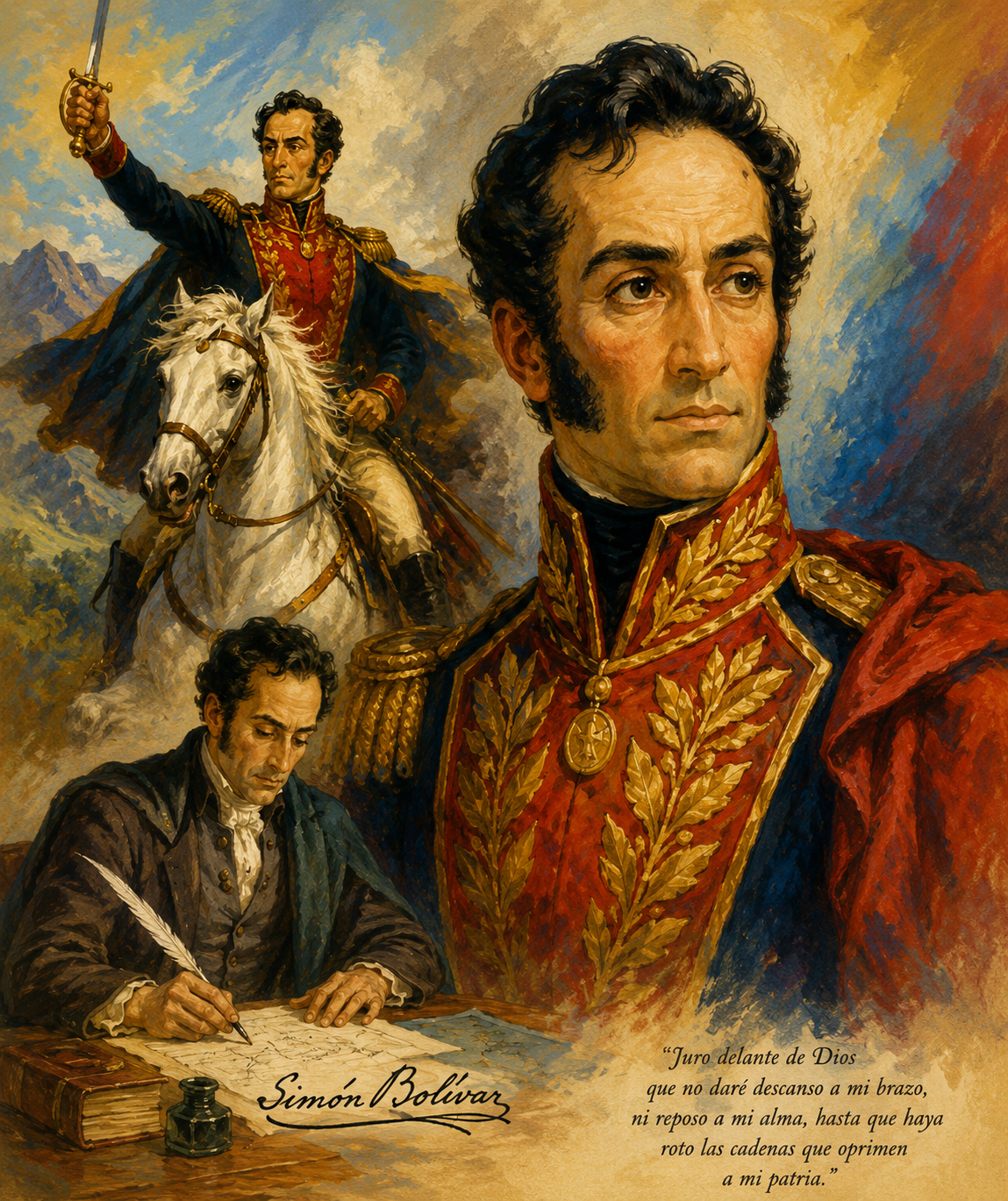
Simón Bolívar: The Liberator of South America
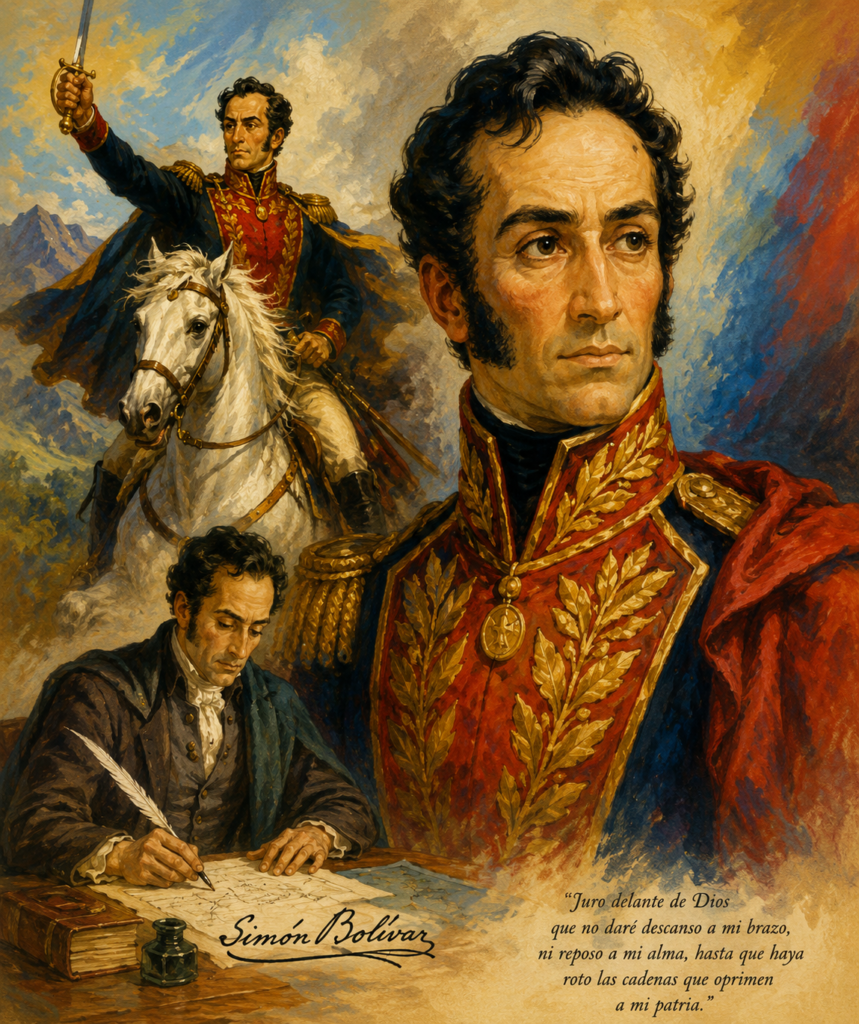
Ai image
Introduction
Simón Bolívar was born on July 24, 1783, in Caracas, the capital of the Captaincy General of Venezuela, a Spanish colonial administrative division in northern South America. He was born into a wealthy Criollo family—people of pure Spanish ancestry who were born in the Spanish colonies rather than in Spain.
Bolívar lost both of his parents at a young age and was raised by relatives and tutors. Despite these hardships, he received an excellent education that shaped his political ideals and future leadership.
Education and the Death of His Wife
As a young man, Bolívar traveled to Madrid, Spain, to complete his education, following the custom of wealthy colonial families. There, he studied under distinguished teachers and became acquainted with members of Spanish high society.
In 1802, he married María Teresa Rodríguez del Toro y Alayza. However, the couple’s happiness was short-lived. After returning to Venezuela, María Teresa died of yellow fever in 1803. Her untimely death deeply devastated Bolívar, and he never remarried.
The Grand Tour of Europe
Grief-stricken by his wife’s death, Bolívar embarked on an extended journey across Europe between 1803 and 1807. He spent considerable time in France, where he became familiar with the ideas of the Age of Enlightenment and read the works of influential philosophers who advocated liberty, equality, and self-government.
In 1804, Bolívar witnessed the magnificent coronation of Napoleon Bonaparte as Emperor of France. Although he initially admired Napoleon’s achievements, he later rejected his imperial ambitions.
In 1805, Bolívar traveled to Italy with his former tutor, Simón Rodríguez. At Monte Sacro in Rome, he made his famous vow that he would dedicate his life to liberating South America from Spanish colonial rule.
Return to Venezuela
Bolívar returned to Venezuela in 1807. He began building support among the wealthy Criollo population for the cause of independence. When Spain was weakened by the Peninsular War following Napoleon’s invasion, Bolívar emerged as one of the leading figures in the Spanish American independence movement.
In 1810, he began his military career by joining the revolutionary forces and quickly became one of the movement’s most influential leaders.
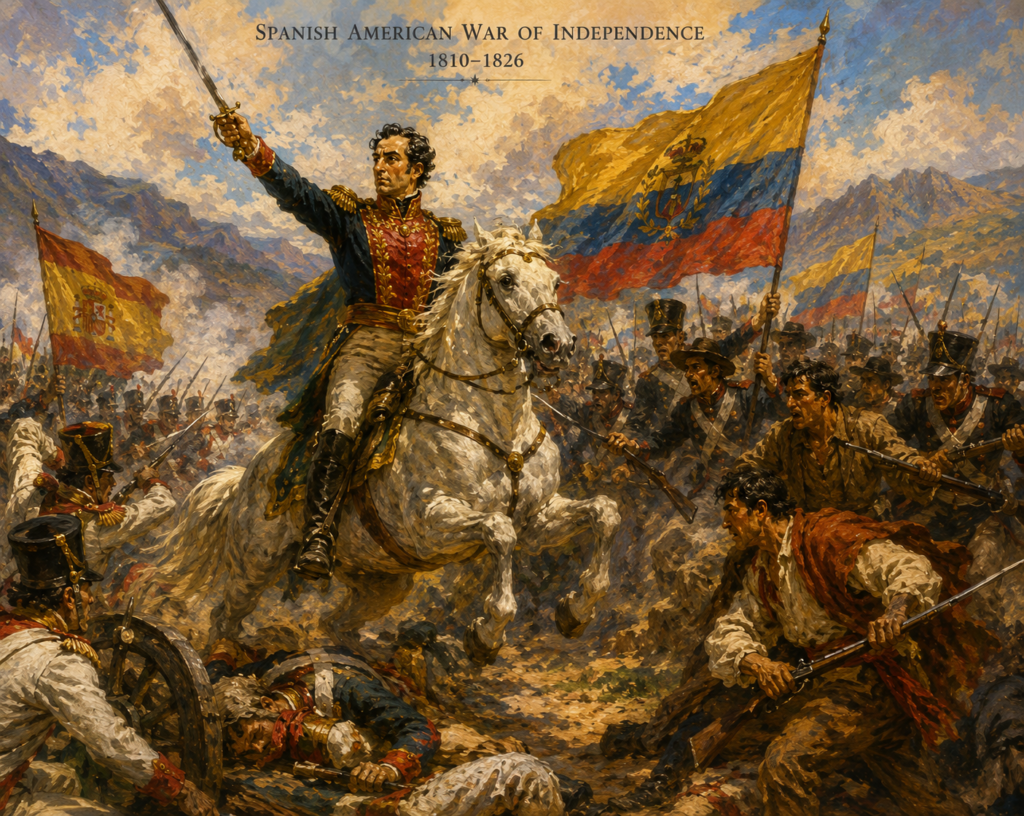
Ai image The Fight Against Spanish Rule
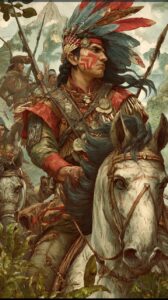
Between 1813 and 1823, Bolívar led several major military campaigns that ultimately secured Venezuela’s independence.
1. The Admirable Campaign (1813)Bolívar launched the Admirable Campaign from New Granada (present-day Colombia) into Venezuela. His forces captured several important cities before entering Caracas in triumph.Result:- Caracas was liberated.- The Second Republic of Venezuela was established.- Bolívar earned the title “El Libertador” (The Liberator).
2. The Royalist Counteroffensive (1814)Spanish Royalist forces launched a powerful counterattack against the republic. Bolívar’s army suffered several defeats, forcing him into exile.Result:- The Second Republic collapsed.- Bolívar fled Venezuela and reorganized his efforts abroad.
3. The Liberation Campaigns (1816–1819)With military and financial assistance from Haiti, Bolívar rebuilt his army and resumed the struggle for independence. Through a series of successful campaigns, he gradually regained control over much of Venezuela.Result:- The independence movement was revived.- Patriot forces regained significant territory.
4. The Battle of Carabobo (June 24, 1821)The Battle of Carabobo was the decisive battle of the Venezuelan War of Independence. Bolívar’s forces defeated the Spanish Royalist army, securing the future of the nation.Result:- Spain suffered a decisive military defeat.- Venezuela’s independence was effectively secured.
5. Final Victory (1823)In 1823, patriot forces captured Puerto Cabello, the last major Spanish stronghold in Venezuela.
Result:- Spanish rule in Venezuela officially came to an end.- Venezuela achieved complete independence.
Countries Liberated by Simón Bolívar
Bolívar played a crucial role in the independence of several South American nations, including:- Venezuela- Colombia- Ecuador- Peru- Bolivia- Panama (through its inclusion in Gran Colombia)
The country of Bolivia was named in his honor. Venezuela later adopted the official name Bolivarian Republic of Venezuela to recognize his legacy.
Political Challenges
Following independence, Bolívar faced intense political opposition and internal divisions within Gran Colombia. His dream of a united South America gradually collapsed due to regional rivalries and political conflicts.
Death
Simón Bolívar died of tuberculosis on December 17, 1830, at Quinta de San Pedro Alejandrino, near Santa Marta (present-day Colombia). He was only 47 years old at the time of his death.
Legacy
Today, Simón Bolívar is remembered as one of history’s greatest revolutionary leaders. His vision, courage, and determination transformed the political landscape of South America and earned him the enduring title “The Liberator.” His legacy continues to inspire millions across Latin America and around the world.
Post Comment