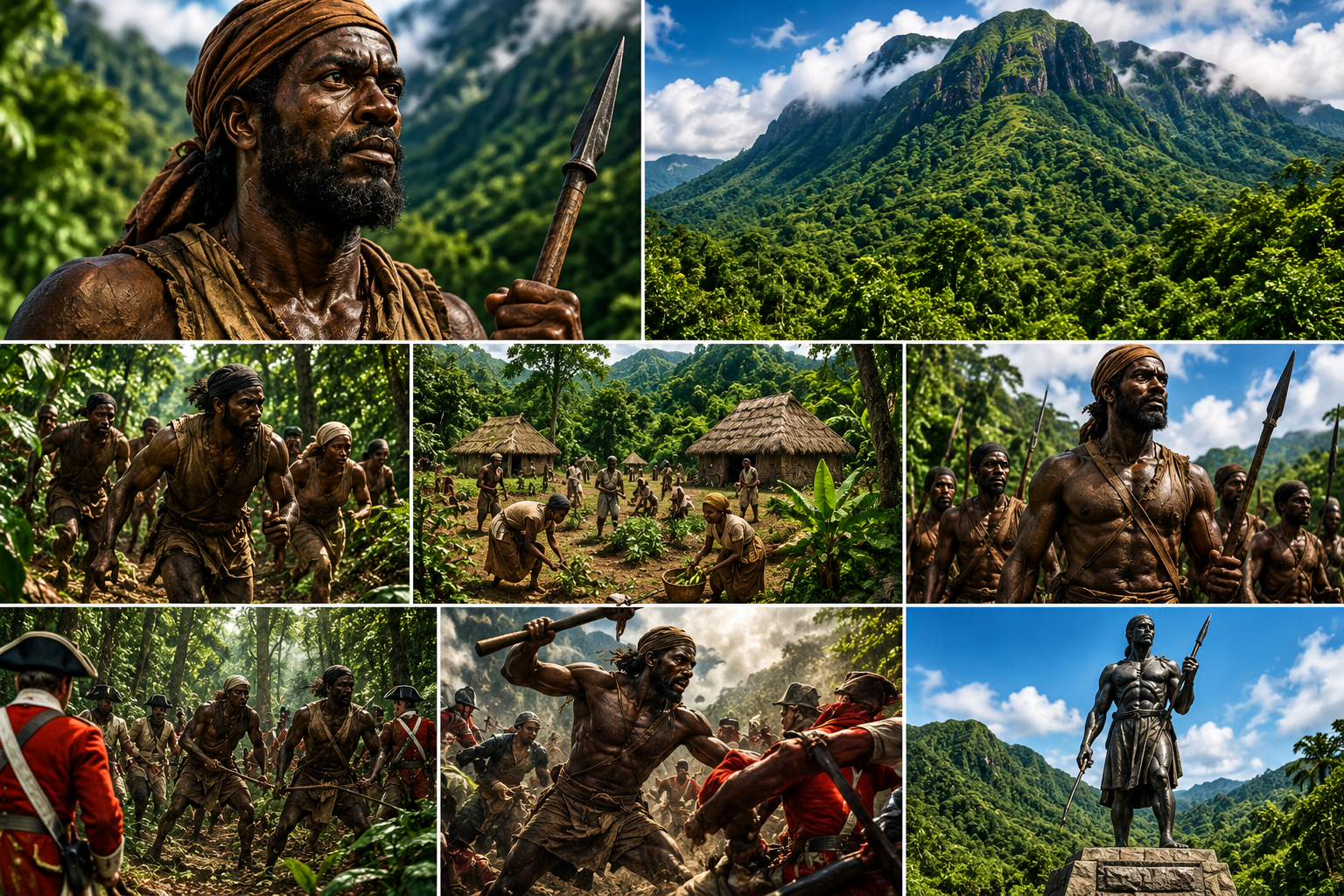
Morne Jacko – The Legendary Maroon Leader Who Fought for Freedom
Introduction
Throughout history, countless men and women have risked everything in pursuit of one priceless ideal—freedom. Among these remarkable individuals stands Morne Jacko, one of the Caribbean’s most inspiring freedom fighters. Although his name is less widely known than many other historical figures, his courage and determination left an unforgettable mark on the history of Dominica.
Jacko was not a king, a wealthy landowner, or a military general. He was an enslaved African who refused to accept a life in chains. Instead of surrendering to oppression, he escaped into Dominica’s rugged mountains and became the leader of a community of Maroons—formerly enslaved people who chose freedom over slavery, despite the dangers.
His story is not just about one man’s escape. It is a story of leadership, resistance, sacrifice, and hope. Today, places such as Morne Jacko and Plat Jacko continue to remind people of the extraordinary bravery of those who fought for liberty against overwhelming odds.
—
Slavery in Dominica
During the 17th and 18th centuries, European colonial powers competed for control of Caribbean islands because of their fertile land and profitable sugar plantations.
Dominica became one of these contested islands. Plantation owners imported thousands of Africans through the transatlantic slave trade. These men, women, and children were forced to work under harsh conditions.
Life for enslaved Africans was extremely difficult. They worked long hours cutting sugarcane, building plantations, and performing exhausting labor. Many suffered from hunger, disease, punishment, and the constant loss of freedom.
Yet despite these terrible conditions, many refused to surrender their hope.
Some escaped into Dominica’s dense forests and towering mountains, where they built hidden settlements beyond the reach of colonial authorities.
These escaped people became known as Maroons.
—
The Island That Protected Freedom
Dominica’s geography played an important role in the Maroon movement.
Unlike many Caribbean islands with flat plantations, Dominica is covered with:
Dense tropical rainforests
Deep valleys
Fast-flowing rivers
High volcanic mountains
Thick vegetation
These natural features made it nearly impossible for colonial soldiers to travel safely through the interior.
For escaped slaves, the mountains became more than a hiding place.
They became a homeland.
The forests provided food, fresh water, medicinal plants, and protection.
Nature became their greatest ally.
—
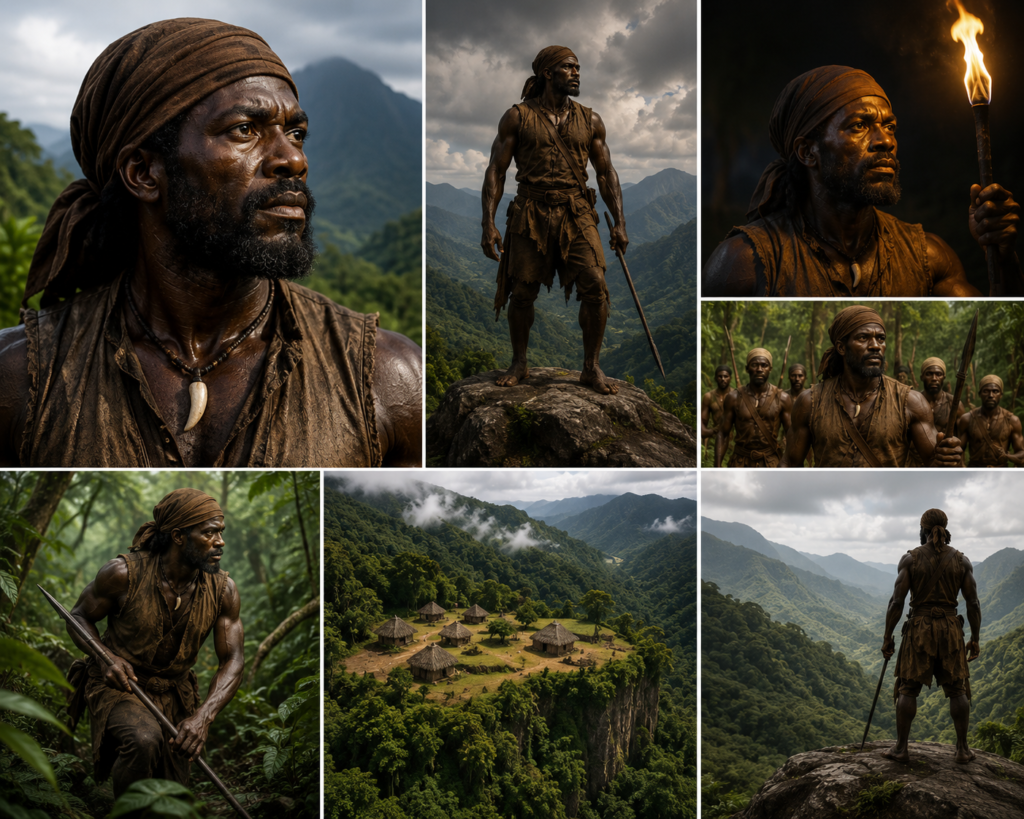
Who Was Jacko?
Historical records suggest that Jacko was born in Africa before being captured and sold into slavery.
Like millions of others during the Atlantic slave trade, he was transported across the ocean under horrific conditions before arriving in Dominica.
Instead of accepting slavery, Jacko escaped.
The exact details of his escape remain unknown, but historians believe he successfully reached Dominica’s mountainous interior.
There he met other escaped Africans who shared the same dream:
To live as free people.
Jacko quickly earned respect because of his intelligence, courage, and leadership.
He understood the forests.
He understood survival.
Most importantly, he understood that freedom could only survive if people worked together.
Soon he became the leader of one of Dominica’s largest Maroon communities.
—
Building a Free Community
Jacko did not simply hide from colonial authorities.
He helped build a functioning community.
The Maroons created homes from wood and local materials.
They grew crops such as cassava, yam, bananas, and other tropical foods.
They hunted wild animals and gathered fruits from the forest.
Families raised children who had never experienced plantation life.
For the first time, many people could decide how to live without a slave master controlling every aspect of their lives.
Although life remained dangerous, it was life lived with dignity.
—
Plat Jacko – The Hidden Stronghold
One of the most important places connected with Jacko is Plat Jacko, meaning Jacko’s Flat.
This mountain plateau served as the headquarters of his Maroon settlement.
Its location was carefully chosen.
Steep cliffs surrounded much of the area.
Dense forests concealed its entrances.
Only those familiar with the mountain paths could easily reach it.
This natural fortress allowed the Maroons to detect approaching enemies long before soldiers arrived.
Colonial forces often became lost in the rainforest while trying to locate Jacko’s camp.
Even when they found clues, the difficult terrain made launching an attack extremely dangerous.
Plat Jacko became a symbol of freedom hidden within nature itself.
—
Leadership Beyond Strength
Jacko was respected not merely because he could fight.
He inspired people through leadership.
He organized food production.
He ensured that everyone contributed to the community.
He encouraged cooperation rather than fear.
Many escaped slaves traveled long distances hoping to join his settlement because they believed Jacko offered not only safety but also hope.
His leadership transformed scattered fugitives into an organized community capable of surviving in one of the Caribbean’s most challenging environments.
The Growth of the Maroon Community
As news of Jacko’s successful escape spread across Dominica, more enslaved Africans began risking everything to flee the plantations. Many traveled for days through thick forests, crossed dangerous rivers, and climbed steep mountains in search of freedom.
When they reached Plat Jacko, they found more than a hiding place—they found a community built on equality, cooperation, and hope.
The Maroons welcomed newcomers and taught them how to survive in the wilderness. Everyone contributed to the settlement. Some farmed the land, others hunted, gathered fruits and medicinal plants, built shelters, or stood guard. Every member played a role in protecting the community.
For many, it was the first time they could make decisions about their own lives without fear of punishment.
—
Living in Harmony with Nature
The mountains of Dominica became the Maroons’ greatest ally.
They learned to use every part of the forest wisely. Streams provided fresh drinking water, fertile soil supported crops like cassava, yams, bananas, and plantains, and the forests supplied wood, fruits, herbs, and game.
Instead of exhausting the land, the Maroons respected nature and took only what they needed. This knowledge, combined with skills brought from Africa and learned in the Caribbean, allowed them to survive in one of the island’s most rugged landscapes.
—
Jacko’s Leadership
Jacko was more than a courageous fighter. He was a wise and respected leader.
He knew that freedom depended on discipline and unity. Under his guidance, the Maroons established rules that encouraged cooperation and fairness. Disagreements were settled peacefully whenever possible, and every person was expected to contribute to the survival of the community.
Jacko inspired confidence because he shared the same hardships as everyone else. He worked, hunted, and defended the settlement alongside his people.
His leadership earned loyalty rather than fear.
—
Guerrilla Warfare Against Colonial Forces
The colonial authorities viewed the growing Maroon settlements as a serious threat. Every successful escape encouraged others to seek freedom, weakening the plantation system.
To destroy the settlements, British forces organized military expeditions into the mountains.
Jacko understood that his people could never defeat a professional army in an open battle.
Instead, he used guerrilla warfare.
The Maroons attacked only when they had the advantage. They knew every trail, river crossing, and mountain pass. They could appear suddenly, strike quickly, and disappear into the rainforest before soldiers could respond.
Dense fog, heavy rain, steep cliffs, and thick vegetation often worked in the Maroons’ favor.
Many military expeditions returned without finding Jacko’s camp.
—
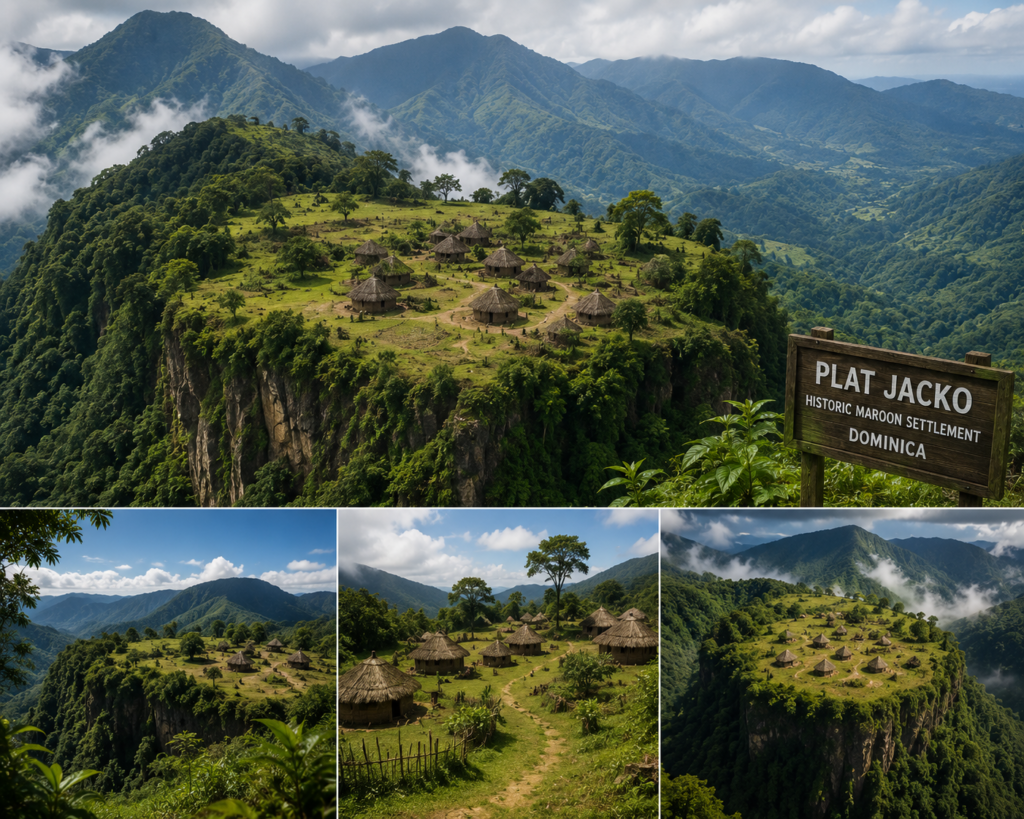
The Search for Plat Jacko
British commanders repeatedly tried to locate Plat Jacko.
They questioned plantation owners, searched forests, and relied on guides familiar with the island. Yet the Maroons carefully concealed their settlement.
Lookouts watched important mountain paths day and night. If strangers approached, warning signals spread quickly through the community.
Families could hide deep within the forest while defenders prepared for possible attacks.
The difficult landscape frustrated colonial soldiers, many of whom were unfamiliar with Dominica’s mountains.
—
A Symbol of Hope
Jacko’s continued freedom inspired enslaved people across the island.
His story spread from plantation to plantation.
People whispered that there was a place in the mountains where no master ruled, where families lived freely, and where courage mattered more than chains.
These stories gave hope to people who had almost lost faith in a better future.
Although escaping remained dangerous, Jacko proved that freedom was possible.
His success became a powerful symbol of resistance against slavery.
—
Challenges Within the Mountains
Life as a Maroon was not easy.
The community faced shortages of food during storms, tropical diseases, injuries, and the constant possibility of military attacks.
Heavy rains sometimes destroyed crops.
Hurricanes threatened shelters.
Medical care was limited, and every injury carried risks.
Despite these hardships, the Maroons believed that a difficult life in freedom was far better than a comfortable life in slavery.
Their determination kept the community alive for many years.
—
A Growing Legend
As time passed, Jacko became more than a leader.
He became a legend.
Stories described his remarkable knowledge of the mountains and his ability to avoid capture despite repeated military campaigns.
Whether every tale was true or not, these stories reflected the deep respect people had for him.
To the enslaved, Jacko represented courage.
To the colonial authorities, he represented resistance.
To future generations, he became one of Dominica’s greatest freedom fighters.
Morne Jacko – The Legendary Maroon Leader Who Fought for Freedom
Part 3: The Final Battle, Legacy, and Lessons
—
The Final Campaign
For many years, Jacko and his followers successfully resisted repeated attempts by colonial authorities to destroy their Maroon settlement. Every failed expedition strengthened Jacko’s reputation and inspired more enslaved Africans to dream of freedom.
Eventually, however, the British intensified their efforts. They organized larger military expeditions, gathered information about the mountains, and searched relentlessly for the Maroon strongholds.
After decades of resistance, Jacko’s settlement was finally discovered. In 1814, colonial troops launched a surprise attack on the Maroon community. Although Jacko and his followers fought bravely, they were greatly outnumbered.
Historical records indicate that Jacko was killed during this attack. His death marked the end of one of Dominica’s most famous Maroon leaders, but it did not end the ideals for which he fought. His courage became part of the island’s history and identity.
—
A Legacy That Lives On
Although Jacko lost his life, his story survived.
Today, Morne Jacko and Plat Jacko are remembered as symbols of freedom, resistance, and determination. These places remind visitors that ordinary people can achieve extraordinary things when they refuse to surrender their dignity.
Jacko’s legacy is honored in Dominica as an example of leadership, resilience, and the human desire to live free.
His story also reminds us that history is shaped not only by kings and generals but by people who dared to challenge injustice.
—
Why Morne Jacko Matters Today
Modern visitors to Dominica see breathtaking mountains, lush rainforests, and peaceful valleys. Yet these beautiful landscapes were once the setting for an extraordinary struggle for freedom.
Morne Jacko is more than a mountain.
It is a symbol of hope.
It represents every person who stood against oppression despite overwhelming odds.
For historians, Jacko’s story provides valuable insight into the Maroon communities that existed throughout the Caribbean.
For students, it teaches courage and perseverance.
For everyone else, it is a reminder that freedom should never be taken for granted.
—
Lessons from Jacko’s Life
Jacko’s journey offers timeless lessons:
Freedom is priceless. People are willing to risk everything to live free.
Leadership is built on trust. Jacko earned respect by serving alongside his people.
Unity creates strength. The Maroons survived because they worked together.
Knowledge is power. Their understanding of the mountains became a powerful advantage.
Hope can survive even in the darkest times. Jacko proved that determination can overcome immense challenges.
—
Historical Significance
The story of Morne Jacko is an important chapter in Caribbean history. It highlights the courage of the Maroons and their role in resisting slavery across the region.
Although many historical details have been lost over time, Jacko remains one of Dominica’s most respected freedom fighters. His legacy continues to inspire researchers, educators, and visitors interested in the island’s rich cultural heritage.
Post Comment