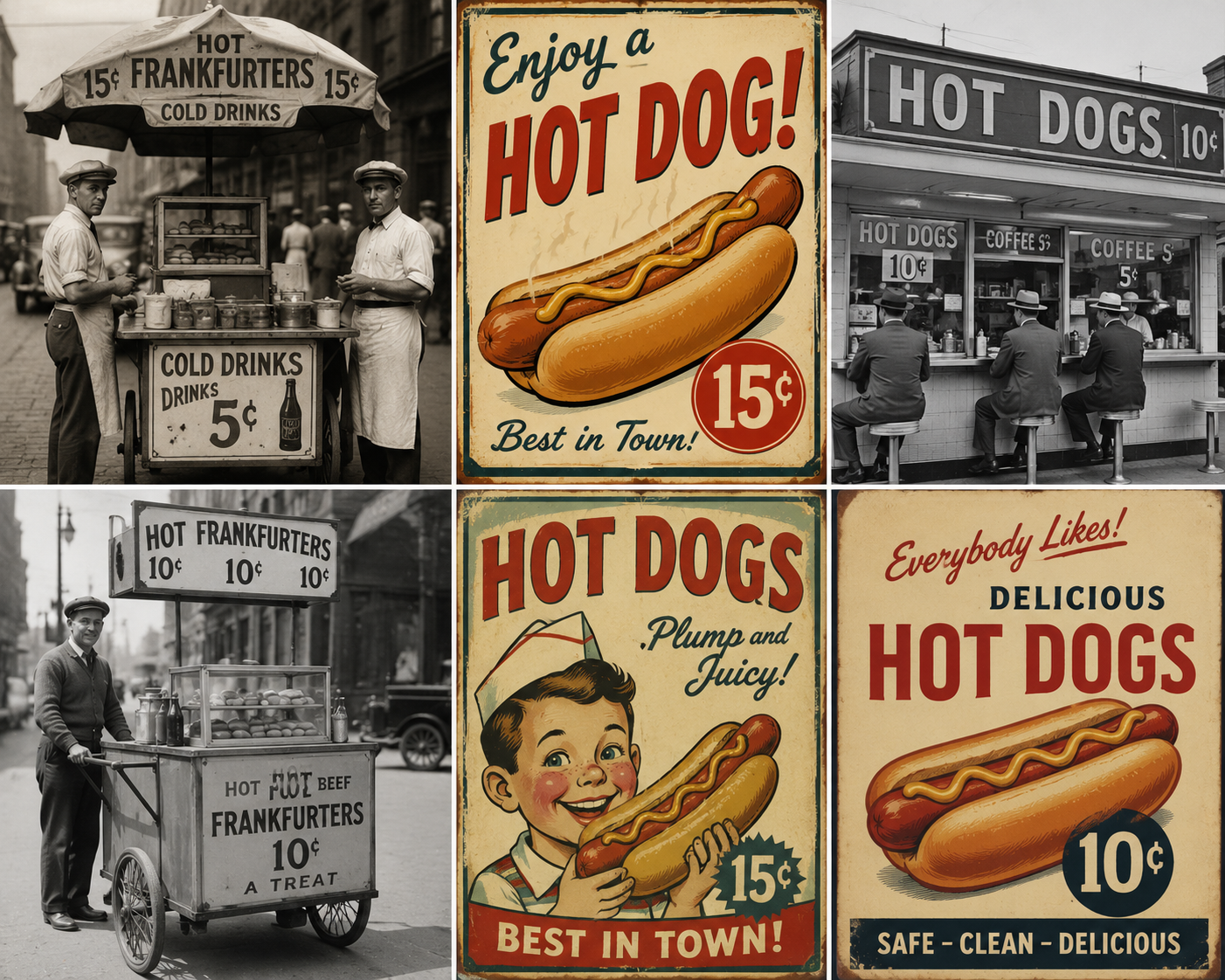
Charles Feltman and the Birth of the American Hot Dog
Few foods are as closely connected with American culture as the hot dog. It is simple, inexpensive, portable, and instantly recognizable: a seasoned sausage placed inside a long soft bun and finished with toppings such as mustard, onions, ketchup, relish, or sauerkraut. Today, the hot dog is found at baseball stadiums, backyard barbecues, roadside stands, fairs, restaurants, and Fourth of July celebrations across the United States.
But behind this famous American food is a fascinating story of immigration, entrepreneurship, Coney Island, and changing American eating habits.
Among the people most closely associated with the early history of the hot dog is Charles Feltman, a German-born baker and food vendor who operated in Coney Island, Brooklyn, during the second half of the 19th century. Feltman is widely credited with popularizing the idea of serving a hot sausage inside a long bread roll, creating a convenient food that could be eaten while walking along the busy seaside resort.
Although historians continue to debate exactly who invented the first sausage-in-a-bun and when it happened, Charles Feltman’s role in the development of the modern American hot dog is difficult to ignore. His business grew from a humble food wagon into a major Coney Island food and entertainment empire.
Who Was Charles Feltman?
Charles Feltman was a German immigrant who became a baker and entrepreneur in New York. During the 1860s, Coney Island was developing into one of America’s most popular seaside destinations. Visitors came to enjoy the beach, entertainment, performances, attractions, and eventually amusement parks.
This growing crowd created an enormous opportunity for food vendors.
Feltman recognized that visitors needed food that was inexpensive, hot, filling, and easy to eat. According to historical accounts, he began selling food from a mobile pie wagon that he pulled through the sandy areas of Coney Island.
At the time, sausages such as frankfurters and wieners were already familiar among German-American communities. German immigrants had brought their sausage-making traditions to the United States, and street vendors sold sausages in American cities.
The challenge was making these sausages convenient for people who wanted to eat while walking.
Feltman’s solution became one of the most influential developments in American fast food.
The Sausage and the Bread Roll
The basic concept was straightforward: place a hot sausage inside a long bread roll.
This combination solved several problems at once.
A customer did not need a knife and fork. The bread protected the hands from the hot sausage, while also providing an inexpensive source of carbohydrates. The entire meal could be carried easily and eaten while walking.
Historical sources commonly credit Feltman with selling sausages in rolls at Coney Island beginning in 1867. However, the exact history of the hot dog is complicated, and different accounts give different dates and credit other vendors with similar innovations.
For this reason, it is more accurate to say that Feltman is widely credited with popularizing the sausage-in-a-bun format rather than claiming that he unquestionably invented every element of the modern hot dog.
That distinction is important because the hot dog evolved from European sausage traditions and American street-food culture rather than appearing suddenly as a completely new invention.

Why Coney Island Was the Perfect Place
Coney Island played a major role in the rise of the hot dog.
During the late 19th century, Coney Island became a destination for enormous crowds of New Yorkers and visitors. People came to escape the city, enjoy the beach, watch entertainment, and experience new amusements.
Large crowds meant large demand for food.
Vendors needed products that could be prepared quickly and sold cheaply. A sausage inside a bread roll was almost perfect for this environment.
The food was:
– Portable
– Affordable
– Quick to serve
– Filling
– Easy to eat
– Suitable for large crowds
This was the beginning of an idea that would later define American fast food.
Feltman’s success demonstrated that food could become an important part of the entertainment economy. Visitors did not simply come to Coney Island for attractions; eating became part of the experience.
From a Pie Wagon to a Food Empire
Feltman’s business grew dramatically.
What began as a small mobile food operation eventually developed into a large restaurant and entertainment complex known as Feltman’s German Gardens.
By the late 19th and early 20th centuries, Feltman’s operation had become an important Coney Island institution. Historical accounts describe a massive complex containing restaurants, beer gardens, entertainment facilities, and food stands. At its height, the business employed a large workforce and served enormous numbers of visitors.
Feltman had demonstrated something important: a simple food item could become the foundation of a large commercial enterprise.
His business also helped establish Coney Island as one of the places most strongly associated with the American hot dog.
Was Charles Feltman Really the Inventor?
This is one of the most interesting questions in hot dog history.
The answer is not completely certain.
Many historical accounts credit Charles Feltman with creating or popularizing the hot sausage in a bread roll during the 1860s. Other accounts point to different vendors and different dates.
For example, some histories mention Antonoine Feuchtwanger, a sausage vendor in St. Louis, who is associated with the use of long rolls for serving hot sausages. Other stories connect the development of the hot dog bun to practical problems faced by food vendors.
The larger story becomes clearer when we consider that sausages themselves were not new.
Frankfurters and wieners had European origins, particularly within German and Austrian food traditions. German immigrants brought these foods to America, where they gradually became part of American street culture.
Therefore, the modern hot dog should be understood as an American evolution of European sausage traditions.
Charles Feltman’s great contribution was helping transform that tradition into a highly successful American food business.
The Rise of the American Fast-Food Idea
The story of Feltman is also the story of American urbanization.
During the late 19th century, American cities were growing rapidly. Workers, immigrants, families, and tourists increasingly needed convenient food.
Street food became an important part of city life.
The hot dog fit perfectly into this new environment.
A vendor could prepare sausages in large quantities and serve them quickly. Customers could eat them without sitting down for a formal meal.
This concept would eventually influence the development of American fast food.
Long before modern fast-food chains appeared, vendors like Feltman were demonstrating the commercial potential of standardized, portable meals.
The Connection to Nathan Handwerker
Charles Feltman’s story is also connected directly to one of America’s most famous hot-dog brands: Nathan’s Famous.
Nathan Handwerker, a Polish immigrant, worked at Feltman’s establishment before starting his own hot-dog business. In 1916, Handwerker opened a small stand at Coney Island and sold hot dogs for five cents, compared with the ten-cent price associated with Feltman’s hot dogs.
This was an important moment in American food history.
Handwerker used a lower price to attract customers and eventually built Nathan’s Famous into a major brand.
The success of Nathan’s helped continue the Coney Island hot-dog tradition long after Feltman’s original business disappeared.
In this sense, Feltman’s influence extended beyond his own lifetime and business. His Coney Island food model helped create an environment in which later entrepreneurs could build enormous food brands.
Why Was the Food Called a “Hot Dog”?
The term “hot dog” has its own complicated history.
The sausage was known by names such as frankfurter, wiener, red hot, and dachshund sausage before “hot dog” became the dominant American term.
One popular legend claims that a cartoonist at a baseball game could not spell “dachshund” and therefore called the sausage a “hot dog.” However, historians have found little evidence supporting this famous story. The term “hot dog” was already appearing in American usage by the late 19th century.
The name may have developed partly from humorous associations between the long sausage and dachshund dogs.
At one point, the term could also carry negative associations because inexpensive sausages were sometimes the subject of jokes and concerns about their ingredients.
Over time, however, “hot dog” became a normal and beloved American food term.
From Coney Island to Baseball
The hot dog eventually moved far beyond Coney Island.
It became associated with baseball, fairs, circuses, amusement parks, street corners, and public celebrations.
The reason was simple: the hot dog was perfectly designed for spectators.
A baseball fan could hold a hot dog in one hand while watching the game. At an amusement park, visitors could eat without interrupting their activities. At a picnic, hot dogs could be grilled and served to large groups.
This portability helped transform the hot dog into an American cultural symbol.
By the 20th century, the food was no longer simply a Coney Island specialty. It had become part of everyday American life.
The Hot Dog and American Identity
The hot dog became much more than a cheap meal.
It came to represent an important idea about American food: different cultural traditions could be combined and transformed into something new.
The sausage had European roots.
The bun-and-sausage format developed within American street-food culture.
Coney Island provided the entertainment environment.
Immigrant entrepreneurs helped build the businesses.
American consumers turned the product into a national tradition.
This combination is one reason the hot dog has such an interesting place in American history.
It reflects the country’s history of immigration and entrepreneurship.
The Decline of Feltman’s Business
Despite its enormous success, Feltman’s original empire did not survive permanently.
Coney Island continued to change throughout the 20th century, while competition and changing entertainment patterns transformed the neighborhood.
Feltman’s restaurant eventually disappeared, although its legacy survived through the continued popularity of Coney Island hot dogs.
Nathan’s Famous became the better-known name associated with Coney Island’s hot-dog tradition, while Charles Feltman gradually became a lesser-known figure outside food-history circles.
Nevertheless, historians and food writers continued to recognize Feltman’s contribution.
Modern efforts to revive the Feltman’s name have also helped bring attention back to his place in American culinary history.
Charles Feltman’s Lasting Legacy
Charles Feltman’s greatest achievement was not simply selling sausages.
He recognized the relationship between food, convenience, location, and entertainment.
That idea remains central to the modern food industry.
Today, millions of people buy portable foods while attending sporting events, traveling, shopping, or enjoying entertainment. The basic commercial principle is remarkably similar to what vendors were doing at Coney Island more than a century ago.
Feltman also demonstrated the power of a simple product.
A sausage and a bread roll may sound ordinary, but the combination was inexpensive, convenient, and easy to reproduce. These qualities made it ideal for mass consumption.
His story therefore belongs not only to the history of the hot dog but also to the broader history of American entrepreneurship.
The Hot Dog Today
More than a century after Feltman’s Coney Island business, hot dogs remain one of America’s best-known foods.
They appear in countless regional forms.
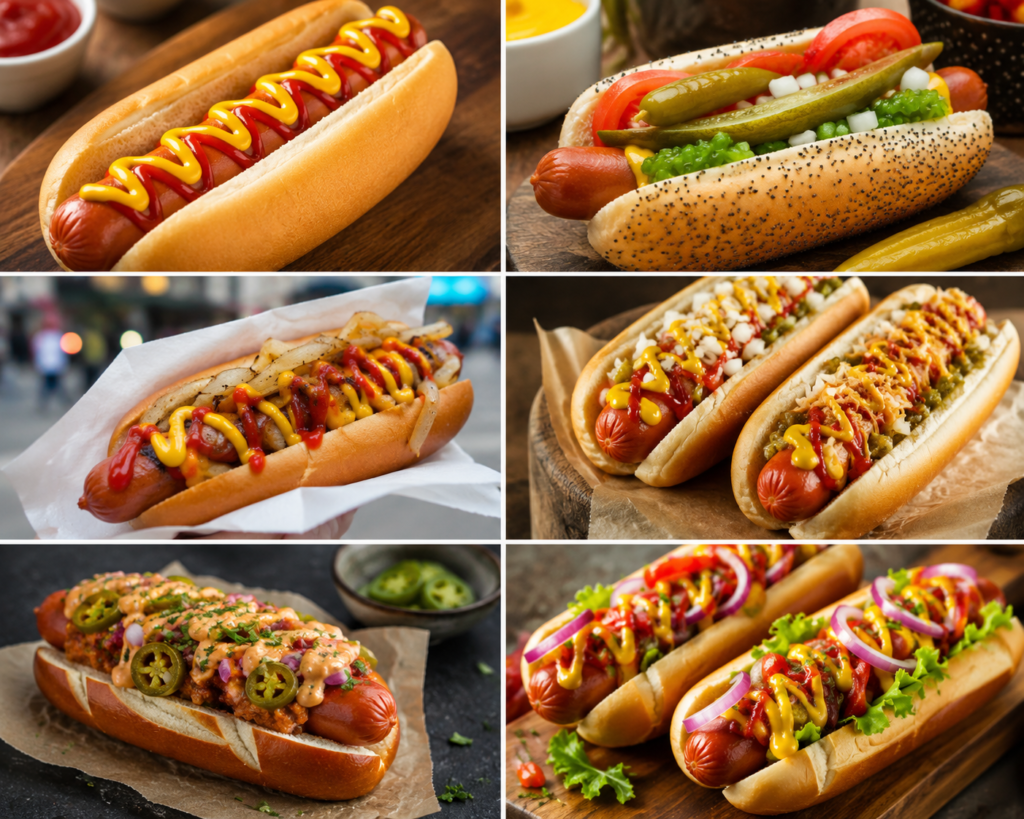
New York-style hot dogs may be served with mustard and onions. Chicago-style hot dogs are famously loaded with toppings. Detroit has its own Coney-style tradition featuring chili and other toppings. Other regions have developed their own recipes and serving styles.
The basic formula remains remarkably consistent:
sausage + bun + toppings = hot dog
Yet the variations are almost endless.
This flexibility has helped the hot dog survive changing food trends.
It can be served at a backyard barbecue, a major sporting event, a street-food festival, or a family dinner.
Conclusion:
Charles Feltman’s story is an important chapter in the history of American food.
Although historians cannot say with absolute certainty that Feltman invented every element of the modern hot dog, he is widely credited with popularizing the sausage-in-a-bun format at Coney Island during the 1860s. His business transformed a simple street-food concept into a major commercial enterprise.
Feltman’s success helped establish Coney Island as an important center of hot-dog culture. His business also provided a foundation for later entrepreneurs, including Nathan Handwerker, whose Nathan’s Famous brand became one of America’s most recognizable hot-dog companies.
The hot dog ultimately became something larger than its ingredients.
It became a symbol of American convenience, immigration, entrepreneurship, entertainment, and popular culture.
Every time someone eats a hot dog at a baseball game, barbecue, fair, or summer celebration, they are participating in a tradition whose roots reach back to the bustling seaside crowds of 19th-century Coney Island.
Post Comment