James Naismith: The Visionary Who Invented Basketball and Changed the World Forever
Introduction
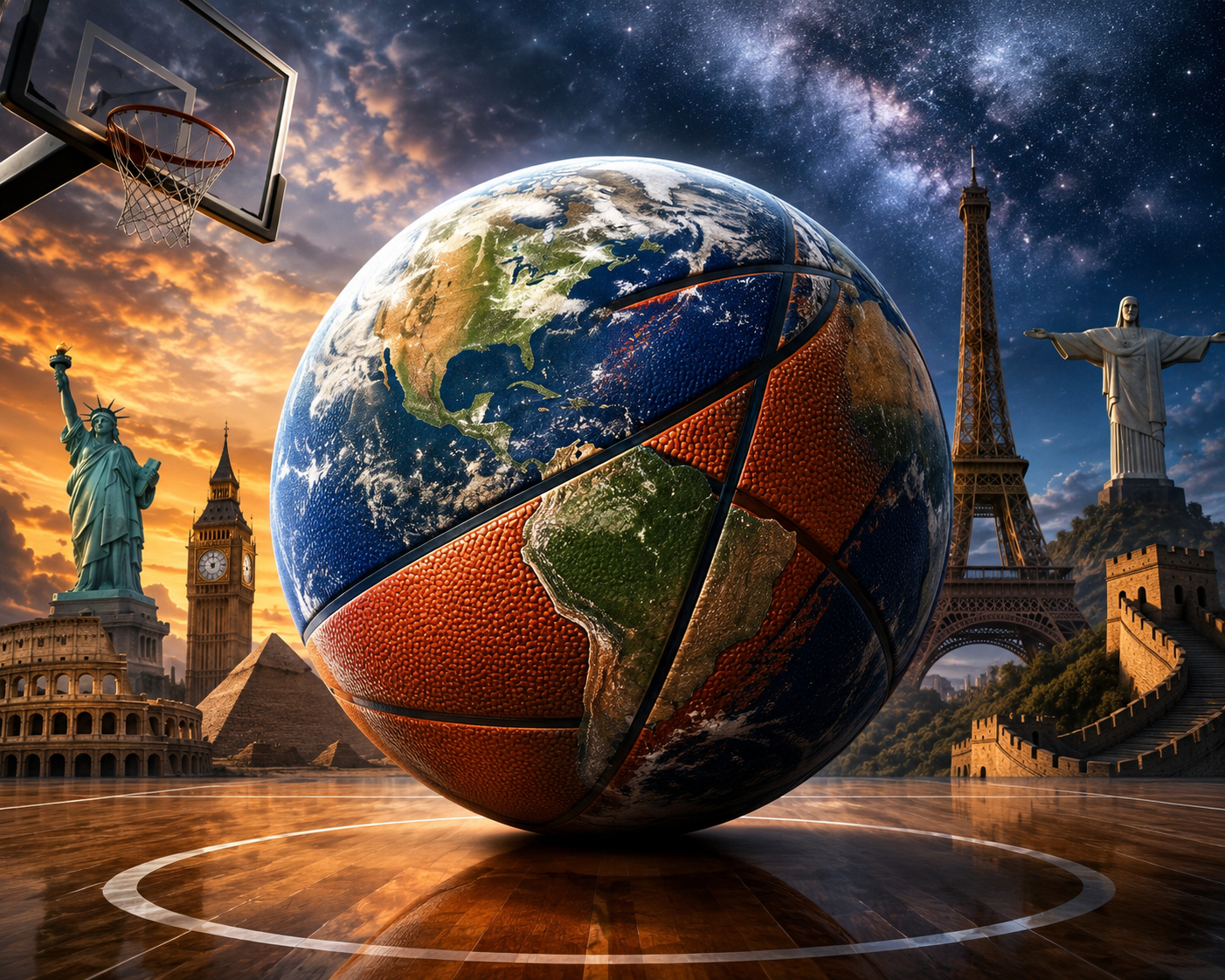
Basketball is one of the most popular sports in the world, played by millions of people across every continent. From neighborhood courts and school gymnasiums to professional arenas packed with thousands of cheering fans, basketball has become a universal language of teamwork, athleticism, and determination. The game inspires children to dream, athletes to compete, and communities to come together. Yet few people know the remarkable story of the man who created this global phenomenon.
The inventor of basketball, James Naismith, was not trying to create a worldwide sport. Instead, he was searching for a practical solution to a simple problem. During the cold winter of 1891, students needed an indoor activity that would keep them physically active without the dangers associated with football or rugby. What began as a classroom assignment eventually transformed into one of the greatest sporting inventions in history.
This article explores the fascinating life of James Naismith, the circumstances that led to the invention of basketball, the original rules of the game, and how his innovative idea evolved into a sport loved by millions around the globe.
Who Was James Naismith?
James Naismith was born on November 6, 1861, in Almonte, Ontario, Canada. Raised in a rural farming community, he developed a strong appreciation for physical activity and outdoor games from an early age. His childhood was not easy. Both of his parents died when he was only nine years old, leaving him and his siblings to be raised by relatives.
Despite these hardships, Naismith displayed remarkable resilience and determination. He enjoyed climbing trees, wrestling with friends, and participating in local sports. One of his favorite childhood games was called “Duck on a Rock,” where players attempted to knock a small stone off a larger rock by throwing another stone with accuracy rather than force. Historians believe this simple game later influenced one of basketball’s key principles—shooting with precision instead of relying solely on power.
Naismith excelled academically while maintaining a passion for athletics. He attended McGill University in Montreal, where he studied theology and physical education. During his college years, he participated in gymnastics, football, lacrosse, and other sports, gaining valuable knowledge about athletic training and teamwork.
His education shaped his belief that sports were not only important for physical fitness but also for building discipline, character, and leadership. These values would later become central to the sport he invented.
The Journey to Springfield
After graduating from McGill University, James Naismith accepted a position at the International YMCA Training School in Springfield, Massachusetts. The school trained physical education instructors who would eventually work throughout North America and beyond.
In 1891, Dr. Luther Gulick, the head of physical education at the school, faced a significant challenge. Winters in New England were long and harsh, making outdoor sports nearly impossible for several months each year. Students grew restless indoors and quickly lost interest in repetitive gym exercises.
Gulick assigned Naismith the difficult task of creating a completely new indoor game. The game had to satisfy several important requirements:
– It needed to be played indoors.
– It had to keep students physically active.
– It had to minimize rough physical contact.
– It should encourage teamwork rather than individual play.
– It needed to be enjoyable enough that students would willingly participate.
Naismith had only two weeks to solve the problem.
The Birth of Basketball
Instead of modifying existing sports, Naismith decided to invent an entirely new game. He studied popular sports such as football, rugby, soccer, baseball, and lacrosse, identifying what made them exciting while also recognizing their shortcomings for indoor play.
He realized that games involving excessive running with the ball often became violent. To reduce injuries, he designed a sport where players primarily passed the ball instead of carrying it.
For the goals, Naismith requested two wooden peach baskets from the school’s janitor. The baskets were nailed to opposite balconies of the gymnasium approximately ten feet above the floor. Interestingly, that ten-foot height remains the official basket height in modern basketball.
The first basketball used was actually a soccer ball because no specialized basketball had yet been designed.
On December 21, 1891, James Naismith introduced his new game to a class of eighteen students. Each team consisted of nine players. Every time a team scored, someone had to climb a ladder to retrieve the ball because the peach baskets still had closed bottoms.
Although the first game was somewhat chaotic, students immediately enjoyed the challenge and excitement. They asked to play again, marking the beginning of basketball’s remarkable journey.
The Original Thirteen Rules
To organize the game, Naismith wrote thirteen simple rules and posted them on the gymnasium wall. These rules emphasized skill, fairness, and teamwork rather than physical strength.
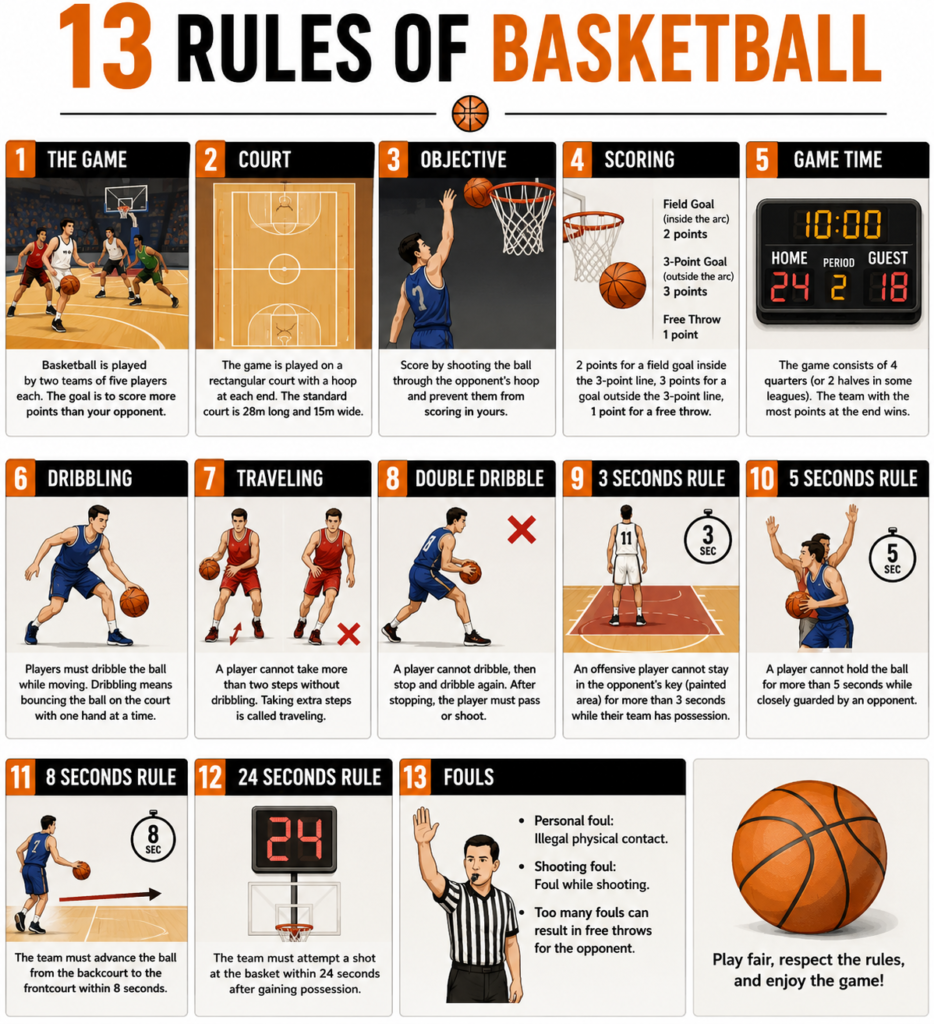
Some of the original principles included:
– Players could throw the ball in any direction using one or both hands.
– Running while holding the ball was not allowed.
– Physical pushing, tripping, or striking opponents was prohibited.
– Goals counted only when the ball remained inside the basket.
– The game focused on passing, movement, and accurate shooting.
Although basketball has evolved significantly over the past century, many of these original ideas remain at the heart of today’s game.
Why Basketball Was Different
Basketball quickly distinguished itself from other sports because it rewarded intelligence, cooperation, and strategy. Success depended not only on athletic ability but also on communication, quick decision-making, and teamwork.
Unlike many sports of the era, basketball encouraged players of different sizes and abilities to contribute in meaningful ways. Fast guards, accurate shooters, skilled passers, and strong defenders all played important roles.
This balanced approach helped basketball appeal to schools, colleges, and community organizations across North America.
The game’s simple equipment requirements also contributed to its popularity. All that was needed was a ball, two baskets, and an open playing area. As a result, basketball spread rapidly through YMCA centers, educational institutions, and local communities.
The Rapid Growth of Basketball
The success of basketball surprised even James Naismith. Within weeks of the first game, students at the International YMCA Training School began sharing the rules with friends and colleagues. Since many graduates became physical education instructors across North America and other parts of the world, basketball spread faster than anyone expected.
YMCA organizations played a major role in introducing basketball to new communities. As instructors traveled to different cities and countries, they brought copies of Naismith’s original 13 rules with them. Soon, schools, colleges, military camps, and recreation centers were organizing basketball games.
The sport was especially popular because it required very little equipment. A ball, two goals, and a relatively small playing area were enough to organize a game. Unlike football or baseball, basketball could be played indoors throughout the winter, making it ideal for schools in colder climates.
By the early 1900s, basketball had become one of the fastest-growing sports in North America. Colleges established competitive teams, and organized tournaments attracted large crowds. Newspapers began covering important games, helping the sport gain even more popularity.
Improvements to the Game
As basketball became more popular, several changes were made to improve the game.
The original peach baskets had closed bottoms, meaning someone had to retrieve the ball after every score. Eventually, baskets with open bottoms replaced them, making the game much faster.
A specially designed basketball replaced the soccer ball used in the first game. Court markings became standardized, and player positions were clearly defined.
Rules continued to evolve to create a more exciting and balanced sport. Dribbling, which was not part of the original game, gradually became an important skill. Time limits, fouls, free throws, and other modern rules were introduced over the years to improve competition and fairness.
Despite these changes, James Naismith always believed that teamwork and sportsmanship should remain the foundation of basketball.
Basketball Reaches the World
Basketball soon expanded beyond the United States and Canada. Missionaries, teachers, soldiers, and YMCA workers introduced the game across Europe, Asia, South America, Africa, and Australia.
The sport’s universal appeal made it popular in countries with different cultures and languages. Since the basic rules were easy to understand, people of all ages quickly learned how to play.
International competitions increased basketball’s popularity, and national teams began competing against one another. The game became a symbol of friendship and healthy competition between nations.
One of the greatest milestones came in 1936 when basketball became an official Olympic sport at the Summer Olympics in Berlin, Germany.
James Naismith attended the Olympic Games as a special guest. Watching athletes from around the world compete in the sport he had invented was one of the proudest moments of his life. During the medal ceremony, he personally presented medals to the winning teams, a fitting honor for the creator of basketball.
Post Comment