Route 66: Cyrus Avery
Introduction
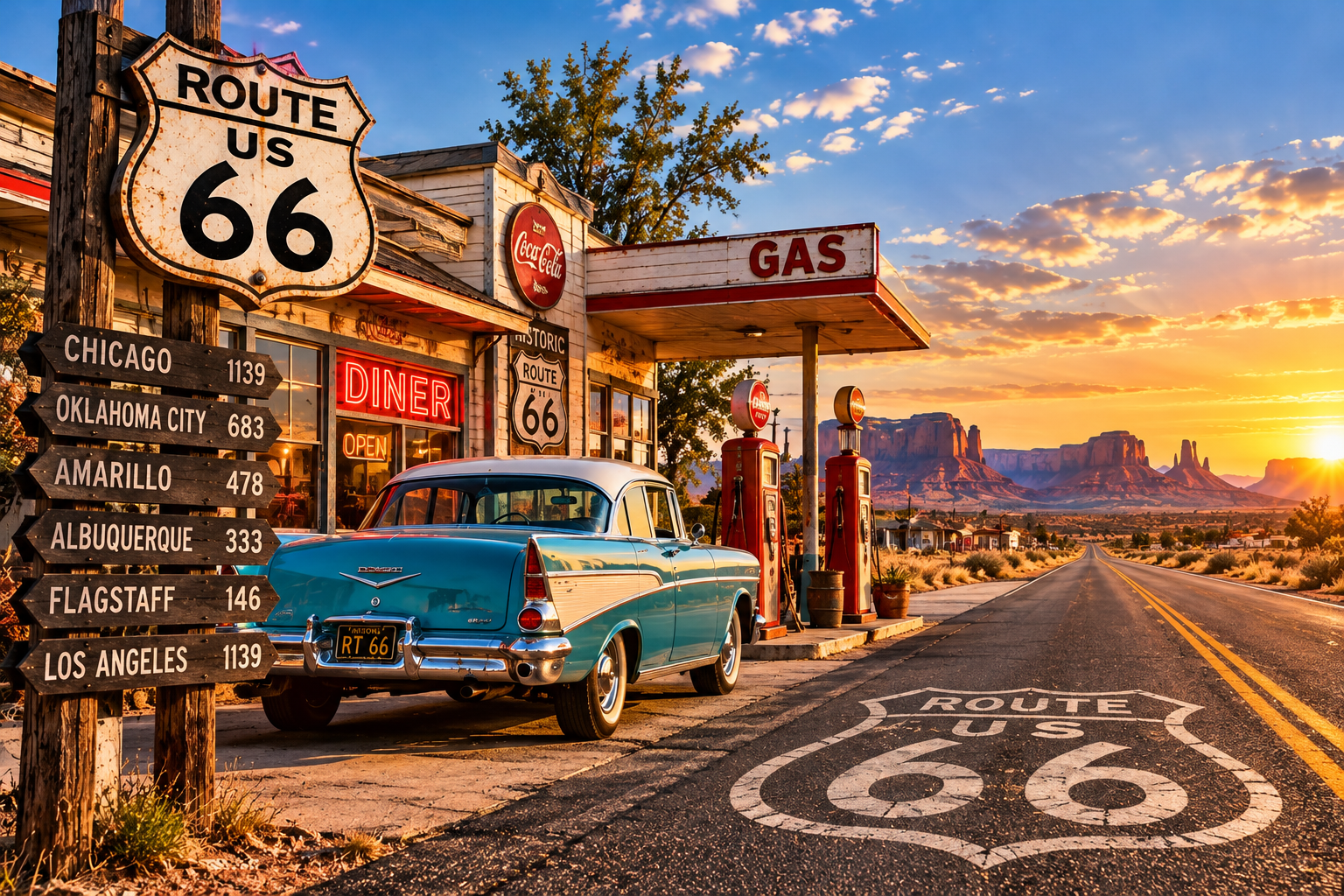
Route 66 is one of the most famous highways in American history. Known as the Mother Road, it became a symbol of freedom, adventure, migration, and the American dream. Stretching from Chicago, Illinois, to Santa Monica, California, this historic highway connected communities, supported businesses, and helped millions of Americans travel across the country.
But who helped make Route 66 a reality? One of the most important figures in its history was Cyrus Avery, an Oklahoma businessman and transportation advocate widely known as the Father of Route 66.
The story of Route 66 is not just about a road. It is about the people who built it, the families who traveled along it, and the communities that grew around it.
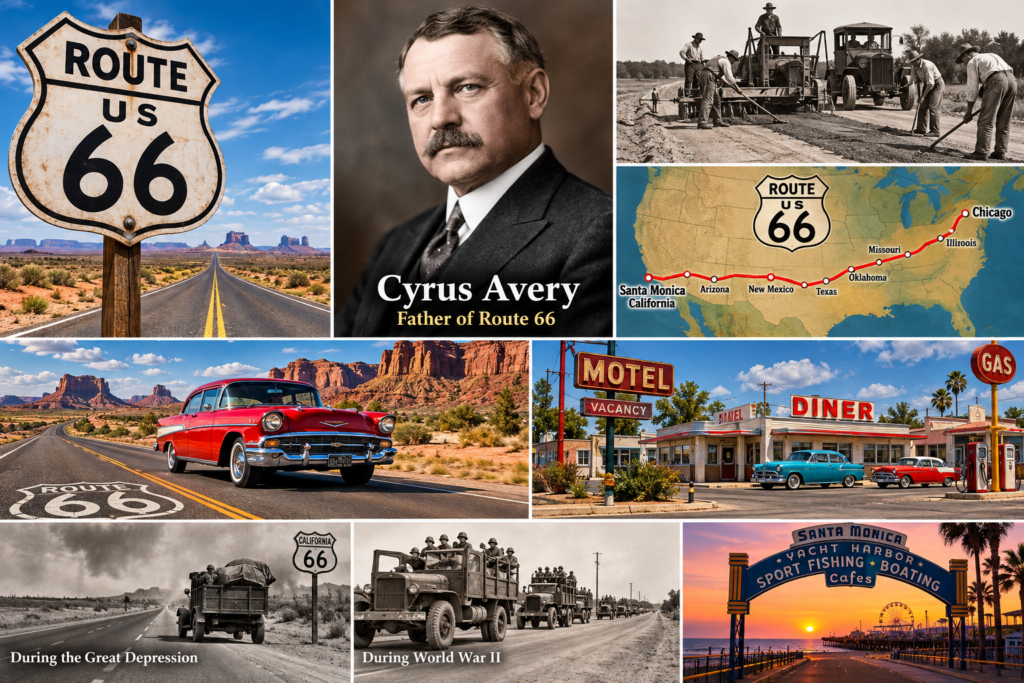
1. Cyrus Avery: The Father of Route 66
Cyrus Stevens Avery was born on August 31, 1871, in Stevensville, Pennsylvania. He later moved to Oklahoma, where he became a successful businessman and an influential advocate for better roads.
During the early twentieth century, automobile ownership was increasing in the United States. However, many roads were poorly maintained, and traveling long distances by car was difficult.
Avery understood that America needed a better highway system. He believed that improved roads could connect communities, encourage trade, and support economic development.
He became involved in the Good Roads Movement, which promoted the construction and improvement of roads throughout the country.
Avery played a significant role in promoting a national highway that would connect the Midwest with the western United States. His efforts helped establish the route that became known as U.S. Route 66.
Although Avery did not personally build the entire highway, his leadership and advocacy were instrumental in its development.
Today, he is remembered as one of the key figures behind America’s most iconic road.
2. When Was Route 66 Established?
Route 66 was officially established on November 11, 1926, as part of the United States Numbered Highway System.
The new highway connected Chicago, Illinois, with Los Angeles, California, providing a major transportation route across the country.
Its original route passed through eight states:
1. Illinois
2. Missouri
3. Kansas
4. Oklahoma
5. Texas
6. New Mexico
7. Arizona
8. California
The highway covered approximately 2,448 miles, although its exact length changed over time as sections were improved and rerouted.
Route 66 quickly became an important transportation corridor, linking small towns, agricultural communities, and major cities.
Its establishment marked an important step in the development of modern American road travel.
3. Why Was Route 66 So Important?
Before the development of an extensive highway network, traveling across the United States could be difficult and expensive.
Railways served many major transportation needs, but automobiles offered travelers greater flexibility.
Route 66 helped make long-distance road travel more practical. Farmers could transport goods, businesses could reach new customers, and families could explore different parts of the country.
The highway also connected communities that had previously been relatively isolated.
Restaurants, gas stations, motels, repair shops, and roadside attractions appeared along its route. These businesses depended on travelers and helped create local employment.
For many small towns, Route 66 became an economic lifeline.
The highway represented more than transportation. It offered opportunities for people who wanted to start businesses, move west, or discover a different way of life.
4. Route 66 During the Great Depression
The Great Depression began in 1929 and caused severe economic hardship throughout the United States.
Millions of Americans lost their jobs, businesses closed, and families struggled to survive.
During this period, Route 66 became an important route for people traveling west in search of work and better living conditions.
Many families left areas affected by drought and agricultural hardship, particularly parts of the Great Plains.
Some traveled toward California, hoping to find agricultural employment or other opportunities.
John Steinbeck later helped immortalize this period in his 1939 novel The Grapes of Wrath. The book portrayed the hardships faced by migrant families traveling west during the Dust Bowl era.
Route 66 became closely associated with this migration and the determination of ordinary Americans to rebuild their lives.
For many travelers, the highway represented both hardship and hope.
5. The Dust Bowl and the Mother Road
During the 1930s, severe drought, poor farming practices, and powerful dust storms devastated parts of the Great Plains.
This environmental and economic disaster became known as the Dust Bowl.
Many affected families abandoned their farms and traveled west in search of work.
Route 66 became one of the routes used by these migrants as they moved toward California.
Its nickname, the Mother Road, became widely recognized through John Steinbeck’s The Grapes of Wrath.
The phrase captured the highway’s importance to people seeking a new beginning.
However, the journey was often difficult. Families faced financial uncertainty, poor living conditions, and discrimination while searching for employment.
The history of Route 66 therefore includes both inspiring stories of opportunity and painful memories of displacement and poverty.
6. Route 66 During World War II
During World War II, Route 66 became increasingly important for military transportation and the movement of supplies.
The United States needed reliable roads to transport personnel, equipment, and essential materials.
The highway connected numerous communities and transportation facilities across the country.
Military traffic also brought business to roadside establishments, including restaurants, service stations, and motels.
After the war, many American soldiers returned home with an interest in travel and recreation.
As the economy expanded, automobile ownership increased, and more families began taking road trips.
Route 66 became an important part of this growing travel culture.
7. The Golden Age of Route 66
The years following World War II are often considered the golden age of Route 66.
During the 1950s and early 1960s, Americans increasingly embraced automobile travel.
Families traveled for vacations, workers moved between cities, and tourists explored the country’s landscapes.
Businesses along Route 66 developed distinctive identities.
Motels offered overnight accommodation, diners served travelers, and gas stations provided fuel and vehicle repairs.
Some establishments featured neon signs, unusual architecture, and memorable roadside attractions.
These businesses helped create the classic image of American road culture.
Route 66 also became associated with independence and adventure. Travelers could stop in small towns, explore unfamiliar places, and experience the diversity of American life.
The highway became a symbol of the open road.
8. The Famous Route 66 Sign
One of the most recognizable symbols associated with the highway is the black-and-white Route 66 shield.
The simple design made the route easy for motorists to identify.
Over time, the shield became a symbol of American travel, popular culture, and nostalgia.
Today, historic Route 66 signs attract tourists, photographers, and road-trip enthusiasts.
Collectors also value vintage signs and memorabilia associated with the highway.
Although many original sections have been bypassed or replaced, the Route 66 shield remains an enduring symbol of the highway’s history.
9. Route 66 in American Popular Culture
Route 66 became famous not only because of its practical importance but also because of its place in American culture.
In 1946, musician Bobby Troup wrote the song “(Get Your Kicks on) Route 66” after traveling across the country.
Nat King Cole recorded a popular version, helping introduce the highway to a wider audience.
The song celebrated the places and experiences associated with traveling along Route 66.
In 1960, the television series Route 66 premiered. It followed two young men traveling across America and encountering different people and situations.
The series helped establish the highway as a symbol of adventure and personal discovery.
Over the decades, Route 66 has appeared in films, books, music, photographs, and other forms of popular culture.
Its image continues to evoke an era when road trips represented freedom and possibility.

10. Why Was Route 66 Replaced?
Despite its popularity, Route 66 eventually lost much of its original transportation importance.
In 1956, President Dwight D. Eisenhower signed the Federal-Aid Highway Act, supporting the development of the Interstate Highway System.
The new highways were designed to improve transportation efficiency and provide faster connections between major cities.
As interstate highways expanded, many travelers began using them instead of Route 66.
Sections of the historic highway were bypassed, and some roadside businesses lost customers.
The process continued for several decades.
On June 27, 1985, Route 66 was officially removed from the United States Numbered Highway System after being largely superseded by the Interstate Highway System.
However, this did not mean that the historic road disappeared completely.
Many original sections, bridges, buildings, and attractions survived.
Communities and preservation organizations continued working to protect the highway’s history.
11. Route 66 Today
Today, Route 66 remains one of America’s most recognizable historic highways.
Although it no longer exists as a single official U.S. highway, many sections are preserved and promoted as Historic Route 66.
Travelers can explore historic downtown areas, vintage motels, classic diners, museums, and roadside attractions.
Popular destinations include the Route 66 landmarks in Illinois, the historic districts of Oklahoma, the Cadillac Ranch attraction in Texas, the Petrified Forest National Park area in Arizona, and the Santa Monica Pier in California.
Each state offers a different perspective on the highway’s history.
Some travelers follow long stretches of the original route, while others visit selected towns and landmarks.
Route 66 tourism supports local businesses and helps preserve historic buildings and cultural traditions.
The highway also offers opportunities to learn about automobile history, migration, architecture, and twentieth-century American life.
12. The Legacy of Cyrus Avery
Cyrus Avery’s contribution to Route 66 remains an important part of American transportation history.
His advocacy helped promote the idea that a connected highway system could benefit communities far beyond the largest cities.
He recognized that roads were essential not only for transportation but also for economic development and regional cooperation.
Avery’s work contributed to the creation of a highway that later became internationally famous.
His legacy is remembered in Tulsa, Oklahoma, where Route 66-related landmarks celebrate his role in the highway’s history.
Although countless engineers, construction workers, government officials, business owners, and local communities contributed to the development of the road, Avery’s leadership helped turn the vision of a major transcontinental highway into reality.
Conclusion
Route 66 is one of the most enduring symbols of the American road trip.
Established in 1926, it connected eight states and helped transform transportation, business, tourism, and migration across the United States.
During the Great Depression, it became a route of hope for families searching for new opportunities. During World War II, it supported transportation and economic activity. In the postwar years, it became a destination for travelers seeking adventure and freedom.
Although the highway was officially removed from the U.S. highway system in 1985, its cultural significance remains strong.
At the center of its early history stands Cyrus Avery, the Father of Route 66, whose vision and determination helped promote the development of this legendary American highway.
Route 66 reminds us that roads do more than connect places. They connect people, preserve memories, and tell the stories of generations.
For America, Route 66 will always represent the spirit of adventure and the promise of the open road.
Post Comment