How Did Ward Nicholas Boylston Explore Egypt and Climb the Great Pyramid?
Introduction
Imagine travelling from America to Egypt in the eighteenth century, when there were no airplanes, modern highways, or comfortable tourist facilities. Reaching another continent was a major adventure, and visiting ancient monuments in distant countries required courage, money, and determination.
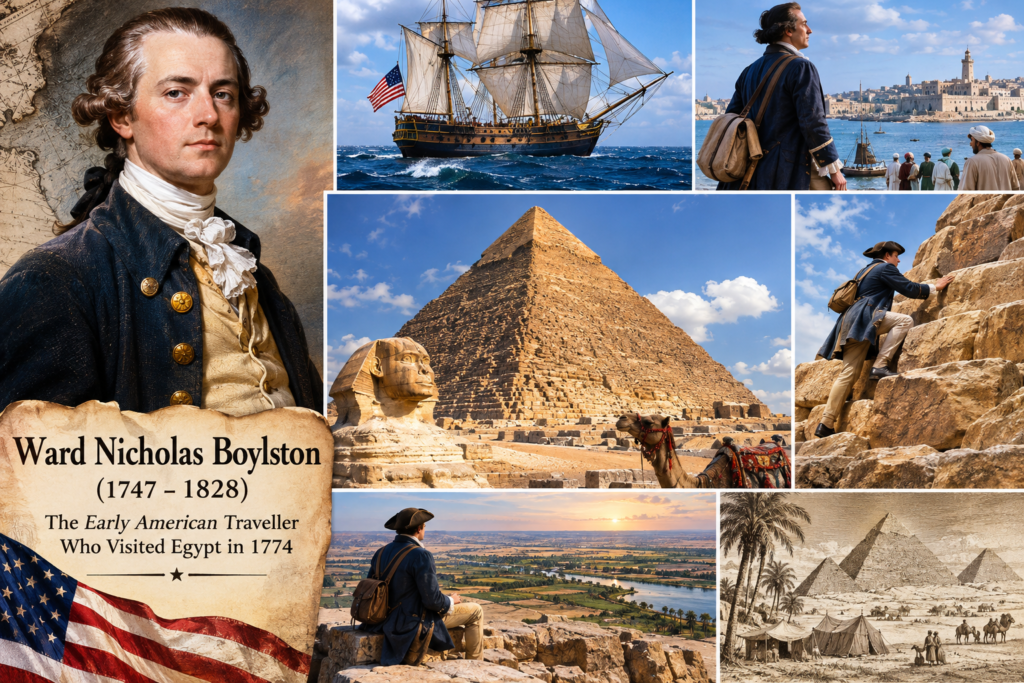
In 1774, an American traveller named Ward Nicholas Boylston journeyed to Egypt and visited the legendary Great Pyramid of Giza. His experience became an important chapter in the early history of American travel to Egypt. He is identified in historical research as the first known American to visit the country.
Boylston’s journey was particularly remarkable because he did more than simply look at the ancient pyramids. He climbed the Great Pyramid and experienced the extraordinary monument from above.
His story connects early American history with the fascinating civilization of ancient Egypt. It also reveals how adventurous travellers explored the world long before international tourism became popular.
Who Was Ward Nicholas Boylston?
Ward Nicholas Boylston was born in 1747 in Boston, Massachusetts, which was then part of British America.
He was born into a prominent New England family. His original surname was Hallowell, but he later adopted the surname Boylston after receiving an inheritance from his maternal uncle, Nicholas Boylston, in 1770.
His family background gave him opportunities to travel and experience different parts of the world. During the eighteenth century, wealthy Americans sometimes travelled to Europe to study culture, architecture, education, and history.
However, travelling beyond Europe was much more unusual. Egypt was a distant destination, and reaching it involved complicated sea journeys and unfamiliar transportation arrangements.
Boylston became one of the early Americans whose travels extended into the Middle East. His Egyptian adventure eventually gave him a distinctive place in the history of American exploration.
Why Was Egypt an Important Destination?
Egypt has attracted travellers and historians for thousands of years. Its ancient monuments, royal tombs, temples, and pyramids represent one of the world’s most remarkable civilizations.
The country was especially fascinating to European and American visitors during the eighteenth century.
The Great Pyramid of Giza was already an ancient structure when Boylston arrived. Built during the reign of Pharaoh Khufu around 2560 BC, it had survived for more than four thousand years.
The pyramid was originally approximately 146.6 metres tall. Over the centuries, the loss of its outer casing stones reduced its height to approximately 138.5 metres.
For an eighteenth-century traveller, seeing such a massive structure was an extraordinary experience. The monument demonstrated the architectural knowledge, engineering abilities, and organizational power of ancient Egyptian society.
Egypt was not simply a destination for sightseeing. It offered visitors an opportunity to encounter the remains of a civilization that had influenced world history.
How Did Boylston Travel to Egypt in 1774?
In 1774, Boylston travelled through Europe before reaching Egypt.
At that time, crossing the Atlantic Ocean and travelling through the Mediterranean required considerable planning. Sailing ships were the principal means of long-distance international transportation.
Travellers depended on favourable winds, experienced sailors, and suitable ships. A journey that takes only a few hours by airplane today could require weeks or even months in the eighteenth century.
Once travellers reached a foreign country, they also needed local transportation and assistance.
In Egypt, horses, donkeys, camels, and boats were important methods of transportation. Local guides helped visitors navigate unfamiliar towns, roads, and desert environments.
Boylston eventually reached Alexandria, an important Mediterranean port city in northern Egypt. From there, he travelled towards Cairo and the famous pyramids of Giza.
His arrival marked an important moment in the history of American travel to Egypt.
Visiting the Great Pyramid of Giza
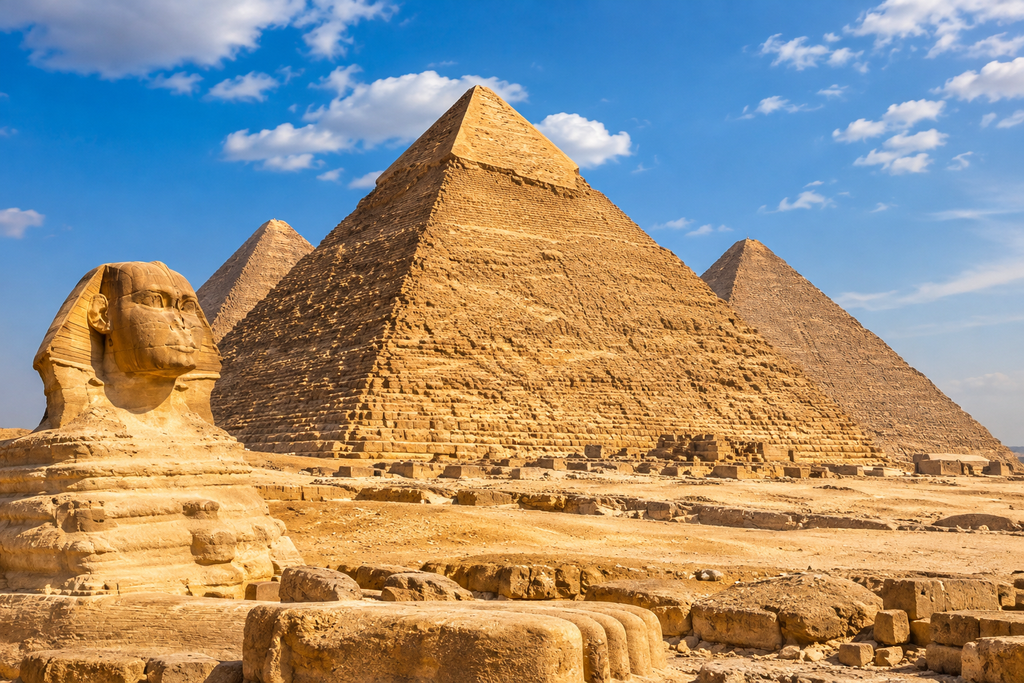
The most remarkable part of Boylston’s Egyptian adventure was his visit to the Great Pyramid of Giza.
The Great Pyramid is the largest of the three main pyramids at Giza. It was constructed as the tomb of Pharaoh Khufu, who ruled during Egypt’s Fourth Dynasty.
Its construction involved millions of large limestone blocks, careful planning, and an extraordinary amount of organized labour.
When Boylston approached the pyramid, he encountered a monument that had stood for thousands of years.
For a visitor coming from eighteenth-century America, the enormous structure must have been an unforgettable sight.
Unlike modern tourists, Boylston did not have visitor centres, safety barriers, elevators, or organized sightseeing facilities.
Exploring the pyramid required physical effort and assistance.
How Did He Climb the Great Pyramid?
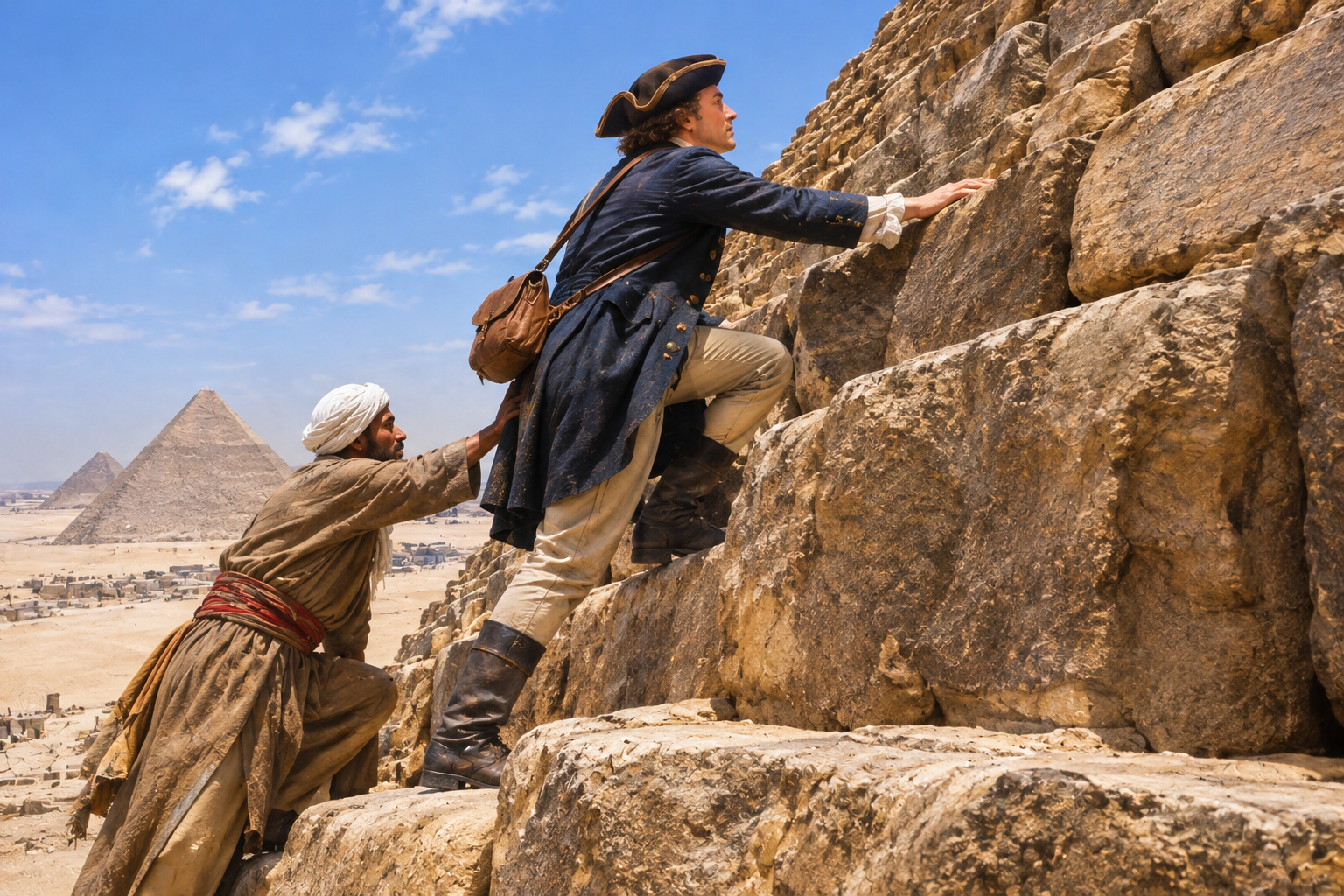
Boylston’s visit became particularly interesting because he climbed the Great Pyramid.
According to the historical account discussed by Andrew Oliver in his research on early American visitors to Egypt, Boylston reached the summit after approximately three-quarters of an hour of climbing.
Climbing the pyramid was not an easy activity. Its enormous stone blocks created a series of steep steps, and reaching the top required considerable physical effort.
Today, visitors generally experience the Great Pyramid through controlled tourism arrangements, and climbing its exterior is prohibited.
In Boylston’s time, however, climbing the pyramid was possible for adventurous visitors.
From the top, he could look across the surrounding desert landscape and see the remarkable monuments of the Giza plateau.
The view offered a different perspective on the ancient Egyptian landscape.
His climb demonstrated the adventurous spirit of early travellers who wanted to experience historical monuments directly rather than simply observe them from a distance.
Life and Travel During the Eighteenth Century
To understand Boylston’s journey, it is important to understand the conditions of international travel during the 1770s.
Modern travellers can book flights, hotels, guided tours, and transportation using a mobile phone. None of these conveniences existed during Boylston’s lifetime.
Travelling across continents involved several challenges.
1. Difficult transportation
Ships were the main means of travelling between distant countries. Land journeys often depended on animals, boats, and walking.
2. Limited communication
Travellers could not easily contact their families or receive immediate information from home. Letters could take weeks or months to arrive.
3. Language barriers
Visitors frequently needed interpreters and local guides to communicate with people in unfamiliar countries.
4. Health and safety challenges
Medical facilities were limited, and travellers faced unfamiliar diseases, changing weather, and difficult environmental conditions.
5. Financial expenses
International journeys were expensive. Travellers needed sufficient money for transportation, accommodation, food, guides, and other expenses.
Despite these difficulties, Boylston completed his Egyptian visit and experienced one of the greatest architectural achievements in human history.
Was Ward Nicholas Boylston Really the First American in Egypt?
Boylston is often described as the first American known to have visited Egypt in 1774.
However, historical research requires an important qualification.
John Antes, a Pennsylvania-born American who travelled as a missionary, reached Egypt earlier, around 1770. His journey means that the claim of Boylston being the absolute first American to visit Egypt is not undisputed.
Andrew Oliver’s book, American Travelers on the Nile: Early U.S. Visitors to Egypt, 1774–1839, examines Boylston and other early American visitors to Egypt.
For an accurate historical article, it is better to describe Boylston as one of the earliest documented American travellers to Egypt and as a figure identified in Oliver’s research as the first known American visitor.
This distinction makes the story more historically responsible and interesting.
The Connection Between America and Ancient Egypt
During the eighteenth and nineteenth centuries, American interest in ancient Egypt gradually increased.
Travellers, scholars, missionaries, and explorers visited the country to understand its history, architecture, religion, and culture.
Egypt became an important destination for people interested in archaeology and ancient civilizations.
Boylston’s journey belongs to this early period of American interest in Egypt.
His visit also illustrates how international travel helped connect distant societies. An American traveller could experience ancient Egyptian monuments firsthand and bring knowledge of those places into the wider American world.
In later decades, more Americans travelled to Egypt, and the country became an increasingly popular destination for historical exploration.
The Great Pyramid: A Monument That Survived Thousands of Years
The Great Pyramid of Giza remains one of the most recognizable monuments in the world.
It was the tallest human-made structure for approximately 3,800 years, until medieval European cathedral construction eventually surpassed its height.
The pyramid is part of the Giza pyramid complex, which also includes the pyramids of Khafre and Menkaure and the famous Great Sphinx.
Its construction continues to attract researchers, architects, engineers, and visitors.
The Great Pyramid demonstrates the advanced planning and technical capabilities of ancient Egyptian civilization.
When Boylston climbed it in 1774, he was standing on a monument that had already witnessed thousands of years of human history.
Today, the pyramid is recognized as part of the UNESCO World Heritage Site known as Memphis and its Necropolis – the Pyramid Fields from Giza to Dahshur.
Ward Nicholas Boylston’s Historical Legacy
Ward Nicholas Boylston’s importance comes from his place in the early history of American international travel.
His journey to Egypt took place at a time when travelling outside the American colonies was difficult and uncommon.
His visit to the Great Pyramid demonstrated the curiosity that encouraged early Americans to explore distant cultures and historical landmarks.
Although Boylston is not as widely recognized as some nineteenth-century explorers, his story deserves attention because it connects two important histories: the early history of America and the ancient civilization of Egypt.
His experience also reminds modern readers that international exploration did not begin with airplanes, modern tourism, or professional travel companies.
It began with individuals willing to undertake challenging journeys in search of knowledge and experience.


Post Comment