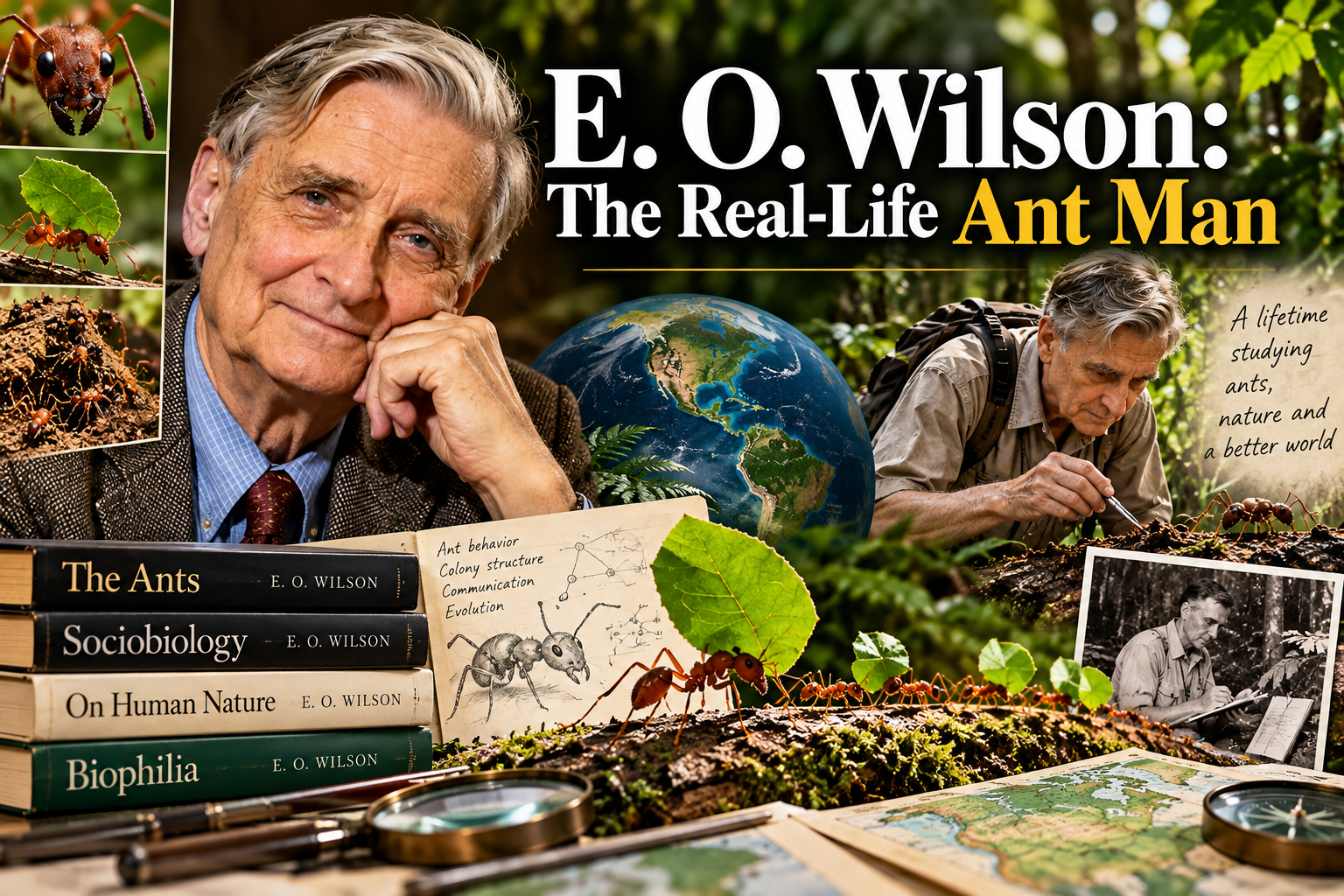
E. O. Wilson: The Real-Life Ant Man
When most people see an ant, they see a tiny insect walking across the ground.
E. O. Wilson saw an entire civilization.
Edward Osborne Wilson was one of America’s greatest biologists and naturalists. Known around the world as the “Ant Man,” Wilson dedicated much of his life to understanding ants and the complex societies they create.
His work helped transform the scientific study of ants into a fascinating window into evolution, cooperation, communication, and human behavior.
Who Was E. O. Wilson?
Edward Osborne Wilson, commonly known as E. O. Wilson, was born on June 10, 1929, in Birmingham, Alabama.
As a child, Wilson developed a deep fascination with nature. A fishing accident damaged his eyesight in one eye, making it difficult for him to observe larger animals. Instead, he turned his attention toward smaller creatures.
That change would shape his entire life.
Wilson became particularly fascinated by insects—and eventually, ants became his greatest scientific passion.
He would go on to become a professor at Harvard University and one of the most influential evolutionary biologists of the modern era.
Why Was He Called the “Ant Man”?
Wilson earned the nickname “Ant Man” because of his extraordinary knowledge of ants.
He studied thousands of ant species and traveled to different parts of the world to observe them.
But Wilson wasn’t simply collecting ants.
He wanted to understand their social lives.
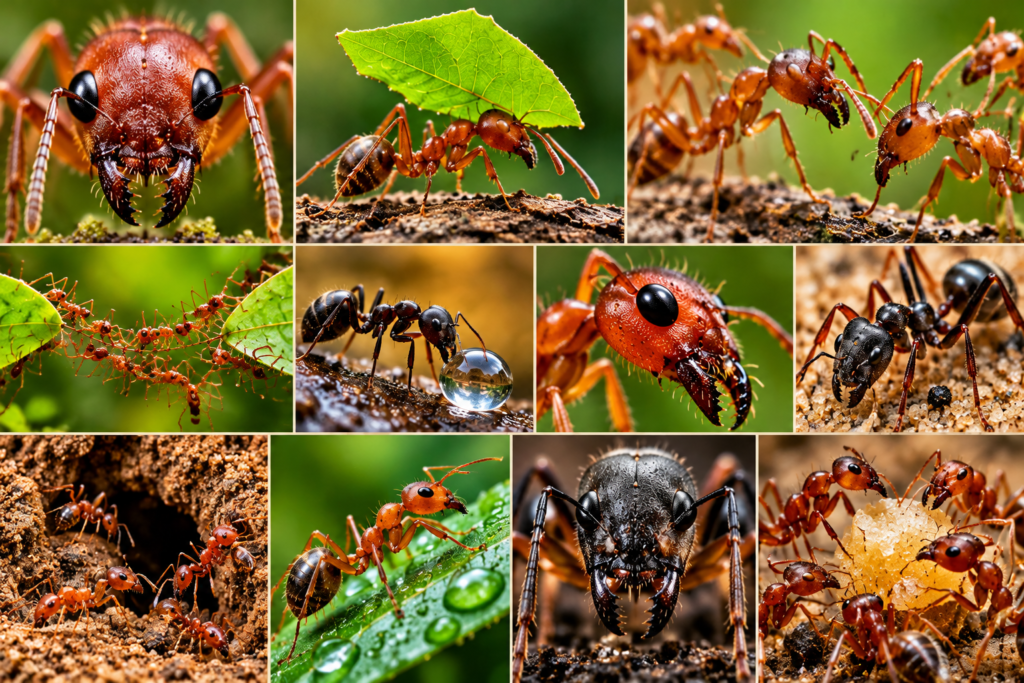
Ant colonies function in remarkably organized ways. Different ants perform different jobs: some gather food, some protect the colony, some care for young ants, while the queen produces offspring.
Wilson helped scientists understand how such complex societies could evolve.
To him, an ant colony was almost like a living superorganism.
The Scientist Who Made Ants Fascinating
Wilson discovered that ants communicate using chemical signals called pheromones.
When an ant discovers food, it can leave a chemical trail that helps other ants find the same source.
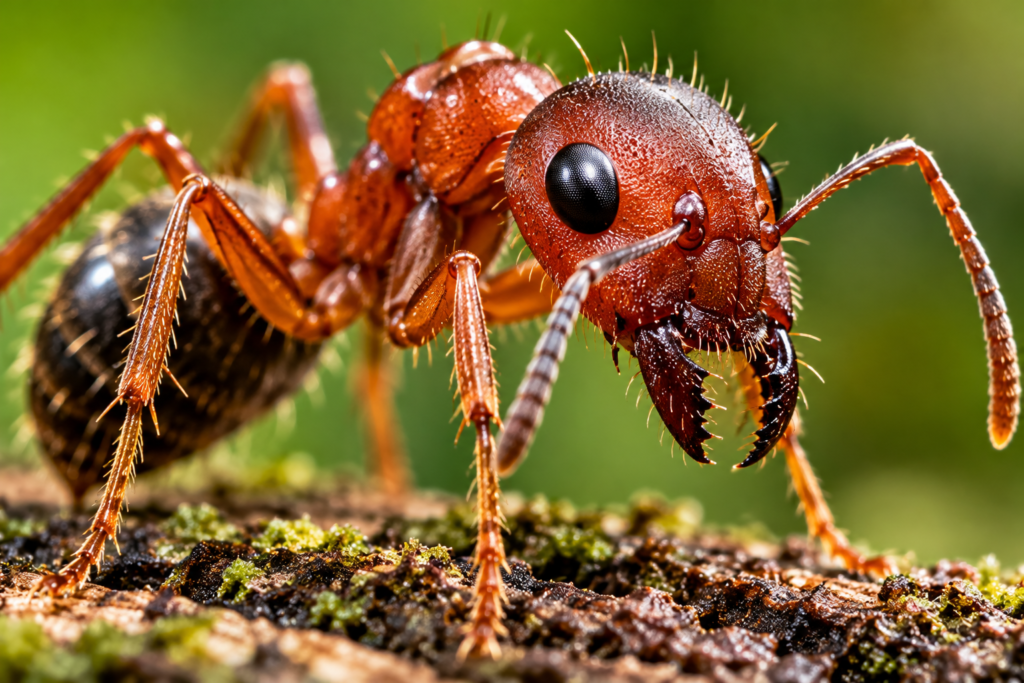
Suddenly, what looked like a simple line of ants became something much more fascinating:
A sophisticated communication network.
Wilson’s research helped explain how seemingly simple individual insects could collectively create highly organized societies.
His Work on Sociobiology
Wilson’s scientific interests eventually expanded beyond ants.
In 1975, he published his influential book Sociobiology: The New Synthesis.
The book examined how evolutionary processes could influence social behavior in animals.
It became one of the most influential—and controversial—scientific works of its era.
Wilson argued that behaviors such as cooperation, competition, communication, and social organization could be studied through the lens of evolution.
His ideas sparked intense debate among scientists and other scholars.
But regardless of the controversy, the book helped establish sociobiology as an important field of study.
Biodiversity Became Another Great Mission
E. O. Wilson was not only an expert on ants.
He became one of the world’s strongest voices for biodiversity and conservation.
Wilson warned that humanity was losing species at an alarming rate and that protecting ecosystems was essential.
He believed that every species had value—not only because of what it could do for humans, but because life itself was worth protecting.
He became especially passionate about protecting Earth’s remaining natural habitats.
The “Sixth Extinction”
Wilson frequently warned about what scientists call the sixth mass extinction.
Human activities such as habitat destruction, pollution, overexploitation, and climate change can put enormous pressure on wildlife.
Wilson argued that the loss of biodiversity could have consequences far beyond the disappearance of individual species.
His message was simple but powerful:
We cannot destroy nature without ultimately affecting ourselves.
E. O. Wilson and the World of Ants
Wilson’s scientific career included the discovery and description of numerous ant species.
He also helped create detailed scientific knowledge about ant behavior and classification.
One of his most important contributions was demonstrating that tiny creatures could teach us enormous lessons about nature.
Ant colonies reveal principles of:
– Cooperation
– Competition
– Communication
– Division of labor
– Evolution
– Social organization
– Survival
The tiny ant became a doorway into understanding much larger questions.
Pulitzer Prize Winner
Wilson was also a highly respected science writer.
His book On Human Nature, published in 1978, won the Pulitzer Prize for General Nonfiction.
He won another Pulitzer Prize in 1991 for The Ants, which he co-authored with Bert Hölldobler.
The book became a landmark work in the study of ants.
Winning two Pulitzer Prizes demonstrated that Wilson wasn’t just a scientist—he was also an extraordinary communicator.
The Ants: A Scientific Masterpiece
The Ants, published in 1990, became one of Wilson’s most famous works.
The enormous scientific book combined detailed research about ant biology, behavior, evolution, and social organization.
For scientists, it became an important reference.
For the general public, it revealed just how sophisticated ant societies could be.
Wilson helped people look at ants differently.
After his work, an ant was no longer simply a tiny insect.
It could be viewed as a member of an incredibly complex society.
E. O. Wilson’s Legacy
Wilson received numerous awards and honors throughout his career.
But perhaps his greatest achievement was changing the way people thought about nature.
He showed that studying a tiny organism could reveal enormous ideas about life.
He also encouraged people to protect the natural world before it was too late.
In his later years, Wilson continued promoting biodiversity and conservation.
He supported the idea that large areas of Earth’s natural environment should be protected for future generations.
The Real-Life Ant Man
Unlike the fictional Marvel superhero Ant-Man, E. O. Wilson did not shrink to the size of an insect or communicate with ants through superpowers.
His ability was real—and in its own way, just as remarkable.
His superpower was scientific curiosity.
He spent decades observing creatures that most people ignored.
He followed ants through forests, studied their chemical communication, examined their colonies, and used scientific evidence to understand their extraordinary social systems.
That dedication earned him a unique place in science.
Final Thoughts
E. O. Wilson was the real-life Ant Man.
He didn’t need a superhero suit.
He had a microscope, notebooks, scientific curiosity, and an extraordinary ability to see a hidden world beneath our feet.
His research on ants helped reshape biology, while his work on biodiversity reminded humanity that Earth’s smallest creatures can be part of its biggest story.
From a tiny ant colony to the future of the entire planet, E. O. Wilson spent his life asking one enormous question:
How does life work—and how can we protect it?
His answer was built through decades of observation, research, writing, and a lifelong fascination with the natural world.
E. O. Wilson may have studied ants, but his legacy is about life itself.


Post Comment