Dr. Carl N. Shuster Jr.: The Man Who Unlocked the Secrets of a 450-Million-Year-Old Survivor
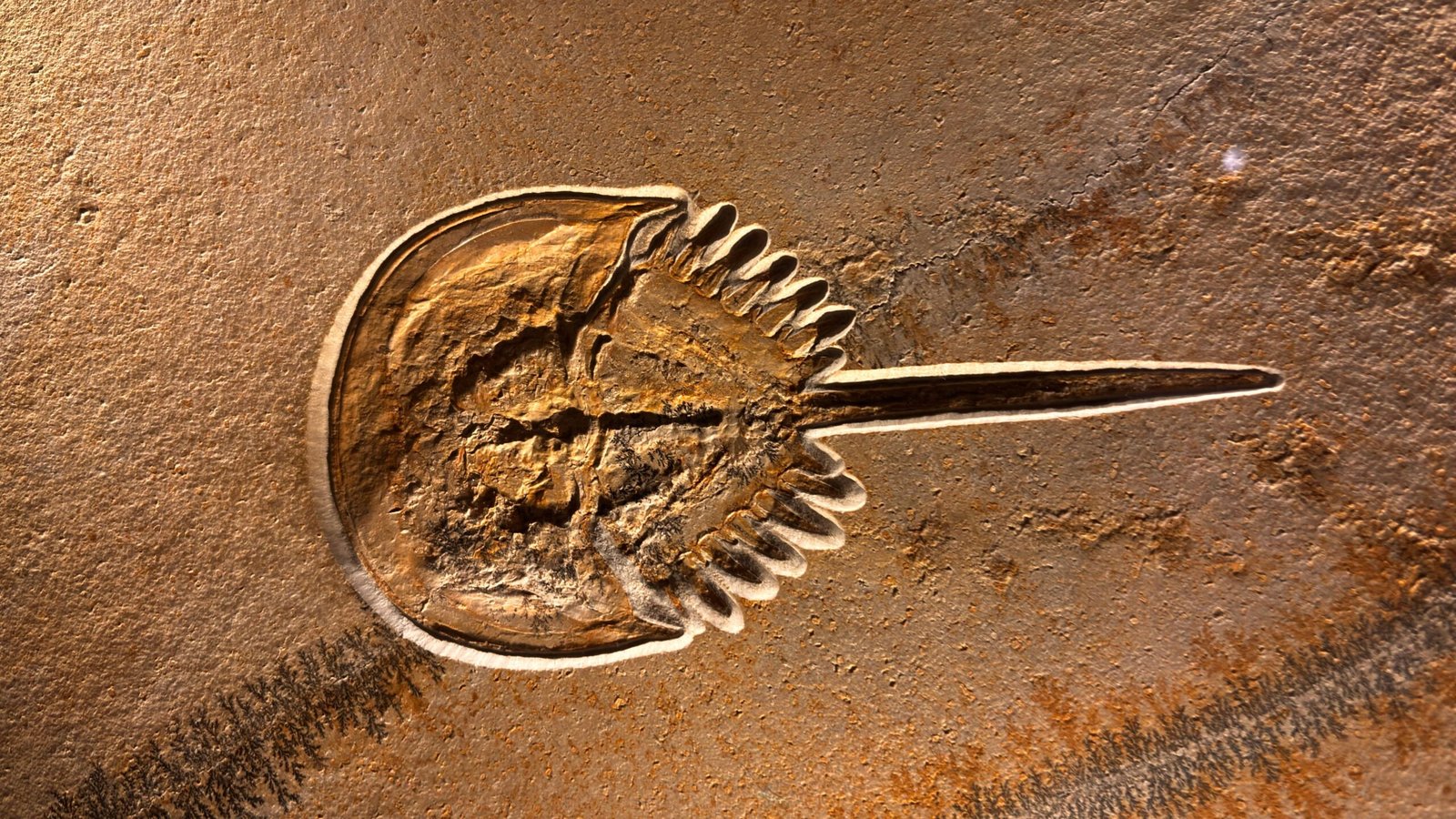
Long before humans walked the Earth, before the rise of the dinosaurs and long before modern coastlines existed, an extraordinary creature was already moving through the world’s ancient seas.
It looked almost alien.
Its hard, rounded shell, long pointed tail and multiple pairs of legs gave it an appearance unlike almost anything alive today. People eventually called it the horseshoe crab.
But despite its name, it is not a true crab. It belongs to an ancient lineage of marine arthropods that has survived enormous changes in the planet’s history.
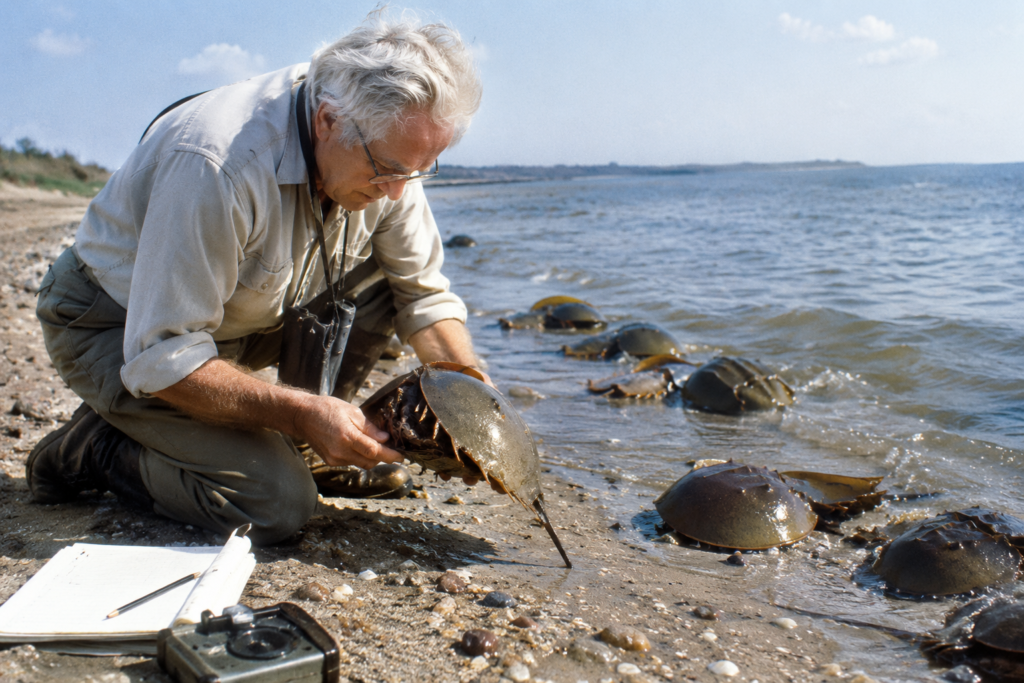
For centuries, the horseshoe crab was simply an unusual animal found along the Atlantic coast. Then one scientist devoted much of his life to understanding it.
His name was Dr. Carl N. Shuster Jr.
Shuster became one of the central figures in modern horseshoe crab research. A tribute presented at the 2019 Horseshoe Crab International Workshop described him as a seminal leader in the field for seven decades, while the Delaware Estuary Program remembered him as a “founding father” of horseshoe crab science.
His story was not simply about studying an unusual animal.
It was about discovering how much an ancient survivor could teach modern science.
From a Young American to a Scientist
Carl N. Shuster Jr. was born in 1919 and grew up in New Jersey. His early life unfolded during the difficult years of the Great Depression, followed by the enormous upheaval of World War II.
He attended Rutgers University, where he participated in ROTC and played several sports, including lacrosse, soccer and boxing. His life then took a dramatic turn when the United States entered World War II.
Shuster served in the U.S. Army and later joined the Army Air Forces. During the war, he became a navigator aboard a B-17 bomber with the 95th Bomb Group of the Eighth Air Force. His oral-history interview at Rutgers provides firsthand details of his military experiences.
After the war, he returned to education.
He eventually pursued graduate studies and earned his Ph.D. from New York University in 1955. His doctoral research examined geographic variation in the American horseshoe crab, Limulus polyphemus.
That ancient-looking animal would become the defining subject of his scientific career.
The Creature That Captured His Attention
The American horseshoe crab is one of nature’s remarkable survivors.
Its lineage stretches back hundreds of millions of years, although the commonly repeated “450 million years old” description refers to the broader horseshoe-crab lineage rather than the age of today’s exact species.
The animal itself has changed relatively little in overall body design compared with many modern animals.
To Shuster, however, it was far more than a living curiosity.
It was a biological record.
By observing the animal carefully, scientists could investigate its anatomy, growth, reproduction, geographic distribution, ecology and relationship with its environment.
Shuster spent decades doing exactly that.
His early scientific work included studies of horseshoe-crab anatomy and natural history. His 1948 master’s thesis examined the animal’s digestive system, while his 1955 doctoral dissertation focused on geographic variation within Limulus polyphemus.
These studies helped establish the foundation for a remarkable career.
A Lifetime With Limulus
Shuster became one of the world’s leading authorities on Limulus polyphemus, the American horseshoe crab.
His work appeared across decades of scientific literature.
He wrote about horseshoe-crab natural history, anatomy, geographic distribution, blood and circulatory systems, biology and conservation. A compiled bibliography of horseshoe-crab research lists numerous publications by Shuster beginning in the 1950s and continuing into later decades.
But his influence went beyond papers.
Shuster was also known for his detailed scientific illustrations. His anatomical drawings were reproduced repeatedly and became useful educational resources for people studying horseshoe crabs.
His philosophy was remarkably simple:
Observe the animal.
Study it where it lives.
Pay attention to its behavior.
Learn from nature rather than assuming that everything has already been understood.
That approach influenced generations of researchers.
The Delaware Bay Connection
One of the most important places in the story of the American horseshoe crab is Delaware Bay.
Every year, especially during the spring spawning season, large numbers of horseshoe crabs come ashore along the bay’s beaches.
Their arrival is not important only to the crabs themselves.
It is also connected to the survival of migratory shorebirds.
Birds traveling enormous distances stop around Delaware Bay to feed on horseshoe-crab eggs, building up energy for the next stage of their migration. The relationship between the crabs and migratory birds became an important part of modern horseshoe-crab conservation.
Shuster’s work helped scientists and the public understand the ecological importance of these ancient animals.
His influence eventually reached far beyond the laboratory.
More Than an Ancient Animal
There was another reason the horseshoe crab became extremely important to modern science.
Its blood contains specialized cells used to detect bacterial endotoxins.
A substance derived from horseshoe-crab blood, Limulus Amebocyte Lysate (LAL), became an important tool for testing pharmaceutical and medical products for bacterial contamination. U.S. government documents describe LAL as being derived from horseshoe-crab blood and used by pharmaceutical companies to test product sterility.
Suddenly, an animal that looked like a relic from another geological age had become connected to modern medicine.
The horseshoe crab was no longer simply an interesting creature crawling along the beach.
Its biology had become scientifically and medically significant.
The Scientist Behind the Science
Shuster held numerous positions during his long career.
Rutgers’ oral-history archive records that he served as Director of the University of Delaware Marine Laboratories and Director of the U.S. Northeast Shellfish Sanitation Research Laboratory. He also worked as a Chief Environmental Advisor to the Federal Energy Regulatory Commission, worked with the Environmental Protection Agency and later served as an adjunct professor at William & Mary.
Yet horseshoe crabs remained at the center of his scientific identity.
He continued writing, teaching and communicating about them.
He also helped connect scientists internationally.
According to a tribute presented at the 2019 international workshop, Shuster’s contacts with Japanese scientist Koichi Sekiguchi and colleagues during the 1980s helped lay groundwork for later international collaboration, eventually contributing to the establishment of the IUCN Horseshoe Crab Specialist Group in 2012.
That is an important part of his legacy.
He did not simply collect knowledge.
He helped build a scientific community around an animal that had once received relatively little attention.
A Sanctuary Named in His Honor
Shuster’s name eventually became permanently connected with horseshoe-crab conservation.
The Carl N. Shuster Jr. Horseshoe Crab Reserve was established off the mouth of Delaware Bay as a protected marine area.
U.S. federal records describe the reserve as a roughly 1,500-square-mile protected zone created through horseshoe-crab management measures. Later scientific literature describes it as a no-take area designed to protect horseshoe crabs in important waters outside Delaware Bay.
Having a marine reserve named after him was a powerful recognition of his influence.
The scientist who had spent decades studying the ancient animal had become part of the modern effort to protect it.
A Hundred Years of Life
Carl N. Shuster Jr. lived for an extraordinary century.
He died on May 28, 2020, at his home in Arlington, Virginia, at the age of 100. The Delaware Estuary Program described him as the founding father of horseshoe crab science.
His life stretched across an extraordinary period of American history.
He lived through the Great Depression.
He served during World War II.
He witnessed the transformation of marine biology.
He watched horseshoe-crab research evolve from relatively specialized natural history into a major scientific field with ecological, conservation and biomedical importance.
And through much of that transformation, he kept returning to the same remarkable animal.
The horseshoe crab.
The Ancient Survivor Still Has a Story to Tell
Perhaps the most remarkable part of Shuster’s legacy is that the story did not end with him.
The questions he helped establish continue to matter.
How do horseshoe crabs reproduce?
How do populations change?
How do they interact with coastal ecosystems?
How should they be managed?
How can humans benefit from their biology without placing their populations at risk?
These questions matter because the horseshoe crab is connected to much more than its own survival.
Its eggs support migratory birds.
Its biology has contributed to biomedical testing.
Its populations provide information about coastal ecosystems.
And its extraordinary evolutionary history gives scientists a living window into the distant past.
Shuster understood that significance.
The Man Who Watched an Ancient World
Carl N. Shuster Jr. did not discover the horseshoe crab.
Humans had known about the animal for centuries.
What he did was different.
He devoted decades to understanding it.
He observed it, studied it, illustrated it, wrote about it and taught others about it.
His scientific career helped transform the horseshoe crab from an unusual creature on the shoreline into one of the most intensively studied marine invertebrates.
A 2004 book on the American horseshoe crab, edited by Shuster, Robert B. Barlow and H. Jane Brockmann, brought together researchers working across many aspects of the species’ biology and described the animal as a survivor with an extraordinarily ancient lineage.
That may be the most fitting way to remember Carl N. Shuster Jr.
He spent his life listening to an ancient survivor.
And in doing so, he helped the modern world understand why that survivor still matters.
Carl N. Shuster Jr. did not merely study the horseshoe crab.
He helped an entire generation of scientists see it differently.
And that is why his name remains permanently connected with the science of one of Earth’s most remarkable survivors.
Post Comment